


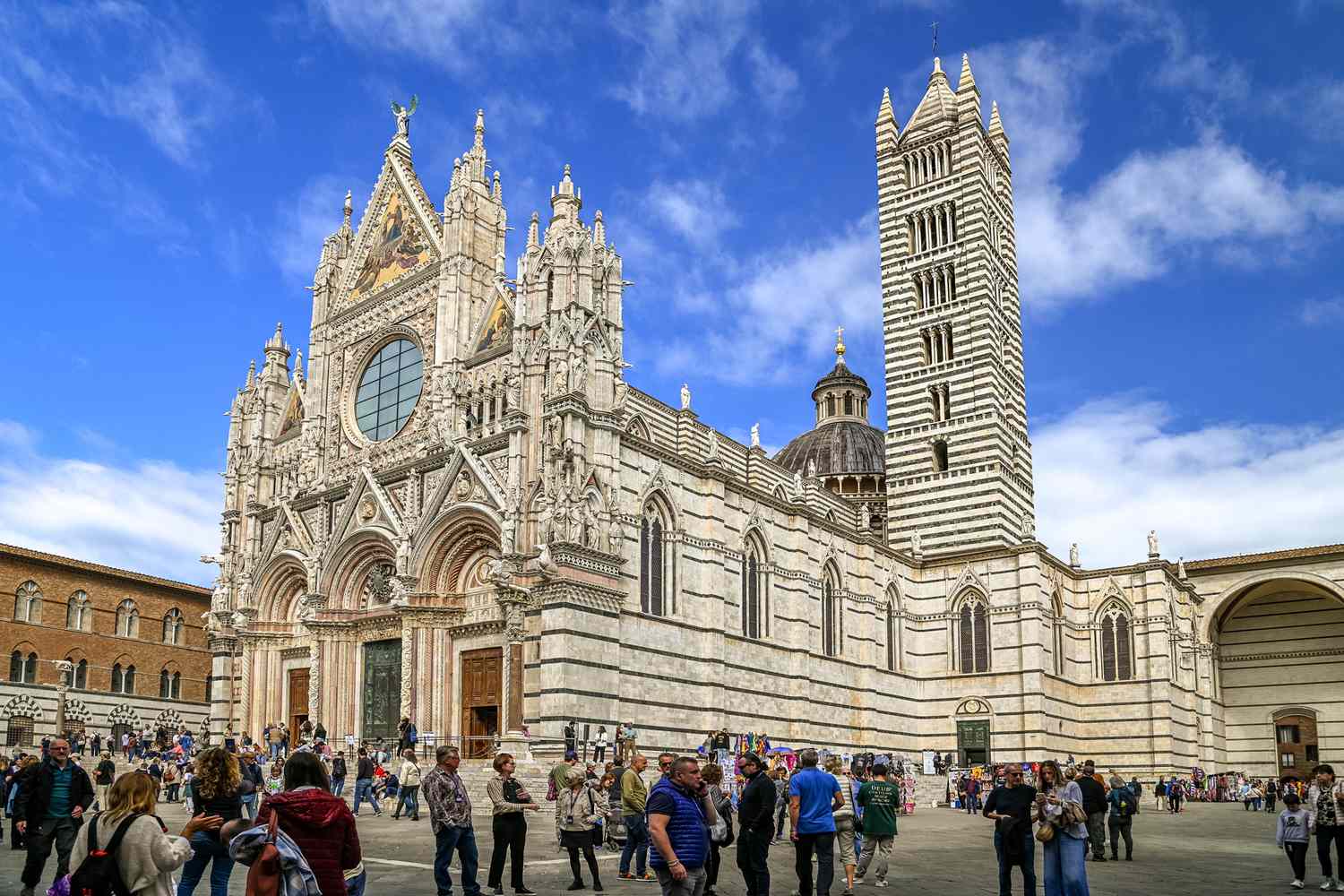
It’s easy to make mistakes as a traveler in Italy, whether it’s your first trip or your 15th. Not planning ahead, planning too much, playing it too safe with your dinner order—none of these things will ruin a vacation, but they may leave you missing out on some serendipitous moments or fantastic cuisine.
I’ve lived in Italy for close to 20 years, and I’ve seen where visitors go astray—and I’ve made a lot of these mistakes myself, especially early on. So here’s my list of 10 Italy travel errors to avoid, for a richer, smoother, and more enjoyable visit.
Don’t be a culinary chicken.
Taylor McIntyre/Travel + Leisure
You may have come for the pizza and pasta al ragu, and you should absolutely sate those cravings. But venture outside your safety zone, and try foods you’ve maybe never tried before. In Rome, that might be oxtail or tripe, or something like marinated artichokes. In Tuscany and Umbria, the chicken liver pate on toast (crostini neri) is a delicious appetizer. Arrosticini (skewered, grilled mutton) are a lip-smacking specialty of Abruzzo. I could go on and on. Bottom line: be an adventurous eater—or at least don’t order the same thing every night.
Don’t underestimate the weather.
Especially if you’ll be traveling to several different regions of Italy, you could easily encounter wildly varying weather. Summers are blazing hot in most of the peninsula, and there aren’t air-conditioned malls you can duck into everywhere. Winter temperatures can reach single digits, and the skies can spit rain for days on end, making outside sightseeing downright miserable. Don’t shrug off the weather forecast. Pack prudently (layers, people, layers!) and leave some flexibility in your schedule to change plans depending on the whims of the weather gods.
Don’t dress like you’re going to the gym.
gbh007/Getty Images
My number one etiquette tip in Italy? Dress nicely. Not fancy, just not like a schlub. It’s not just about being respectable in a country where most people dress neatly and are at least moderately covered up. You’ll likely find that you’re welcomed a little more warmly in stores, restaurants, and hotels when you don’t walk in looking like you should be carrying a rolled-up yoga mat under your arm. And for randomly ducking into churches, which you absolutely should do, your shoulders, knees, and midriff need to be covered. If you’re not dressed appropriately, you’ll be asked to leave.
Don’t forget to carry some euros.
While Italy is a lot more digitized than it was a few years ago, cash is still king for small merchants and street vendors, and it’s handy for small purchases like a slice of pizza or a gelato. Cash also gives you some bargaining power if you’re buying pricier items, such as leather goods, Murano glass, ceramics, or other artisan wares. The seller might not come right out and ask you if you intend to pay cash, but you can ask if there’s any discount for cash purchases. You don’t have to travel with stacks of euros, nor should you. There are ATMs everywhere—just make sure you use one that’s clearly affiliated with a bank.
Don’t wait until the last minute to buy train tickets.
Christopher Larson/Travel + Leisure
I’m not a fan of rigid schedules when I travel in Italy or elsewhere. But if you need to be in Florence for a 12 p.m. entrance slot at the Uffizi Galleries, and you need to get to Florence by train, then buy that train ticket well in advance. Popular routes can sell out, especially in high season and on holiday weekends. So don’t let procrastination throw a wrench in your plans. For long-distance or high-speed trains, remember to check both the Trenitalia and Italo websites. (The latter is a private carrier that’s often cheaper than Trenitalia.) Here’s our guide that explains the particulars of train travel in Italy.
Don’t forget to check museum and attraction opening hours.
If your tightly packed touring schedule involves a Sunday or a Monday, take note: Many attractions and museums may be closed one of these days. The Vatican Museums, for example, are closed on Sundays, and the Uffizi is closed on Mondays. Show up at the Basilica of San Clemente at 1 p.m., and you’ll have to find a shady spot to wait until the church and archaeological site reopen at 2 p.m.—speaking from experience. Smaller towns, especially, may be sleepier on Sundays as some stores remain closed, and many restaurants don’t open until dinnertime—or at all.
Don’t wait in line when you don’t have to.
Taylor McIntyre/Travel + Leisure
I remember the line that used to wrap around the Vatican Museum walls, where the guys selling folding paper fans were the only ones having a good time. Thankfully, those days are gone, as almost every major museum and attraction in Italy has moved to advanced ticket sales and timed entries, so there’s no reason to wait in long lines. Unless you’re booking a guided tour, purchase your tickets directly from official websites. The exception to this rule is St. Peter’s Basilica in Rome—you need to have booked a private tour with skip-the-line access to avoid the long lines here.
Don’t overtip, but do tip.
I know this is controversial, but really, you should leave a small tip for good service in restaurants. Here, that means rounding up by a couple of euros, so maybe leaving €40 on a €37 tab. Yes, there is usually a service charge included in your check (that doesn’t go into your server’s pocket), and yes, Italian waitstaff earn living wages. But low-key tipping is very much the norm now, and it will be appreciated. There’s no need to overdo it, as even 10 percent is a generous tip here.
Don’t skip Italy’s smaller cities and towns.
Michela Sieman/Travel + Leisure
The Italian trifecta of Rome, Florence, and Venice is a popular first-timer’s tour of Italy, for plenty of good reasons. But Italy is a patchwork of landscapes, architecture, and traditions, and you should budget some time to see at least some of what lies outside its three most popular cities. Stop off in Bologna for a taste of Italy’s richest culinary destination. Wander the medieval lanes of Orvieto. Make a quick detour to Padua or Verona, or take a day trip from Rome to discover nearby beaches, ancient ruins, and charming hill towns.
Don’t try to see it all.
I’m a member of several Italy travel groups on Facebook, and nothing makes me cringe more than someone listing the 10 places they plan to stop on their Italy itinerary over two weeks. Nothing will wear you out or suck the joy from your Italian vacation faster than trying to see too much. It’s supposed to be a vacation, not a slog, and you’ll ideally emerge with sweet memories of small moments, not a photo dump of places and meals that flew by so quickly you barely remember them. So cut some destinations from your list, take it slow, and let Italy enchant you so much that you’ll spend the flight home planning your return trip.
Read the full article here