


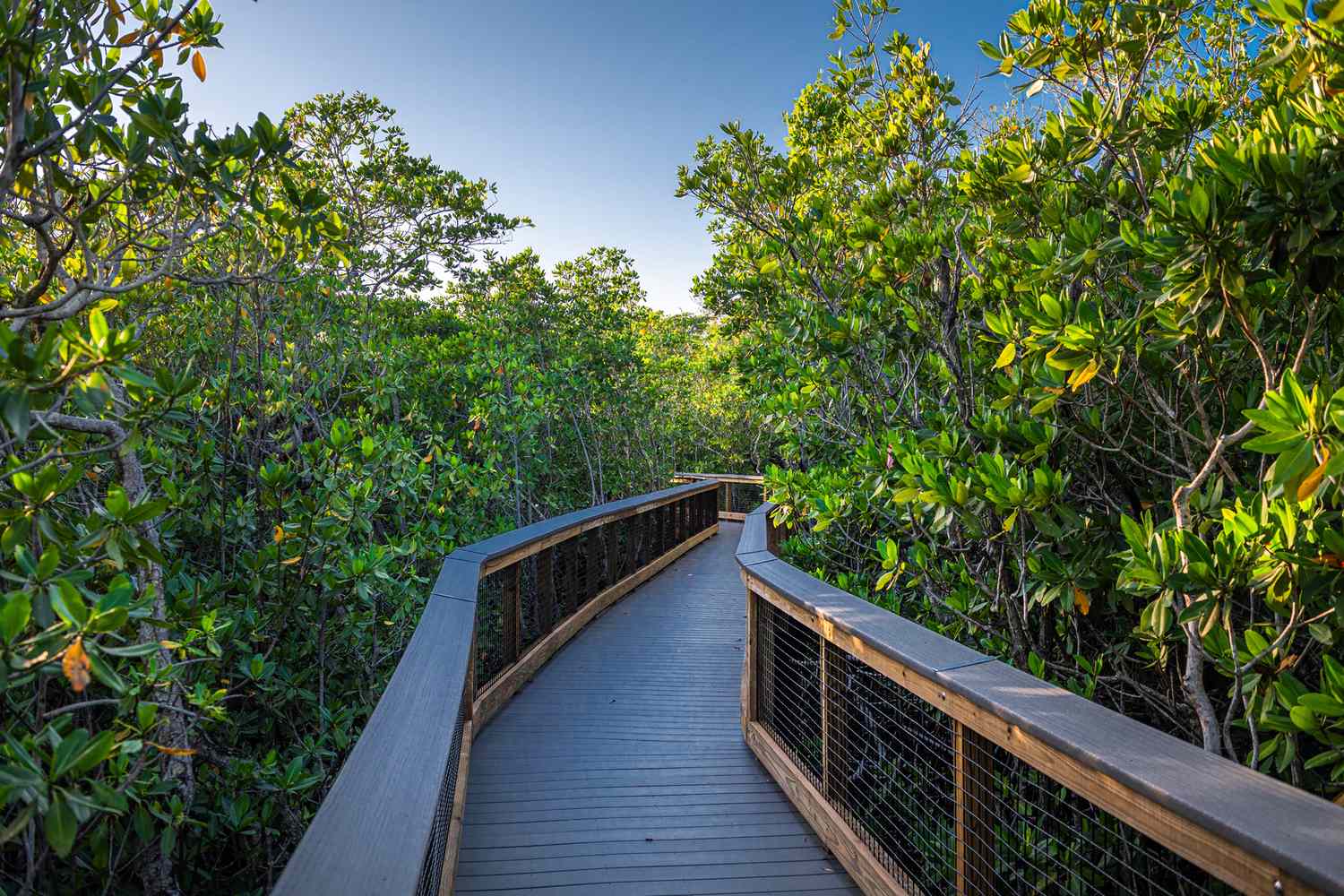
Most travelers come to Florida with a familiar checklist: beaches, theme parks, cotton-candy sunsets, a weeklong escape into sunshine. The sugar sand and roller coasters do deliver, but after three decades of living here, I’ve learned Florida’s greatest treasures aren’t found at the end of a boardwalk or behind a ticket gate. They’re tucked inside its state parks—hundreds of thousands of protected acres where the Sunshine State reveals its wild, strange, and astonishingly beautiful natural assets.
This is the Florida of underwater coral reefs and first-magnitude springs, of prehistoric caverns and wind-shaped dunes, of mangrove tunnels and Civil War forts. It’s where you can float down a 72-degree river, climb a lighthouse, follow migrating birds, or kayak past roseate spoonbills at sunrise. Spread from the Panhandle to the Keys, Florida’s 170-plus state parks safeguard barrier islands, prairies, hardwood hammocks, historic settlements, and some of the most biologically diverse landscapes in North America.
The system is widely considered one of the best in the country, a four-time National Gold Medal winner for excellence in park management, yet it remains surprisingly accessible, with most entrance fees costing less than a movie ticket. For residents, these are the places we return to again and again: to swim, paddle, camp, spot wildlife, trace Florida history, even get married under live oaks or beside the Gulf.
In a state famous for spectacle, Florida’s state parks offer something rarer: connection to nature. And they may just be the best reason to visit. It’s hard to narrow it down to a few, but here are my favorites.
Grayton Beach State Park
D-Ozen/Getty Images
In the soft morning light, Grayton Beach State Park’s sugar-white dunes glow against a pale emerald Gulf, while Western Lake, one of the world’s rare coastal dune lakes, lies glassy and still just behind the shore. Across nearly 2,000 protected acres, pine flatwoods, marsh, and wind-shaped scrub oaks create a wild and improbably pristine landscape. Kayaks and paddleboards slip through tannin-tinted water and out toward the Gulf when the lake breaches. Trails loop through coastal forest where twisted oaks form soft canopies overhead. Add in offshore artificial reefs for snorkeling and a mile of never-hot sand, and Grayton delivers one of Florida’s most complete park experiences.
Torreya State Park
Visit Florida
Set on high bluffs above the Apalachicola River, this 13,000-acre preserve unfolds in steep ravines, hardwood forest, and surprising seasonal color, more Southern Appalachia than subtropical coast. Opened in 1935 and built in part by the Civilian Conservation Corps, it remains one of the state’s most distinctive landscapes. Known as the “mountains of Florida,” Torreya has 16 miles of some of the state’s most challenging hiking trails, with sharp elevation changes, creek crossings, and even a 25-foot waterfall along Weeping Ridge Trail. The park is named for the critically endangered Torreya tree, found almost nowhere else on the planet, with restoration efforts now underway. Near the bluff-top Gregory House, river views and Civil War earthworks add a layer of living history to the climb.
John Pennekamp Coral Reef State Park
Daniel Eidsmoe/Getty Images
Established in 1963 in Key Largo as the nation’s first undersea park, this state park spans 70 nautical square miles of reef, mangroves, and seagrass beds—one of the only places in the state where you can reliably snorkel or dive among healthy coral formations. Trips offshore reveal forests of elkhorn and staghorn coral alive with parrotfish, sea fans, turtles, and massive grouper, while the famed Christ of the Abyss statue offers one of Florida’s most memorable dives. Glass-bottom boat tours make the reef accessible to non-divers, and nearshore mangrove tunnels provide calm water for paddling and beginner-friendly snorkeling. Back on land, short hammock trails and a saltwater aquarium round out a park that delivers discovery above and below the surface.
Kissimmee Prairie Preserve State Park
Zen Rial/Getty Images
Stretching across dry grasslands under wide, unobstructed skies, this park feels more like the Northern Plains than the Sunshine State. In 2016, it earned the distinction of Florida’s first International Dark Sky Park, a sanctuary from light pollution where the Milky Way stretches overhead in brilliant detail—a rarity just a few hours from Orlando and Tampa. The park’s 54,000 acres supply more than stargazing. Hiking, biking, and horseback trails wind through native prairie, while photographers and birdwatchers search for rare species like grasshopper sparrows, crested caracaras, and burrowing owls. Kissimmee Prairie is a reminder that Florida’s beauty isn’t just in its coasts and springs; it also resides in the expansive prairies.
Big Talbot Island State Park
Norm Lane/Getty Images
Set on a Northeast Florida sea island, this largely undeveloped preserve is best known for Boneyard Beach, where the salt-washed skeletons of live oak and cedar trees spill across the sand beneath 30-foot bluffs—one of the most otherworldly shorelines in the state and a longtime Travel + Leisure favorite. Beyond the beach, the park protects salt marsh, maritime forest, and tidal creeks rich with birdlife, including black skimmers, wood storks, and ospreys. Trails like Blackrock and Big Pine lead to bluffs and marsh overlooks, while the Timucuan Trail offers an easy paved ride with water views. Paddle the estuaries by kayak or fish the creeks for redfish and trout. Come for the light, the driftwood, and the sense of raw coastal Florida.
Fort Mose Historic State Park
Linda/Adobe Stock
This 40-acre St. Augustine site marks the location of the first legally sanctioned free Black settlement in what is now the United States, founded in 1738 by people who escaped slavery in the British colonies and secured freedom under Spanish rule. Today, a reconstructed fort, completed in 2025, anchors the park, alongside a museum and visitor center that bring the story of Gracia Real de Santa Teresa de Mose to life. A boardwalk and self-guided Flight to Freedom Trail trace the marsh landscape, where the community once stood, while living-history events and militia reenactments add layers of storytelling.
Edward Ball Wakulla Springs State Park
imageBROKER/Marc Rasmus/Getty Images
A vast, sapphire-blue spring, one of the largest and deepest freshwater springs in the world, sends a steady flow of 70-degree water through a cypress swamp that looks much as it did centuries ago. It’s the kind of landscape that feels genuinely ancient, where manatees drift, and alligators sun on the banks. A guided riverboat tour—gliding past undeveloped shoreline where mastodon remains were once discovered and classic films like “Creature from the Black Lagoon” and “Tarzan” were shot—is the highlight. On land, the 1930s Spanish-style lodge adds Old Florida grandeur with painted ceilings and vintage details. Swim, dive, or simply sit dockside. Wakulla delivers a rare sense of timelessness not far from Tallahassee, the state’s capital city.
Honeymoon Island State Park
Anita Denunzio/Adobe Stock
This barrier island reachable by car features more than four miles of white-sand beach curving along clear, calm water, with room to wander, shell, swim, and fish. A three-mile trail cuts through one of the last remaining virgin slash pine forests in Florida, where gopher tortoises shuffle through the underbrush and osprey and bald eagles patrol overhead. Rentals, a café, and a nature center make it an approachable all-day basecamp. From here, you can go a step further off-grid. Honeymoon Island serves as the ferry launch to Caladesi Island State Park. Caladesi feels more remote, with an undeveloped shoreline, a 2.5-mile nature trail past the historic Scharrer homestead site, and a mangrove-lined paddling trail through still backwaters. Together, the two parks offer a perfect pairing: accessible adventure and castaway calm in a single trip.
St. Andrew’s State Park
Robert Hainer/Adobe Stock
A nearly two-mile stretch of sugar-white sand bends along emerald waters, where paddlers, snorkelers, and kayakers share the shore with herons, ibis, and even the occasional alligator. Paved bike trails and marked hiking paths thread through the park, while a concession stand offers rentals, snacks, and fishing supplies for a full day of outdoor adventure. For a true escape, hop on the shuttle to nearby Shell Island, a seven-mile undeveloped barrier island accessible only by boat. With no restrooms, running water, or trash cans, Shell Island is the ultimate castaway experience. Moon snails, olive shells, and conch line the beach, while bottlenose dolphins often glide just offshore. St. Andrews balances accessibility and wilderness, offering both family-friendly amenities and a taste of Florida’s stunning Gulf Coast.
Ichetucknee Springs State Park
James Robert Smith/Getty Images
Eight crystal-clear springs feed the six-mile Ichetucknee River, creating some of the state’s most pristine swimming and paddling waters at this park. In summer, the river hums with tubers drifting lazily through the shaded canopy, but in fall and winter, it becomes a serene wildlife corridor. Canoes and kayaks glide past herons, egrets, limpkin, wood ducks, and even the occasional otter or manatee, while beavers and turtles sun themselves on logs along the banks. The park’s 2,669 acres include three nature trails through sandhill pine forests and lush hardwoods, plus boardwalks offering glimpses into Florida’s rich ecology and history. Native Americans once fished these waters, and a 17th-century Spanish mission sits nearby.
Koreshan State Park
LagunaticPhoto/Getty Images
Once home to the Koreshan Unity Settlement, a utopian community founded in the late 1800s, the park preserves 11 restored buildings and landscaped grounds that tell the story of pioneers who lived, worked, and thrived along the Estero River. Guided tours reveal the Koreshans’ belief system, their inventive approach to daily life, and their surprising industrial achievements, including a 1929 Fairbanks-Morse engine that powered both the community and neighboring homes. Beyond history, the park immerses visitors in nature. Bamboo trails, cultivated gardens, and riverside paths deliver serene walks, fishing, boating, and canoeing. From the Art Hall to the Planetary Court, Koreshan State Park blends education, exploration, and outdoor recreation.
Marjorie Kinnan Rawlings Historic State Park
Robert Alexander/Archive Photos/Getty Images
Preserved much as it was in the 1930s, the Pulitzer Prize-winning author’s cracker-style farmhouse and working homestead feel less like a museum and more like a lived-in story set waiting for its main character to return. Rangers and volunteers keep the farmyard, seasonal garden, and citrus grove so carefully tended it feels frozen in time. Chickens roam freely, trails wander through the shade, and guided house tours bring Rawlings’ writing life into focus, including the years she penned “The Yearling.” Pair the visit with a walk, a picnic, or a boat launch onto Orange Lake, next door, for a full Old Florida afternoon.
Read the full article here