


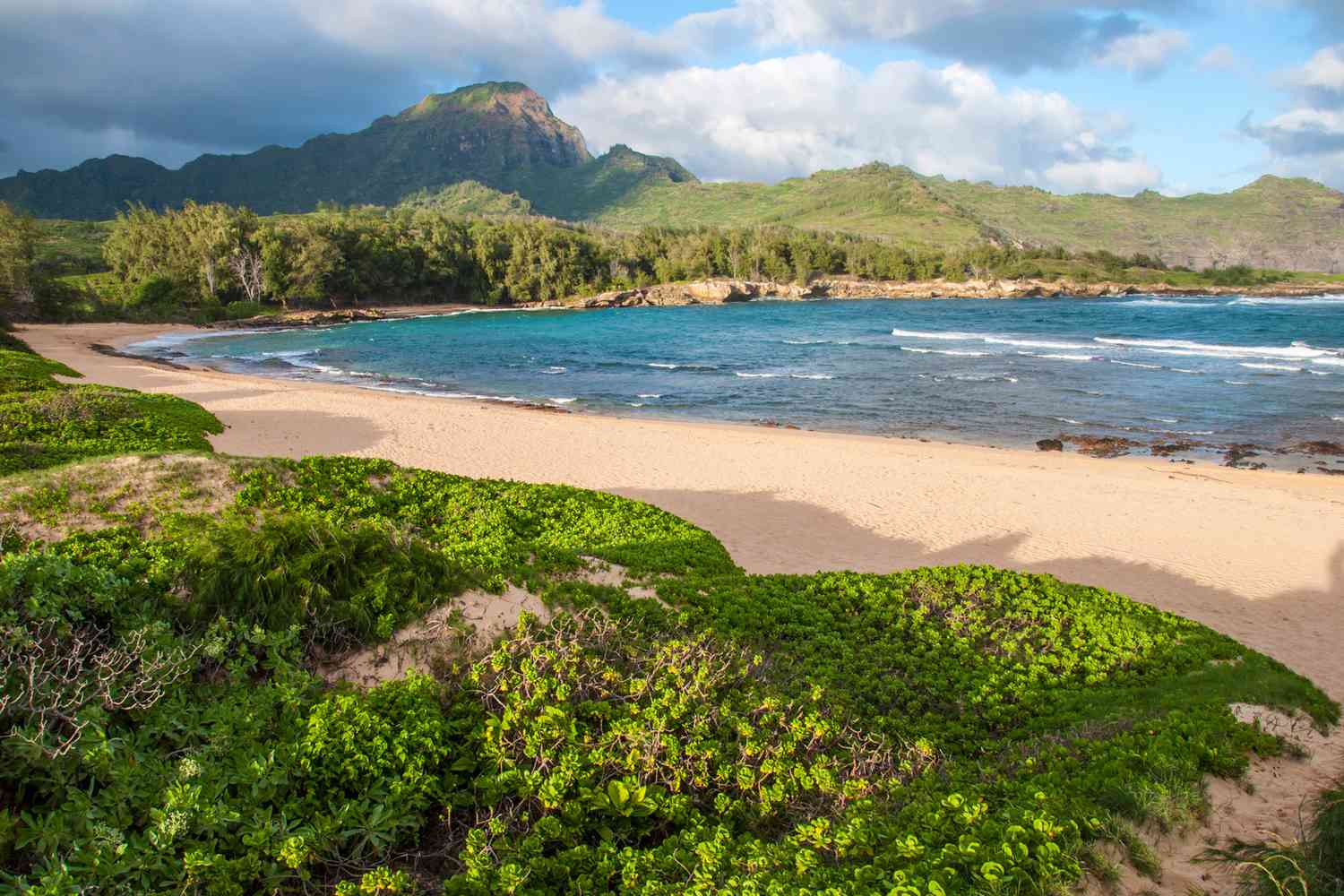
- Discover the tranquil landscapes and cultural richness of Molokai, a Hawaiian island free from large-scale development.
- Visit Upcountry Maui for vibrant farmers markets and breathtaking views of Haleakalā National Park.
- Explore the Windward Coast of Oahu for scenic beaches, trails, and the local delights of Waimānalo town.
You might wonder where Hawaiians vacation, considering they already live in such a desirable tourist destination. Partly because of the state’s location between the U.S. mainland and Asia, many travel to the West Coast, Las Vegas (affectionately nicknamed their “ninth island”), and Japan. But when the time calls for a staycation, their home turf offers ample culture, delicious food, and some of the most incredible nature on the planet.
As a local myself, I often joke that if you get bored in Hawaii, maybe it’s you who is boring. Each island offers something distinct. So, we count ourselves “lucky we live Hawaii,” as the saying goes, and take advantage of the beauty in our own backyards. After speaking to fellow locals, here are seven destinations in Hawaii that I can confirm locals love.
Upcountry Maui
Of all of my travels around the world, a trip I took to Haleakalā National Park more than a decade ago remains one of my fondest memories. I can still vividly recall winding our way to the summit, into the stars. Shivering at the top, we waited in silence; the scene was too serene to ruin even with whispers. As the sun began to break through the darkness, it revealed a sea of cotton-like clouds so surreal I wondered if I was in heaven.
Spanning more than 30,000 acres, the park centers on a dormant volcano that occupies more than three-quarters of the island and stands at 10,023 feet. Haleakalā is home to a number of endangered and endemic species. The name means “House of the Sun” in Hawaiian. The locals know it as the sacred place where ancient kahuna po’o (high priests) meditated and received wisdom.
Upcountry Maui is the rural area on the Haleakalā side of the island. While you’re there, Debbie Nakanelua-Richards, director of community and cultural relations at Hawaiian Airlines, recommends stopping by the Saturday Upcountry Farmers Market in Makawao. Here, you can shop for locally grown and made items, including tropical fruits, honey, grab-and-go meals, clothing, and fresh-cut flowers. For those wanting to immerse their senses in Upcountry Maui’s flora, Grammy-winning Hawaiian musician Kalani Pe’a suggests visiting the Ali’i Kula Lavender farm, where he loves to write music on the lanai or in the gazebo, surrounded by fragrant blossoms.
Windward Coast, Oahu
The roughly 340,000 people who live in Honolulu don’t have to go far to escape the city. The island’s Windward Coast begins at Makapuʻu Point—about a 15-mile drive east of the capital—and extends up to Kahana Bay. With numerous trails and beaches, lava tubes, blowholes, surf breaks, and exquisite coastal scenery, there are endless possibilities for hiking and beach hopping along this eastern shore. You’ll often find families trekking the paved Makapuʻu Point Lighthouse Trail and experienced surfers and bodyboarders at Makapuʻu Beach and Sandy Beach (nicknamed Broke Neck Beach for its treacherous conditions).
Windward Oahu is home to Kailua Beach, popular with windsurfers and kayakers; Lanikai Beach, which has been called one of the world’s most beautiful; and Kualoa Ranch, a 4,000-acre private reserve that Nakanelua-Richards says is a local favorite for zip-lining, horseback riding, and taking in the staggering and storied ‘āina (land). Sherwood Beach is another gem, with gentle waves and views of the Ko’olau mountains.
Kui Wright, a bartender in Waikiki, says Sherwood is his family’s favorite beach. “The sand is soft, the waves are never too big, and the backdrop of the Ko’olau mountains is amazing. It’s right in the middle of a great Hawaiian town called Waimānalo. When we drive home from the beach, there are always people selling some type of local food on the side of the road: shave ice, lau lau (a Hawaiian dish typically made of salted butterfish and pork wrapped in taro leaves), and my favorite, malasadas (Portuguese donuts).”
North Shore, Oahu
Less than an hour from Honolulu is another destination beloved by Hawaii residents and visitors alike: the fabled North Shore. Professional surfers from around the world congregate and compete here. But Koa Rothman, a North Shore native, professional big-wave surfer, and co-founder of The Sunrise Shack, says that while his hometown is known for surf culture, you don’t have to be a surfer to appreciate this place. The seven miles of white-sand beaches are prime for watching the swells and surfers safely from shore, he says. Banzai Pipeline, a surf break off Ehukai Beach Park, is popular for surf contests, and Sunset Beach lives up to its name as a favorite for enjoying sunset views. Waimea Bay Beach Park, the designated location for the Eddie Aikau Big Wave Invitational, is one of the most picturesque spots on the North Shore.
Locals also go to the North Shore to unwind and sink into a slower pace. Nakanelua-Richards says locals love the idyllic rain forest setting and sacred cultural significance of Waimea Valley, home to Oahu’s largest temple: Pu’u o Mahuka Heiau. Go for a picnic, participate in cultural workshops, or take a refreshing dip in the freshwater pool near Waimea Falls on your visit.
South Shore, Kauai
The largely undeveloped island of Kauai is nicknamed the “Garden Island.” Home to one of the wettest spots on earth, Mount Waialeale, this destination receives a good amount of rain. But the South Shore is a slightly drier escape. This sunny swath of Kauai is popular among snorkelers, swimmers, and Poipu Beach resort guests.
Noelani Planas, a Kauai-born chef who has worked at luxury resorts such as Ko’a Kea Resort, says the South Shore has some of the best sunsets. She recommends watching one at Baby Beach, a protected cove just west of Poipu Beach, where you’ll find “calm, ankle-deep waters, perfect for families with babies—hence the name—and small children.” She also suggests the Sunset Wall, a local-favorite spot at Koloa Landing, just down the road from Ko’a Kea Resort. Chef Planas also encourages folks to chase the sun a bit further afield at Salt Pond Beach Park, where a protected lagoon with clear water offers a serene sunset experience.
Of course, there is much more to do and see if you’re on Kauai. The 22-mile Kalalau Trail on the Na Pali Coast is a must for experienced hikers, and a visit to Waimea Canyon, often called the “Grand Canyon of the Pacific,” to admire the striking colors and rock formations is another highlight.
Lanai
Hawaiians looking to reconnect with their land and culture head for—or return home to—the island of Lanai. “It’s one of those places where you can still feel the aloha spirit,” says Lanai Tabura, TV host of Cooking Hawaiian Style and co-host of the “It’s a Hawaii Thing” podcast. “Not only because of its beauty, but because of the people.” Tabura is currently a Honolulu resident, but he and his three brothers were born and raised on the island of Lanai, and they make return trips to visit their mother and community. Although Lanai is the smallest inhabited island in Hawaii, Tabura says it has a lot to offer. His favorite sites include the Lanaihale hike, Maunalei Gulch, Keahiakawelo (aka the Garden of the Gods), and Pu’u Pehe (aka Sweetheart Rock)—named for a tragic mo’olelo (legend).
The island drew ʻĀnela Evans back to her home, too. After being raised on Lanai, Evans spent some time away, but returned to her roots to serve as a cultural practitioner and historian at the Four Seasons Resort Lanai from 2018 to 2022. “When visiting Lanai, it’s as if you’ve taken a step back in time. Life moves at a slower pace. The people have a warmth about them and exude aloha. Archaeological and cultural sites, such as Kaunolu (an ancient fishing village), remain intact and leave you marveling at the skill and tenacity of ancient Hawaiians,” she says. “Lanai is special in every sense of the word. You truly cannot grasp a full sense of what it’s like until stepping foot on the island.”
Hawaii Volcanoes National Park
Taylor McIntyre/Travel + Leisure
The allure of volcanic activity and otherworldly landscapes attracts more than 1.5 million visitors to Hawaii Volcanoes National Park each year. But tourists aren’t the only ones who come here; the 335,259-acre park—and the two active volcanoes in it—hold cultural significance for Hawaiians.
“It’s one of the most fascinating places I’ve experienced,” says filmmaker Vince Keala Lucero. “As a Native Hawaiian and hula practitioner, it’s an area that’s highly sacred. Halema’uma’u Crater is known as the home of Pele, the creator of this ‘āina (land). Over the past decade, it’s been awe-inspiring to feel the steam vents up close, see smoke billowing miles into the sky, and witness her natural fireworks. It’s hard not to see this place as wahi pana (or a sacred space) when you are a participating witness to the terrifying destruction of lava and also the birthing of the newest parts of our planet. For me, that’s a place for aloha ‘āina (love for the land).”
Molokai
Locals seeking simple island pleasures without the high-rise buildings and sprawling resorts love Molokai. This small island (less than 40 miles long and just 10 miles wide) in Maui County has avoided mass development and retained its natural beauty. Here, you’ll find deserted beaches, some of the world’s largest sea cliffs, and Kalaupapa National Historical Park—the site where leprosy patients were once sent into isolation, now a symbol of strength and resilience. A large percentage of Molokai’s approximately 7,400 residents are Native Hawaiian and perpetuate the Hawaiian language, traditions, and stories of this special place.
The Kalaupapa Lookout is a must for visitors to Molokai. “The lookout sits on the edge of a 2,000-foot cliff where you can see the expansive Pacific Ocean with Kalaupapa peninsula sprawled before you,” says Miki’ala Pescaia, a Molokai-born Native Hawaiian cultural practitioner and interpretive park ranger at Kalaupapa National Historical Park. “In the winter, you can catch humpback whales going by, and sometimes hear the sound of their tail slap echo up the cliff. The bird’s-eye view is unique when you read the intriguing story panels there and imagine what life was like before and now.”
Pescaia also loves Papohaku Beach on the west end of the island. “Stretching for three miles, this white-sand beach is never crowded, and sometimes you are the only person there,” she says. “Winter north swells bring treacherous waves, and locals advise against swimming then, but the summers are calmer, and you can catch the last glimpse of sun rays at sunset. A visit to this beach provides a spectacular and humbling experience.”
Read the full article here