


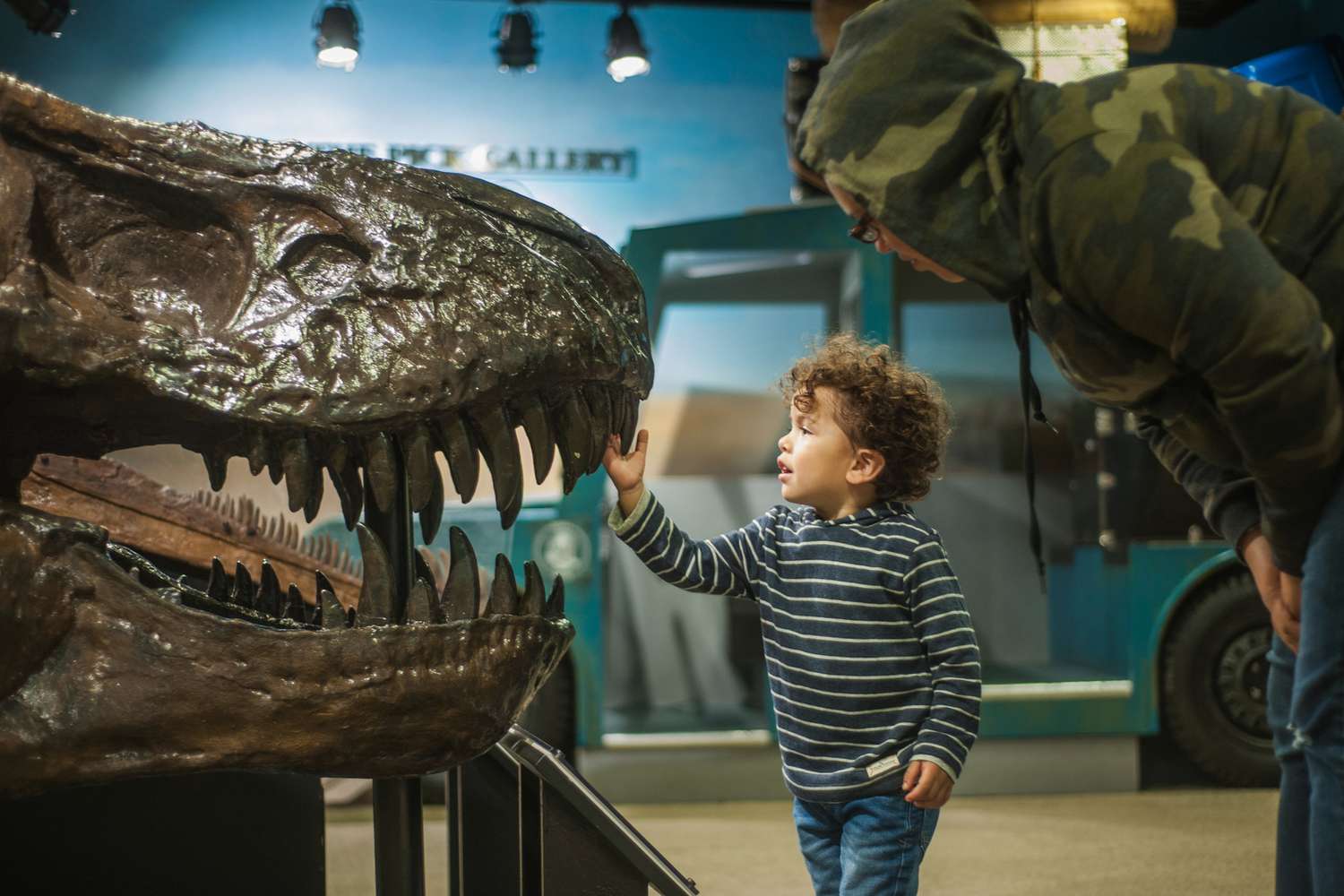
Children’s museums have evolved from rainy-day backups into stand-alone destinations, and the U.S. is home to some of the best in the world.
Size can help—yes, some of these museums are enormous—but it’s far from the deciding factor. What really sets the best children’s museums apart, however, is how intuitive they feel: The focus is on learning through fun as opposed to text-heavy exhibits that tend to fall flat. The institutions mentioned below also follow a clear “show, not tell” approach, and the strongest ones also reflect the character of the city they’re in, rather than sticking to a generic, one-size-fits-all playbook.
From hands-on science and art to imaginative role play and outdoor discovery, the best children’s museums offer something for every child—and often deliver far more enjoyment for the adults than they expected.
Here are the 9 best children’s museums in the U.S.
The Children’s Museum of Indianapolis: Indianapolis, Indiana
Raymond Boyd/Michael Ochs Archives/Getty Images
Spanning 473,000 square feet across five floors, The Children’s Museum of Indianapolis is the world’s largest children’s museum. Its array of exhibits spans science and culture, history, and play. Here, kids can come face to face with real fossils in the Dinosphere, ride the century-old Carousel Wishes and Dreams—a National Historic Landmark—or head outside to the Riley Children’s Health Sports Legends Experience, a 7.5-acre sports and fitness park that opens seasonally.
Boston Children’s Museum: Boston, Massachusetts
Violetta Smirnova/Travel + Leisure
Established in 1913, the Boston Children’s Museum has welcomed countless families over the past 100-plus years. Today, its 88,575 square feet are organized to meet kids where they are developmentally, from PlaySpace, explicitly designed for infants and toddlers, to exhibits like Arthur & Friends, which explore storytelling and social-emotional themes. Elsewhere, young ones can hone their creativity in the art lab, experiment in the STEAM lab, or explore a replica of Fenway Park’s rooftop garden, where produce is grown on site.
The Strong National Museum of Play: Rochester, New York
The Strong National Museum of Play
Located in Rochester, New York, The Strong National Museum of Play spans roughly 150,000 square feet and is designed to appeal to kids and kids-at-heart alike. Not only is the museum home to the National Toy Hall of Fame and the World Video Game Hall of Fame, but it also boasts an expansive, nostalgia-inducing collection of toys, games, and pop-culture artifacts. Plus, families can move easily from exhibits inspired by Sesame Street and The Berenstain Bears to quieter spaces focused on reading and imaginative play.
Please Touch Museum: Philadelphia, Pennsylvania
Please Touch Museum
Philadelphia’s aptly named Please Touch Museum was built with younger children in mind. Designed for kids ages seven and under, its two floors are filled with environments meant to be explored, not observed, such as art studios, water-play areas, and gardens. Though it’s one of the smallest children’s museums, it makes clever use of space with immersive settings such as a child-sized grocery store, hands-on art rooms, and a storybook-style fairytale garden.
The Children’s Museum of the Upstate: Greenville, South Carolina
The Children’s Museum of the Upstate
In downtown Greenville, South Carolina, The Children’s Museum of the Upstate stretches across three floors and roughly 80,000 square feet. Kids can splash at Reedy River Bend, make purchases at a Publix grocery store, explore health and anatomy at Your Healthy Body and its Teddy Bear Clinic, or take on climbing and engineering challenges. Separate spaces for toddlers, along with arts, music, and STEAM offerings, keep the experience flexible for families with kids of different ages.
Exploratorium: San Francisco, California
Ida Tietgen Høyrup for the Exploratorium
The Exploratorium doesn’t operate like a traditional children’s museum, and that’s precisely what makes it so special. Founded in 1969 by physicist Frank Oppenheimer, it functions more like an open-ended learning lab, where visitors are encouraged to test, tinker, and question. More than 600 exhibits examine light and sound, motion, biology, and perception. Art also plays a visible role throughout; installations are directly integrated into the galleries rather than set apart from the science.
Louisiana Children’s Museum: New Orleans, Louisiana
Violetta Smirnova/Travel + Leisure
The Louisiana Children’s Museum spreads out over an 8.5-acre campus inside New Orleans’ City Park. Some exhibits are indoors, others spill outside, and the focus shifts easily from literacy to science to the environment. Follow That Food gets kids on their feet as they trace a meal from farm to table, while Play With Me—complete with a sensory lagoon, felt wall, discovery zone, book nook, and climbing space—is specially designed for children under three. Bubble Studio, where kids climb inside giant bubbles to learn how they’re made, is unsurprisingly among the most popular spots.
Miami Children’s Museum: Miami, Florida
Gustavo Caballero/Getty Images
The Miami Children’s Museum is located on Watson Island, conveniently set between Downtown Miami and Miami Beach. The 56,500-square-foot space includes a kid-run bank, a full-scale cruise ship inspired by the city’s bustling port, and a construction zone designed to make problem-solving fun. Exhibits and programming reflect Miami’s multicultural makeup, with bilingual (English and Spanish) elements throughout. For the youngest visitors, the Castle of Dreams—a two-story sandcastle complete with a winding slide and ambient sound—is a must.
Children’s Museum Houston: Houston, Texas
Truly Compelling Event Photography
With nearly 90,000 square feet, the Children’s Museum Houston is devoted to exhibits that encourage movement, experimentation, and, of course, good ol’ fashioned fun through hands-on play. Flow Works, the Secret Spy Game, and Exploration Zones all draw repeat visits among older kids, while Tot Spot gives younger children their own space. Founded in 1980, the museum has picked up national recognition over the years, including the National Medal for Museum and Library Service; however, it’s the energy and camaraderie on the floor that keep guests of all ages coming back for more.
Read the full article here