


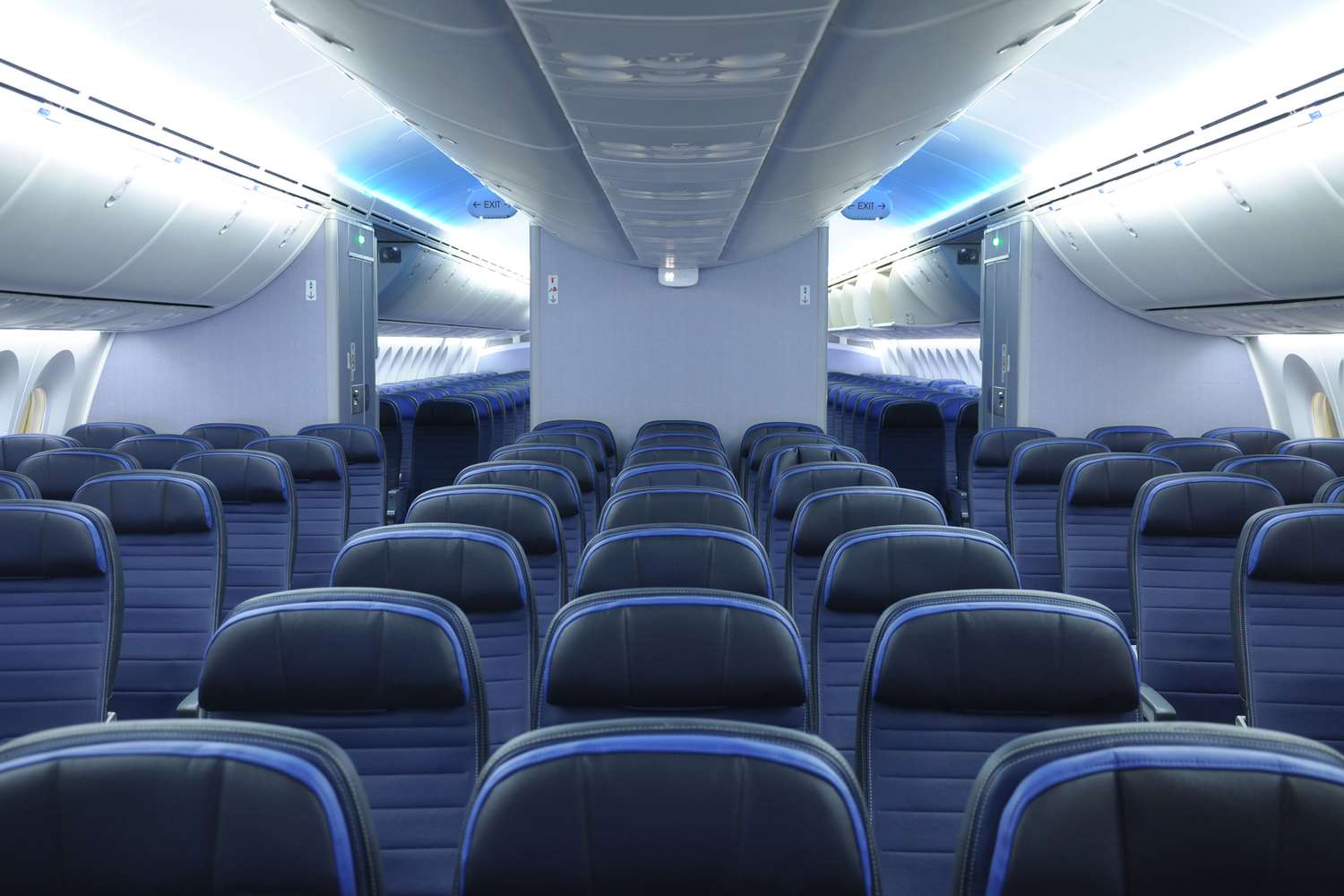
Sleeping on a plane is a challenge for most and a near-impossibility for many. There are plenty of tips and products out there, but few insights are as valuable as those from a flight attendant who has watched millions of travelers sleep (or not sleep) on long-haul overnight flights.
Thankfully, an experienced Virgin Atlantic flight attendant teamed up with U.K. travel insurance company AllClear Travel Insurance to share insights with Travel + Leisure on where to sit to get decent sleep on long-haul flights. And from avoiding turbulence to the perfect row to pick to promote sleep, these tips will help travelers get some shut eye so they arrive feeling fresh and ready to go.
Pick a seat over the wings.
If you value a smooth ride, the flight attendant recommended picking a seat over the wings since you’ll feel the turbulence less. If those seats are booked, the next best bet is a seat closer to the front of the aircraft.
“Being closest to the aircraft’s centre of gravity, you tend to feel less movement and vibration compared with seats further back,” the flight attendant said in a statement shared with T+L, adding, “Sitting over the wing is often one of the smoother spots on the plane.”
She added: “the further forward you sit on the aircraft, the less you’ll feel the impact of [turbulence].”
The exit row isn’t always your best bet.
A seat in the emergency exit row is often considered a win thanks to the extra legroom, but the crew member warned those seats can actually get colder and attract more foot traffic with passengers waiting to use the toilets.
“On some older aircraft, it can get quite chilly near the emergency exit rows,” she said. “I’d usually avoid these seats if you’re sensitive to the cold.”
She added those seats tend to be “a bit of a trade-off between space and potential noise.”
The middle is your friend.
The ideal spot for long-haul economy travelers, according to the flight attendant, is either five rows from the front of the economy cabin or five rows from the back. These rows tend to be quieter because they’re far enough away from people congregating by the bathrooms, galleys, bulkheads, and emergency exits.
“Crew work front to back simultaneously, or two carts from the front of economy to the back. So, five seats from the front is best as you’ll get your first meal choice,” she said. “It’s also closer to the front for turbulence… and being closer at the front means you’ll get off quicker.”
Plan, plan, plan.
The best way to make sure you arrive feeling rested and refreshed is to have a plan, and execute it. That means avoiding heavy meals before sleep, packing ear plugs and an eye mask, and matching your normal sleep duration (oversleeping can leave you feeling groggy).
“On long red-eye flights, don’t hesitate to ask the crew for a spare blanket so you can get really cosy,” the flight attendant said. “You’d be surprised at how many passengers snore, it’s nothing anyone can help, but earplugs are a lifesaver for blocking out the sound.”
Read the full article here