


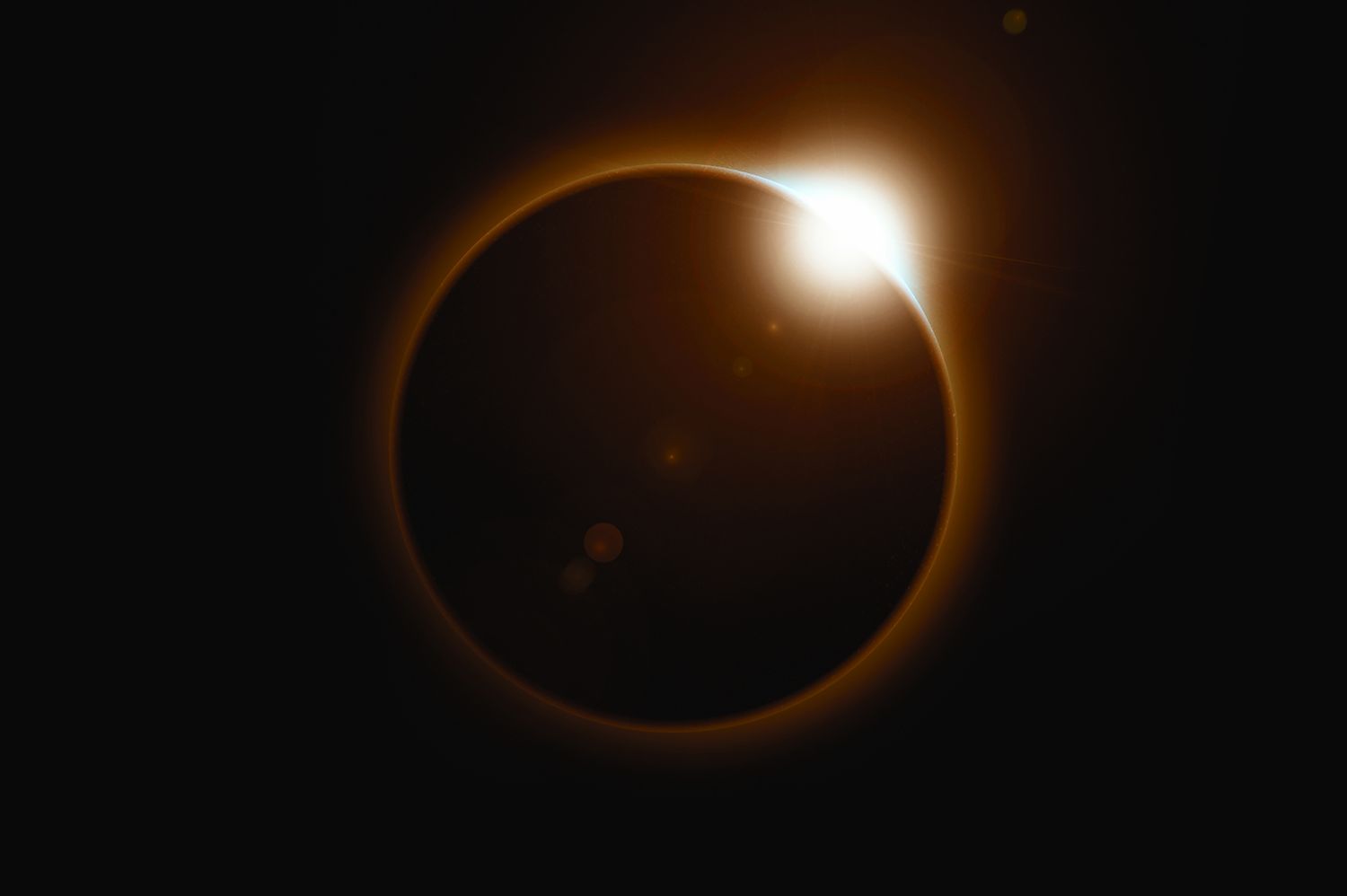
There’s never been a better time to be an eclipse chaser.
The new year marks the beginning of a spectacular streak for the astronomical phenomenon, which will be longer-lasting and better positioned than ever before. Sky-watchers will be treated to annual total solar eclipses in 2026, 2027, and 2028, one of which is being dubbed “the eclipse of the century” for its transcendent qualities.
According to Space.com, the last time Earth experienced such a concentration in total solar eclipses was in 2008 to 2010, making the upcoming streak the most exciting stretch in over 15 years. Not only that, but the ever-important paths of totality will include travel hotspots, making these some of the most accessible and enchanting eclipses of our lifetime.
Aug. 12, 2026 is the first major date to have on your calendar. The total solar eclipse’s path of totality will touch Siberia, eastern Greenland, western Iceland, northern Spain, and parts of the eastern Mediterranean Sea. It’ll be the first total solar eclipse visible from mainland Europe since 1999.
With much of the 2026 path of totality crossing oceans and seas, cruise lines are planning extraordinary voyages to deliver passengers to prime viewing points. In Iceland—home to the longest stretch of totality—the eclipse will last just over two magical minutes. Travelers to this awe-inspiring destination can add the rare celestial display to their list of must-see natural wonders.
But the real once-in-a-lifetime eclipse event happens a year later on Aug. 2, 2027. On that date, a total solar eclipse will last for a whopping six minutes in a path of totality spanning the Middle East, North Africa, and southern Spain. It’ll be the longest total eclipse visible from land since 1991 and until 2114.
Since the totality is gracing Libya and Egypt, clear skies are almost guaranteed for the astounding event—a welcome piece of news for anyone who remembers the clouds that spoiled visibility in parts of North America during the 2024 eclipse. Adding to the enchantment, the path of totality passes over Luxor, Egypt, home to some of the world’s greatest ancient treasures. Experiencing the Valley of the Kings, the Avenue of Sphinxes, and the Colossi of Memnon beneath a spellbinding ring of light promises to be one of the most sublime journeys imaginable.
The 2027 eclipse is also another chance to experience the wondrous solar phenomenon from the water, with cruise operators like Holland America Line planning to anchor off the coast of North Africa for the occasion.
Finally, on July 22, 2028, another solar eclipse will cut across Australia and New Zealand, making totality visible from Sydney for the first time since 1857. It’s another epic cloud-free viewing opportunity with clear skies highly likely in remote parts of Australia, where totality is expected to last for over five minutes. Travelers who want to witness the eclipse in the only certified International Dark Sky Sanctuary in the path of totality can head to Tāhuna Glenorchy on New Zealand’s South Island.
In addition to the trio of total solar eclipses, 2026 to 2028 will bring three annular, or “ring of fire,” solar eclipses. The first one arrives on Feb. 17 but will only be visible in remote parts of Antarctica, while the blazing ring will grace parts of South America and West Africa a year later in Feb. 2027. In Jan. 2028, the final of the threesome will cross the Galápagos Islands, mainland Ecuador, Peru, Brazil, Suriname, French Guiana, Morocco, Portugal, and Spain.
Read the full article here