


We crossed the Monti Lattari, a limestone mountain range that separates Naples from the Amalfi Coast. The road rose away from the city through dark hills before plunging toward the sea. Below, the Bay of Naples lay in moonlight, broken by the outline of the port and the glow of the shoreline.
On the final turn, Atrani appeared through a rock tunnel, its bridge illuminated against the purple night, houses cascading toward the Tyrrhenian Sea. Beneath the bridge, a narrow opening led to 80 whitewashed steps and winding passages to the lobby of our hotel, where the receptionist was waiting with a clunky key. “You travel light,” he said, smiling.
Vic O’Sullivan/Travel + Leisure
The morning bells from Santa Maria Maddalena woke us early, and from the balcony, we admired the tiled roofs that ascended the cliffside. Below, the sea swelled gently against the empty beach. A single car crossed the bridge. Breakfast was beneath the shade of a lime tree, and later, over dinner in the town’s compact piazza, our waiter pointed out various corners that had doubled as scene locations in a television series called Ripley. A subterranean tunnel became a post office, and even the church facade made a guest appearance. He had been offered work as an extra, he told us with pride, but chose instead to labor on the set design during the offseason lull.
Years earlier, we had traveled through Italy in peak season with our three small children. This time, our youngest son had just graduated from college, and we brought him with us for a trip marked by transition, another season nearing its end with a new one set to begin. This trip was low-key, and our plans were fluid. We left the village occasionally, walking through the underground tunnel that links Atrani to Amalfi. On the other side, the boat queues were seasonally short, so we sailed up the coast to Positano and climbed the steep streets without any crowds.
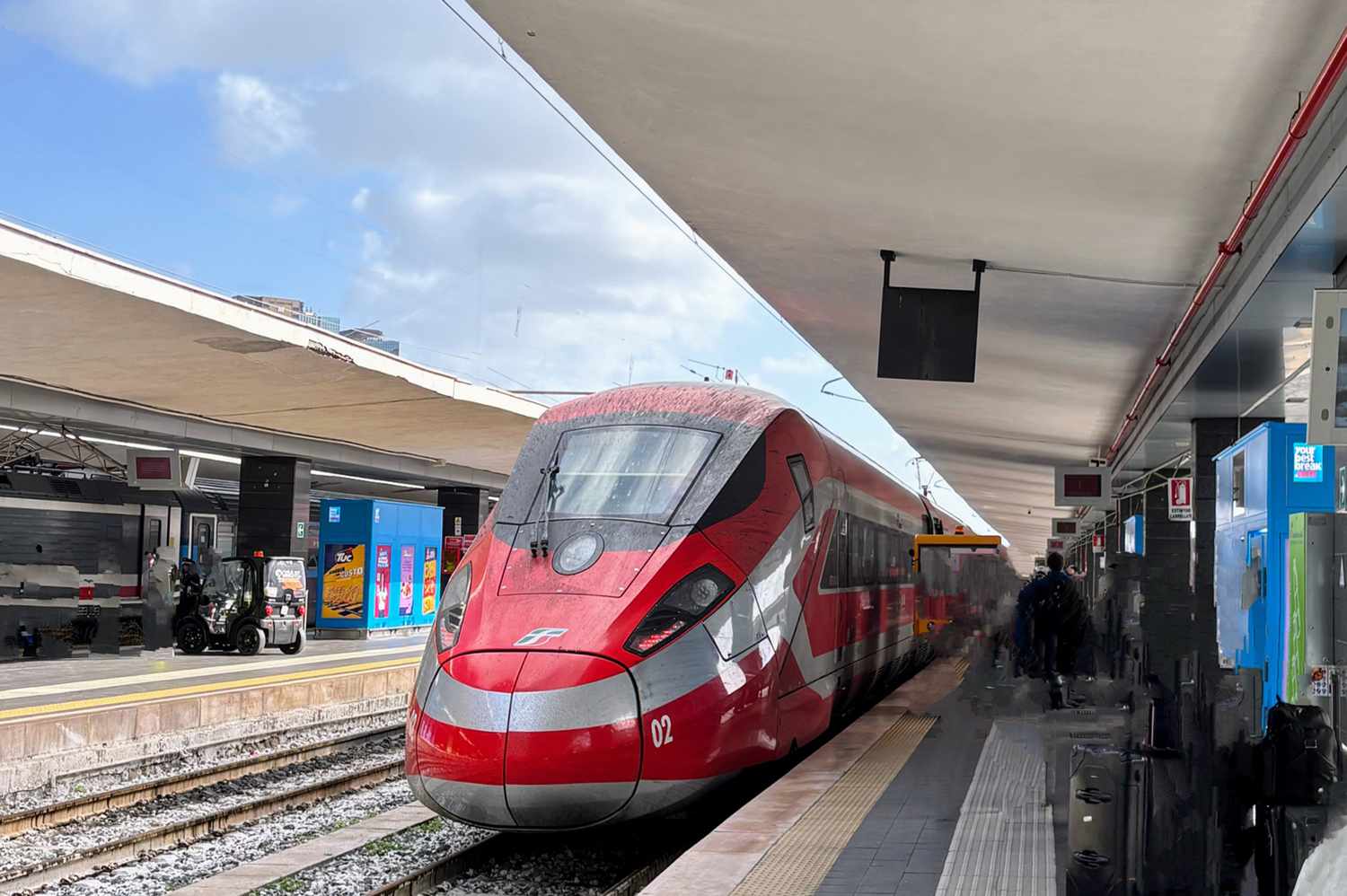
Naples station marked the start of our journey north. The train pulled out slowly, passing freight yards, flyovers, and low-rise housing lining the tracks. Fields soon replaced the graffiti and urban sprawl, stretching in rectangles of straw-gold and damp green. Hedgerows cut dark borders in vineyards while umbrella pines appeared on the horizon, needle sharp against the pale sky.
Vineyards gave way to suburbs with terra-cotta rooftops as we pulled slowly into the outskirts of Florence. North of the city, the air cooled. Passengers swapped T-shirts with sweaters as the train gathered speed, and the plains around Bologna flitted by the window. Then, the pastures plateaued into farmland, with only a tractor or lone farmer breaking the flatness of the setting. Families arrived at one station with exquisitely packed meals and departed at another with empty containers. We stopped by the cafe on board, where two men in yellow jackets made cappuccinos for us.
Vic O’Sullivan/Travel + Leisure
As the train moved from Venice to Mestre, the setting changed dramatically. We crossed the Venetian Lagoon, water spreading out on both sides in shades of navy and white. Venice appeared to rise directly from the surface as we approached, with its stone and brick buildings set low against the horizon, broken by a dome or palace tower.
At Santa Lucia station, we stepped across the Ponte degli Scalzi, the Grand Canal churning below with water traffic. People jostled across the steps as porters maneuvered carts and tourists paused for photos. Waiting at the quay were water taxis for hotel guests. Vaporettos filled up quickly, so we pulled our small cases across the uneven paving to the bridge to walk. From there, the streets narrowed, and our footsteps echoed as we moved south toward Dorsoduro along the lanes that bordered canals, where the district’s elevated setting offered snap views of the other five neighborhoods.
Light reflected off the water onto the pale walls of shops and homes. Delivery boats idled with engines cut. Our hotel, Sina Centurion Palace, sat just off a small square, edged by a quirky shop and a tiny garden. A tranquil courtyard led to the reception, where the building opened onto a panoramic view across the lagoon toward San Marco.
By early evening, the working day was winding down, except for a lone gondolier waiting for a fare by the magnificent whitewashed church of Santa Maria della Salute. We backtracked to Ponte dei Pugni, where small clusters had gathered outside Osteria Ai Pugni, wearing scarves and light jackets. We commandeered a table across from the bar. Outside, darkness settled, the light from the window reflecting off the canal as the crowd gathered on the quay and bridge. Below the low timbered ceiling, the space captured the chatter from a few dozen customers. Cicchetti, fried mozzarella sandwiches, polpette, and fresh, salty fish dishes passed across the bar while glasses of local wine, Aperol spritz, and beer moved rapidly between staff and customers.
We spent the following days threading through the near-empty piazzas and bridges that stretch from Santa Maria della Salute to the Gallerie dell’Accademia. Occasionally, we crossed the Ponte dell’Accademia to do the predictable in San Marco. Instagrammable gelato at Suso and Bellinis at Harry’s Bar, the latter with its polished wood and service, before we slipped into a hushed San Marco square. The bells rang across the piazza, echoing over damp pavements, mosaics washed in late afternoon light, an earlier rain mirroring the Doge’s Palace against the marble surface.
Vic O’Sullivan/Travel + Leisure
Dorsoduro’s lights beckoned to us from across the lagoon every evening. Dinner at Casin dei Nobili brought the experience of a family-run kitchen, with spaghetti alle vongole and gnocchi agli scampi on offer. We caught a glimpse of Al Vecio Marangon’s red canopy through a dimly lit, narrow alley, arriving late after Google sent us on a detour through lesser-seen canals and piazzas near the Ponte dell’Accademia. Inside the restaurant, even in this offseason, the small space was full; a few dined alfresco, unbothered by the crisp evening air. The head waiter freed a table and guided us through the menu, offering recommendations and dry, quirky humor: “Better late than never,” he said. We settled in as conversation turned to post-college plans, blending with the room’s relaxed timbre.
Our evenings often ended outside the Corner Pub, by the galleries that stretched along the canal as far as the walled garden of the Peggy Guggenheim Collection. Locals, aircrew, and students gathered by the dim lantern light, conversations curling around to the small bridge, where the subdued offseason rhythm was almost visible in the slow flow of the river below.
On our final morning, we took a water taxi to the airport. A porter helped with our cases, steady and efficient. Water slapped against the jetty as we jumped on board. The porter’s footsteps echoed back into the marbled lobby, and then even the tapping dissipated into the air or the sound of the boat’s engine. It seemed like one season had given way to another, just like our son’s graduation marked a fork in the road for him, while our own journey continued ahead of us, as the city’s lights across the lagoon receded behind us.
Read the full article here