


Top 5 Can’t Miss
- Admire the park’s famous arches on a scenic drive or hike.
- Take advantage of the exceptionally dark skies and spend a night stargazing.
- Stay at Ulum Moab for the ultimate glamping experience.
- Visit during the spring or fall for pleasant weather and fewer crowds.
- Consider visiting another of Utah’s “Mighty Five” national parks for a nature-packed road trip.
Within minutes of passing the entrance gates, I knew the rumors were true. Arches is, hands down, one of the country’s most striking national parks, and the beauty only intensifies with each mile logged on the otherworldly Arches Scenic Drive.
Arches National Park, a 76,000-acre swath of desert stuffed with thousands of natural sandstone sculptures, lies minutes from adventure base camp Moab. It’s a fan favorite in Utah’s “Mighty Five” lineup of national parks, drawing around 1.5 million visitors per year with hiking, biking, climbing, canyoneering, and horseback riding.
Yet even casual, low-adrenaline Arches visits can leave you spellbound. “The magic of Arches is in slowing down and soaking in the desert scenery,” says Harry Bradley, general manager for nearby glamping resort Ulum Moab. Case in point? My favorite memory at Arches involved lounging beneath the sandstone and gazing at the stars.
Whether you’re chasing action, awe, or a bit of both, here’s how to plan the perfect trip to Arches National Park.
How to Get There
Pierre Longnus / Getty Images
Moab, located in southeastern Utah, is the gateway to Arches National Park. The park sits five miles north of the beloved small town, with a well-marked entrance off Highway 191. To reach Moab, you can either fly straight into the town’s Canyonlands Field Airport (CNY) or fly into Salt Lake City and drive roughly 230 miles southeast.
Renting a car provides the most flexibility and accessibility; there are no shuttles through the park. If you’d rather not drive, consider renting a bike or e-bike or booking a tour with a local outfitter.
The park pairs well with a trip to another Mighty Five destination, Canyonlands National Park, which is located just 26 miles to the west.
Know Before You Go
David Gregg / Getty Images
Arches is open 24 hours a day, seven days a week, but it gets especially crowded between March and October. To deal with less traffic and have better chances of finding parking, the National Park Service (NPS) recommends arriving early in the day—before 8 a.m. at least—or after 3 p.m. in the afternoon.
Also, prepare for the dry heat. It’s important to consume water regularly; NPS suggests packing salty snacks to help retain water, too.
Know that summer into fall is wildfire season in southern Utah; while the fires are typically localized, it’s important to take extra fire-prevention measures during this period to help protect the area.
Best Time to Visit
VisualCommunications / Getty Images
Arches sees peak visitation between March and late October. Summer can climb above 100 degrees Fahrenheit during midday. If you’re visiting in July and August, aim to adventure around sunrise and sunset—or even at night, when rangers lead stargazing tours.
Milder temperatures make spring and autumn especially alluring. “Fall is a time when cooler temperatures roll in and the crowds thin out, creating the perfect setting for a quieter, more intimate experience,” says Bradley. “It’s truly one of the best times to explore, unwind, and enjoy the landscape without the usual bustle.”
Winter gets chilly here, with highs between 30 and 50 degrees Fahrenheit. The park welcomes fewer visitors and offers reduced services (meaning no ranger programs), but winter does provide the chance to enjoy Arches without the crowds. The only hurdle: You’ll have to be flexible. Ice can pose risks on the trails, and heavy snowfall may temporarily close park roads.
Best Things to Do
Michael Ryno / Getty Images
Hike beneath arches.
Hiking gets you close to the sandstone, and Arches offers more than 40 routes to admire the geological wonders. Many easy and moderate hikes lead you beneath the arches and beside the towering fins. Alternatively, experienced hikers can trek even further on a multiday backpacking trip (permit required), although you’ll need to be prepared with plenty of food and water given the backcountry’s lack of resources.
Stargaze.
Arches is an International Dark Sky Park, certified by nonprofit organization DarkSky, which means you’re guaranteed to find inky skies and, weather permitting, a blanket of stars. I planned my trip around those summer nightscapes, and the skies were even more star-studded than I’d imagined. You can enjoy the cosmos all over the park, but I recommend heading to a viewpoint like Double Arch to watch stars, galaxies, and planets shimmer above the ancient sandstone.
Take a scenic drive.
I didn’t expect the 18-mile scenic drive to be a highlight of my Arches visit, but this road packs a major punch. The paved route winds by many park highlights, including Balanced Rock, Sand Dune Arch, and the Great Wall. Detours also lead to Delicate Arch and The Windows Section. You can peruse the road’s major attractions in around two to three hours, but allocate more time if you want to stretch your legs on the trails.
Bike around the sandstone.
To get your heart pumping, try sightseeing on two wheels. All paved and unpaved roads in Arches are open for bicycles and e-bikes. Bike rentals are available nearby in Moab via outfitters like Bike Fiend. While the park doesn’t offer mountain biking, you can get your off-road fill with Moab’s myriad canyon and mesa trails.
Try canyoneering.
Canyoneering through the crag gets you well off the beaten path. You can try it on your own with a permit or on a ranger-led Fiery Furnace tour. If you’re craving more canyoneering, book a trip with an outfitter like Moab Adventure Center. They lead jaunts just outside the park to test your rappelling and rock-climbing skills in a scenic but safe environment.
Plan a picnic.
While it’s tempting to try every Arches adventure, Bradley suggests taking time to unwind among the red rocks, too. “Pack a lunch and enjoy a picnic in the Devils Garden area,” he says. “It’s one of the most picturesque spots to unwind and soak up the desert beauty.”
Best Hikes
Peter Unger / Getty Images
Delicate Arch
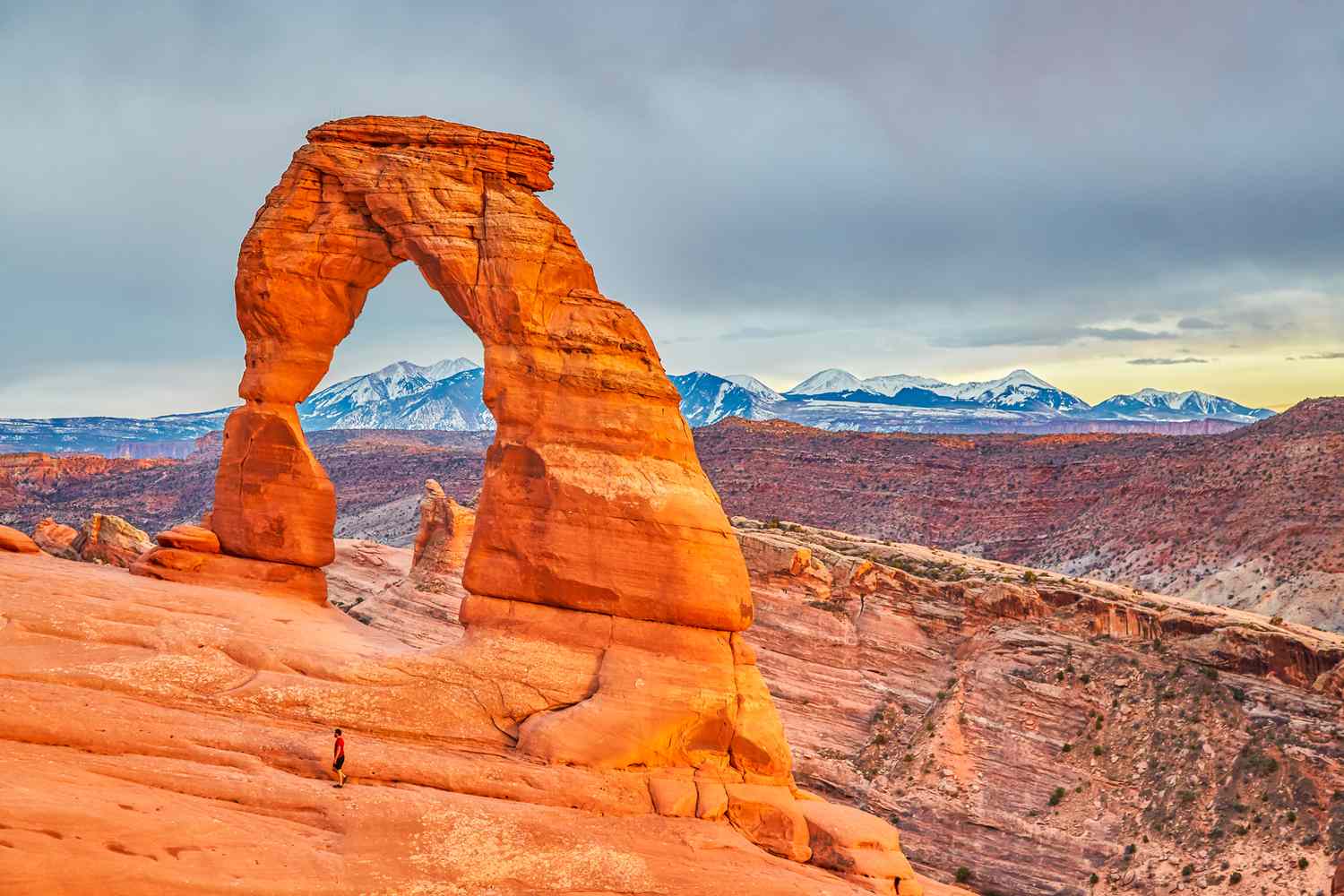
“Delicate Arch is the park’s most iconic hike,” says Bradley, noting it’s particularly impressive at sunrise. You’ll saunter three miles round-trip, gaining about 530 feet of elevation, to get close to this 46-foot-tall showstopper. For another glimpse, try the easily reachable Lower and Upper Delicate Arch viewpoints; the latter provides better visibility, but does require climbing stairs.
Devils Garden
Arches, fins, and spires decorate the park’s beloved Devils Garden, which is around 45 minutes north of the park’s visitor center. Explore this rocky wonderland via the relatively flat, 1.8-mile round-trip trail to Landscape Arch. The four-mile round-trip amble to dramatic Double O Arch offers more of a challenge, with steep hiking, scrambling, and climbing.
The Windows
About two-thirds of the way up the park’s scenic drive, you’ll find the arch-packed Windows Section. Hike the roughly one-mile loop from the parking lot to the North and South Window for views across the Colorado Plateau. Or, head across Windows Road to the half-mile Double Arch Trail to relax beneath the enormous erosion-carved rocks.
Places to Stay
Devils Garden Campground
While accommodation options abound in Moab, there’s nothing like sleeping among the park’s surreal sandstone formations. You can experience that at the 51-site Devils Garden Campground, the only camping option within the park proper. Reservations are required from March 1 through Oct. 31, and it usually fills up each night. Outside of those months, the campground is first-come, first-served.
Ulum Moab
On the opposite side of the accommodation spectrum, you have upscale Ulum Moab. This luxury retreat, located 25 minutes south of Moab, offers 50 upscale safari tents and fine dining (don’t sleep on the canyon graze board with prickly pear jam). The property also hosts complimentary on-site experiences like sunrise yoga, sound baths, and s’mores. And, with the adjacent Looking Glass Arch, Ulum guests can enjoy even more sandstone sauntering within steps of camp.
Slackline Moab, Outset Collection by Hilton
Less than a 10-minute drive from the Arches National Park entrance, Slackline Moab is a convenient base camp for desert adventures. The 138-room hideaway offers a stocked equipment shop, a coffee bar and kitchen, on-site guides, and dog-friendly accommodations. The digs range from king rooms to spots for camper vans and RVs (20-feet-long max). Equipped with 120-volt power hookups, the latter give you access to the property’s facilities, including the outdoor pool.
Places to Eat
rafalkrakow / Getty Images
98 Center Moab
Enjoy Vietnamese fusion at 98 Center, a locally loved hangout on Moab’s Center Street. The restaurant serves everything from banh mi nachos to beef, chicken, or vegan cheesesteaks, with local kombucha on tap.
Moab Diner
Get your fill of comfort food at the laid-back Moab Diner, right on Main Street. This timeless haunt delivers classic diner staples like pancake stacks and biscuits and gravy. Try the green chili omelet for a taste of the region’s renowned pepper.
Moab Coffee Roaster
Fuel up with piping coffee and savory breakfast bites at Moab Coffee Roasters, another Main Street favorite. The shop roasts its beans on-site daily and serves up refreshing treats like smoothies, juices, ice cream, and gelato. For the ultimate post-hike celebration, stop in for an affogato.
Read the full article here