


Wandering the streets of East London, I marveled at my favorite neighborhood, trying food from as many stands as I could at Spitalfields Market. I admired the variety of cuisines, taking photos to reminisce on later.
I had traveled solo to London, taking the Eurostar from Gare du Nord, only a 20-minute walk from my home near Pigalle in the 9th arrondissement of Paris. This solo getaway wasn’t meant to be a wild single woman’s weekend; it was the weekend before I would be forever changed.
The Life-changing News
Robin Allison Davis
“What I’m recommending is a single mastectomy with immediate reconstruction, and we should do it as soon as possible,” my doctor said. When I heard those words in his office in the Parisian suburb of Neuilly-sur-Seine, something inside me broke. This was not the life I was supposed to be living as an American expat. I had moved to Paris from New York City determined to change my life. Instead, less than two years into my new adventure, I was diagnosed with breast cancer at the age of 34. After I returned from my weekend trip to London, I would undergo a mastectomy in my new adopted home.
I had always been a woman who took risks and faced challenges head-on. I traveled frequently, camping overnight in the Sahara desert, climbing the Great Wall of China, and dodging persistent vendors in Istanbul’s Grand Bazaar. I traveled for work, often escaping hairy situations with quick thinking on my feet. Even moving to France was risky—I had quit my high-profile career, relocated without a job or apartment lined up, and knew minimal French. I wasn’t fearful; when I traveled, I felt strong, capable, almost invincible. As cliché as it sounds, I was a strong Black woman, and it was a part of my identity.
Now, diagnosed with breast cancer, I felt weak and rudderless. I lost agency over my body at the same time as losing my identity.
The Emotional Undertones of My Trip
Robin Allison Davis
That trip to London prior to surgery felt like my last chance to live it up—and my last weekend to be a woman with two breasts, not marked by breast cancer. I traveled to recenter myself and prepare for one of the biggest moments in my life.
With this trip, solo travel was my way to cope with grief. I traveled to London to mourn the impending loss of my breast, my sense of self, my femininity, and my identity. Being a nameless, faceless girl in a city full of strangers gave me the space to process my feelings—feelings I believed no one I knew could understand.
At the same time as offering anonymity, being in London provided some familiar comfort. It felt almost like being home in the U.S.—the language barrier was nonexistent, and the city buzzed with an energy I recognized. I was determined to enjoy myself, get lost in the city, and do everything possible to push my diagnosis and upcoming mastectomy out of my mind.
I talked to strangers just because I could—no need to be anxious over my accent or grammatical mistakes—and I took delight in the simplest pleasures: stopping at bookstores for hours; taking the Tube to South London to enjoy the Jamaican food I had missed so much in Paris and gorging myself at an outdoor table at Fish, Wings & Tings, the small Jamaican restaurant in Brixton Village. When the steaming plate of jerk chicken arrived, I almost cried over the spices, flavors, and atmosphere. I was in heaven. Afterward, I visited nearly every stall in the market—a mix of clothing, Colombian food, West African home goods, and artisanal crafts—touching the fabrics and chatting with shop owners.
The Power of Solo Travel
Robin Allison Davis
Travel, especially solo travel, has always rejuvenated me. After a hectic week of apartment hunting and landing a minuscule place in Saint-Germain-des-Prés when I first moved to Paris, I booked the cheapest trip I could find to decompress—“une petite pause,” as the French say—and off to Brussels I went. I stayed in a hotel in the Saint-Gilles neighborhood, exploring the city on foot and eating frites (fries) as often as I could. I ended up returning to Brussels, to that little hotel in Saint-Gilles, several times when life felt overwhelming and I needed a reset.
In 2020, in the middle of a pandemic and less than two years after my mastectomy and being declared cancer-free, I found myself again in Neuilly-sur-Seine at the American Hospital diagnosed with a breast cancer recurrence. Like the first time, my doctors wanted to start treatment quickly—to begin chemo less than one month after diagnosis.
I was facing a whirlwind of injections, procedures, and several rounds of harsh drugs. It was time for another trip, but with the borders closed, London and Brussels were off the table. This time, I went to the south of France.
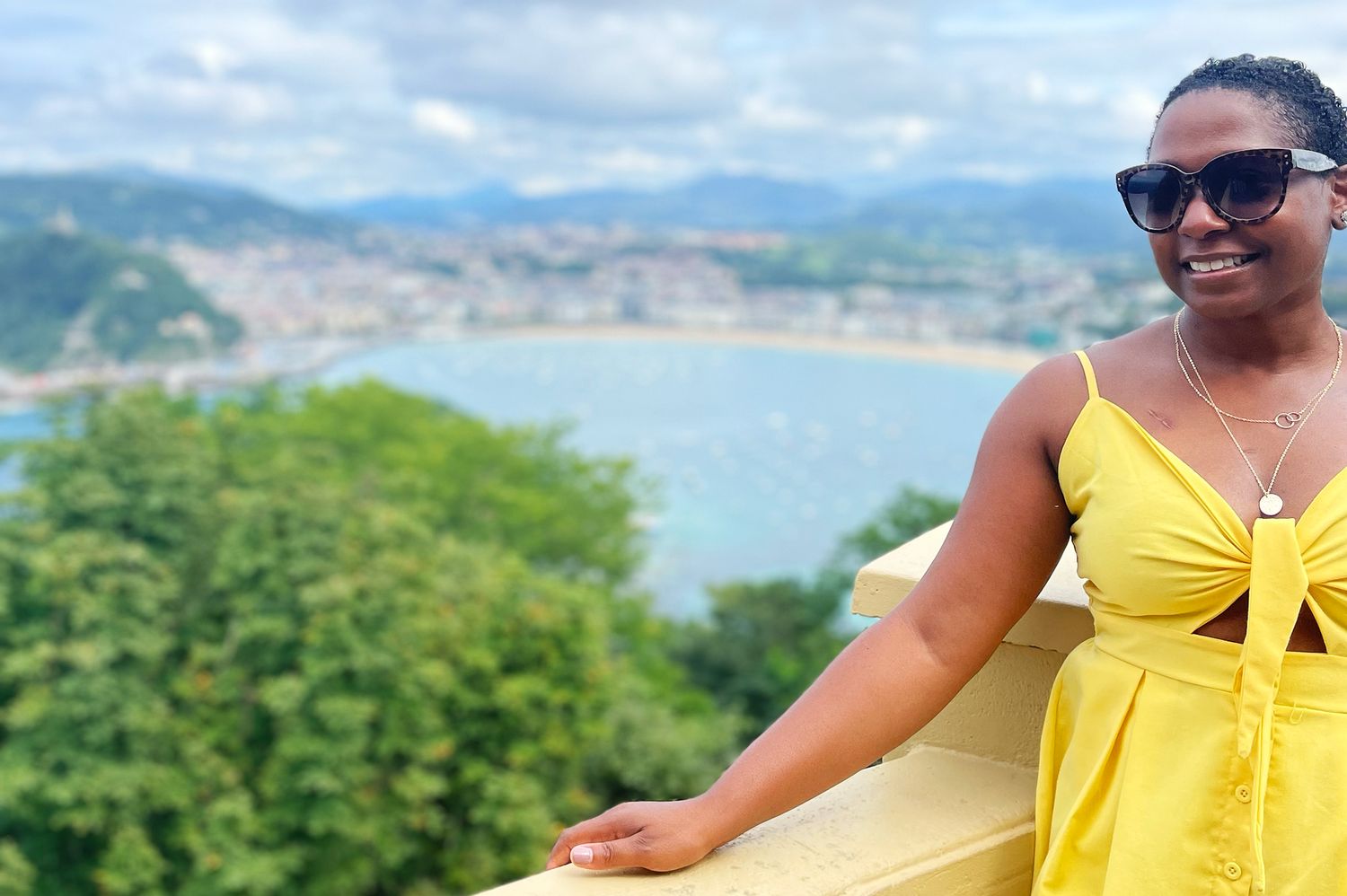
To strangers, it might have looked like I was on an “Eat, Pray, Love” journey, strolling through Montpellier, Sète, and Aix-en-Provence, journal in hand, and eating alone with a glass of wine. I scribbled notes in my journal and people-watched, soaking in as much scenery as I could, unsure whether I would survive this second round of cancer and ever see these landscapes again.
I was awash with grief and used those quiet moments to recenter. Recenter, but also to distract myself. It was easier to think about what activity to do next or where to eat than face the tough road ahead. I was the strong traveler again. The distraction worked until, during my last night in Aix-en-Provence, I went to the pharmacy to pick up a prescription for the long road of treatment ahead.
Solo travel helped me reclaim my joy during the darkest times in my life. It gave me the chance to be completely selfish: I did what I wanted, when I wanted, how I wanted. It gave me back the control over my life I had lost during my medical struggles and desperately needed again.
Now, nearly five years cancer-free, I realize the identity I thought I had lost—the woman who takes risks and faces challenges head-on—was there all along. My life looks different, but whether or not I travel, whether or not I have breast cancer, everything I needed was within me the entire time.
Read the full article here