


Top 5 Can’t Miss
- Stay at Nannai, where ocean-facing bungalows make for the island’s most romantic retreat.
- Spend a day at Baía do Sancho, often ranked the world’s best beach for its turquoise water, abundant marine life, and adventurous cliffside access.
- Book a Hawaiian outrigger canoe trip at sunrise to watch dolphins.
- Divers and snorkelers can enjoy crisp visibility and encounter reef sharks, sea turtles, rays, and more at one of the top dive destinations in Brazil.
- Experience Brazil’s seafood-rich northeastern cuisine, like the signature lobster stew at Cacimba.
For years, limited flights, visitor caps, and steep environmental fees kept Fernando de Noronha notoriously difficult to access, especially for international travelers. This kept the remote Brazilian archipelago wild and rugged, its volcanic cliffs and crystalline waters luring mostly domestic travelers in search of Brazil’s most pristine beaches.
But now a new direct LATAM flight from São Paulo, Brazil’s main travel hub, makes it easier for foreign visitors to fly in. Add to that a major airport renovation that increases visitor capacity, and the time to go is now, before everyone else arrives.
Ranked among the most beautiful places in the world, it’s tough to pinpoint why, exactly, Fernando de Noronha has remained off the tourist radar. A look at its complex history offers a hint: Claimed by the Portuguese in the early 1500s, it was later fought over for its strategic location in the South Atlantic, turned into a prison colony in the 18th century, and used as a U.S. air base during World War II. It wasn’t until 1988 that Noronha embraced its current identity as a biodiverse habitat, when most of the archipelago was designated a Marine National Park, which resulted in the strict visitor limits and conservation fees in place today.
Today, exclusive resorts and splashy New Year’s celebrations often frame the island as a playground for Brazilian celebrities. Yet for locals born and raised there—those who can identify a shark species by its shadow on the shoreline—it remains a living sanctuary, home to green sea turtles, spinner dolphins, and countless other protected species.
“Many people see Noronha as a status symbol,” Luiz Guilherme, who runs Descobrindo Noronha, a tour company, tells Travel + Leisure. “Our idea is to show the true essence of the island. It’s a UNESCO World Heritage site, and some people don’t fully understand what that means, nor do they know the importance of conservation.”
As the island opens up, Guilherme hopes visitors will go there to seek more than just an Instagram photo—and leave with a deeper understanding of the island and why it’s worth protecting.
Best Hotels & Resorts
Pousada Maravilha
Pousada do Vale
Just a short walk from Noronha’s historic center, Pousada do Vale is a lush, garden-like refuge with a lovely spa. The hotel honors its commitment to sustainability with an organic garden that provides fresh ingredients for the restaurant—a rarity on the island, where logistics make fresh produce difficult to come by.
Nannai Noronha
This hotel is a refined extension of the iconic Nannai brand, known for pioneering luxury bungalow stays in northeastern Brazil. The bungalows are impressively spacious, with super-king beds and verandas overlooking a beautiful bay.
Pousada Maravilha
It’s tough to beat the view at Pousada Maravilha, where an elegant infinity pool stretches out toward a sea of blue. The restaurant focuses on seafood dishes rooted in regional flavors. Order the rich risotto with aratu crab—best enjoyed outdoors with a glass of champagne.
Colina Pousada Spa
Perched high on a hilltop, Colina Pousada Spa offers 180-degree views, from the island’s tallest peak to the old fortress. A horizon-facing infinity pool and a spa set the tone for a serene retreat, making it a favorite for couples.
Teju-Açu
This eco-chic hideaway was built in harmony with the land, using reforested wood in its design. Its bungalows and open-air restaurant are nestled within the jungle, making it feel tucked away. Still, it’s a short walk from the long, sandy stretch of Praia da Conceição.
Best Things to Do
Nicole Athayde/Travel + Leisure
Find the beach that’s right for you.
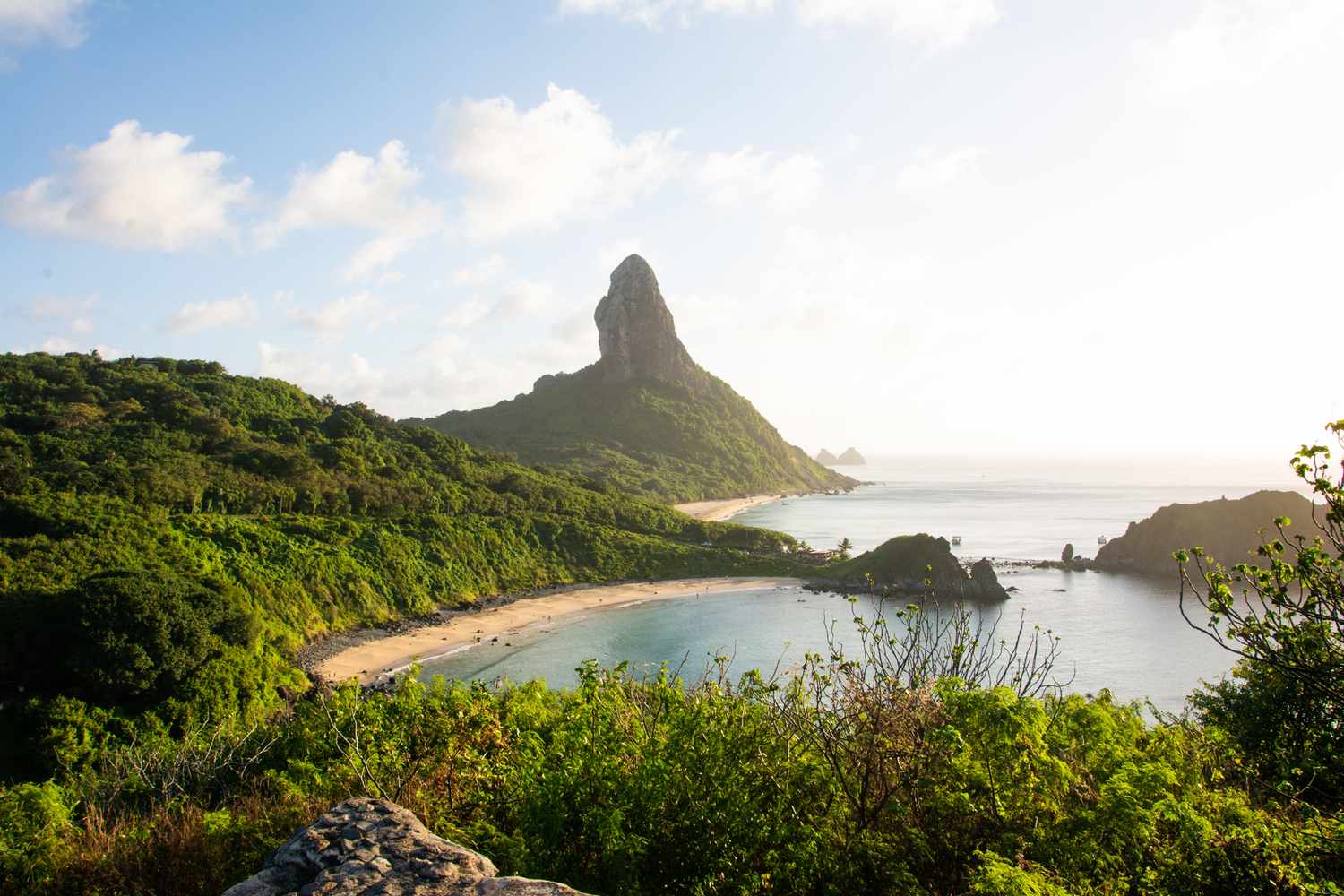
Noronha is home to some of Brazil’s most pristine beaches, many of them framed by volcanic peaks that feel more like French Polynesia than South America. “When you arrive, you should hop on the island tour—that way you’ll already get to know about 70 percent of the island,” Guilherme says. The full-day outing takes you to all the main beaches; you can then decide which to revisit later in your stay.
Take a Hawaiian canoe trip to see dolphins.
It requires an early wake-up and a bit of a workout, but the reward is time on the water with the resident spinner dolphins. It’s not guaranteed, but they almost always appear just after sunrise and hang around the bay most mornings. Take along snorkel gear—every stop is a chance to swim with sea turtles and even the occasional reef shark.
Go for a hike.
Trails like Capim Açu take you into the island’s national park, revealing its wilder, more adventurous side. “It’s the island’s longest trail, but it holds such beauty—a view of Noronha completely different from what we usually see,” Guilherme says.. Hikes within the park must be booked in advance, either in person upon arrival or online. For the Capim Açu trail, you’ll need to hire a certified guide.
Snorkel or scuba dive.
Noronha’s crystal-clear water—with visibility up to 160 feet—makes it Brazil’s top dive destination. Even if you’re not a diver, you’d be remiss not to pack your snorkeling gear. The archipelago is revered as one of the best places to spot Brazil’s wildlife, both above and below the surface of the water.
Explore Projeto Tamar.
Noronha is a sanctuary for sea turtles, and Projeto Tamar leads the island’s conservation efforts. At its visitor center near Praia do Boldró, travelers can learn about the marine life and the fragile ecosystem that make the island so unique. Next door, a small museum traces its fascinating journey from prison to protected paradise.
Best Beaches
Karin Duarte/Travel + Leisure
Baía do Sancho
Often named one of the best beaches in the world for its turquoise, sea life-rich waters, Baía do Sancho is many travelers’ favorite stop on the island. For swimmers, the sheltered, crystalline bay can feel like a natural pool. Getting there is part of the adventure: access is only by boat or via ladders built into the surrounding stone cliffs.
Praia do Meio
This beach sits between Praia do Cachorro (the closest and easiest to access from town) and Praia da Conceição—and there’s little infrastructure, making it a lot calmer than the other two.
Praia da Conceição
Set against Morro do Pico, Noronha’s tallest peak, Praia da Conceição is a long, wide stretch of sand that makes it perfect for all-day lounging. In the afternoon, head to Bar do Meio, which is accessible from both Conceição and Meio beaches and offers live music.
Praia da Cacimba do Padre
Framed by the dramatic twin peaks of Dois Irmãos (the Two Brothers), Cacimba do Padre is known for its powerful surf usually from December to March. But on calmer days, it’s possible to swim to Baía dos Porcos right next door.
Baía dos Porcos
Baía dos Porcos is a small, wild cove next to Cacimba do Padre. Getting there involves a short cliffside hike—pause at the top for the postcard view of the Dois Irmãos peaks—before descending a rocky path. It’s less swimmer-friendly than other beaches, but “We locals love Baía dos Porcos,” Guilherme says. “We think it’s the prettiest.”
Best Restaurants
Nannai Noronha
Cacimba
With expansive indoor and outdoor dining areas, Cacimba is on every must-eat list in Noronha. The menu gets creative with dishes like Thai shrimp curry with plantains, but the star remains its signature bobó de lagosta, a rich lobster stew and northeastern classic.
Restaurante Teju-Açu
Located within the eco-minded Teju-Açu lodge, this restaurant serves contemporary Brazilian cuisine made with as many local, organic ingredients as possible. It’s celebrated for its impeccable service, including complimentary transfers to and from hotels.
Restaurante do Valdênio
Straightforward, hearty meals in a no-frills setting—Restaurante do Valdênio is where the locals eat. Expect Brazilian comfort food, like grilled fish paired with rice and beans, served with friendly, laid-back island hospitality. It’s an excellent spot for lunch, especially if you plan on splurging on dinner.
Benedita Cozinha Afetiva
São Paulo chef Dário Costa opened Benedita a few years ago to bring refined grilled seafood to the island. The menu celebrates smoky whole fish, octopus, and squid, all cooked simply na brasa—Brazil’s traditional style of grilling over open coals. Run daily by chef Sabrina Costa, the restaurant’s open kitchen draws diners into the experience.
Chicama
Chicama is a newcomer from Recife-based chef Biba Fernandes, who brings Peruvian flavors to the island. Dishes like ceviche and tiraditos mark a fresh contrast from the usual northeastern Brazilian cuisine.
Best Time to Visit
Nicole Athayde/Travel + Leisure
Visit in August through January for the clearest, calmest waters, with impeccable visibility for diving and snorkeling. “September is the most beautiful month on the island,” chef Sabrina Costa says. “The sea becomes translucent. In the natural pools, you can see everything. There are barely any waves. You feel it in the atmosphere. Lots of families come with their children—it’s the best time of year to visit all the beaches.”
How to Get There
Global_Pics/Getty Images
Flights arrive at Fernando de Noronha Airport (FEN), a small airport less than three miles from Vila dos Remédios, the island’s main village. Daily service connects through Recife (REC), on Brazil’s northeastern coast, about an hour’s flight away. A four-hour flight from São Paulo (GRU) eliminates the need for a connection.
How to Get Around
Karin Duarte/Travel + Leisure
There are no ride-sharing apps on Noronha, so taxis are the way to go. They’re reliable, but some may consider them expensive, with short rides costing between R$30 and R$50 (between US$5 and US$10). Rates are fixed, and cash is preferred. A public bus also runs between Porto Inicial and Praia do Sueste beaches every 30 minutes. It costs around R$5-$10 (US$1-$2) per ride, offering a basic yet budget-friendly alternative.
Scooters are an affordable way to explore, although the driving can be adventurous: some of the island’s dirt roads can be rough. Biking is another cost-effective way to get around; some guesthouses rent them.
Groups of friends often rent dune buggies and split the cost. It’s the most popular—and, arguably, the most fun—way to get around, letting you bounce between beaches at your own pace.
Read the full article here