


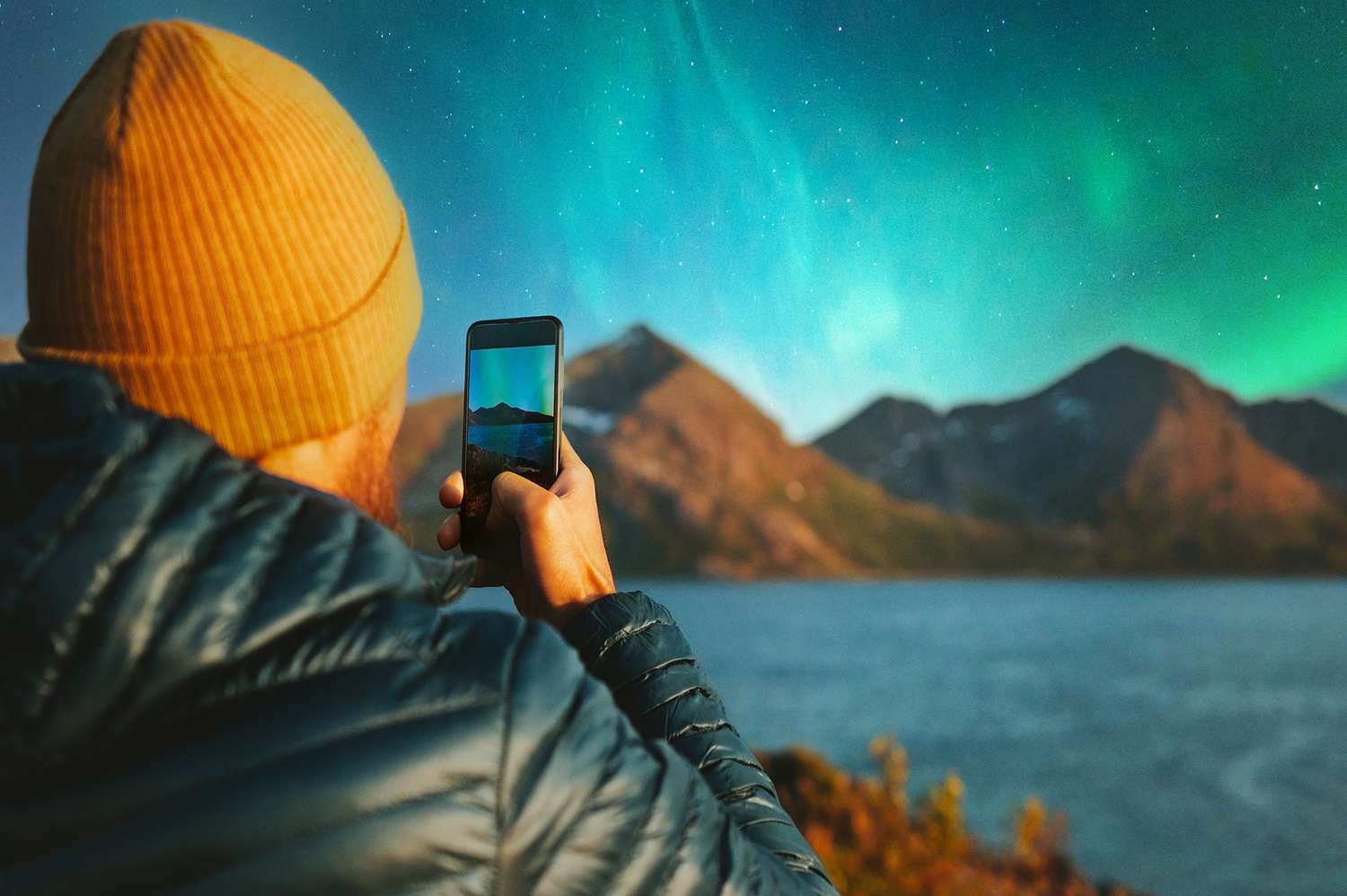
Wintertime offers wondrous sights, from otherworldly glacial palaces to rolling hills of shimmering snow. But perhaps the most sought-after natural wonder of the season has nothing to do with ice or fresh powder; it’s the absolute best time of year to spot the aurora borealis’ enchanting colors in the sky.
According to a study conducted by Icelandair, 34 percent of travelers in the U.S. put seeing the northern lights at the top of their bucket list. Witnessing the celestial ephemera with your own eyes is a magical experience like no other, but we can’t blame anyone for wanting to at least try to capture the phenomenon on camera. And while iPhone pictures and videos will never compare to experiencing the northern lights in person, there are a few things you can do to improve your shots—and dazzle folks back home.
First off, make sure your iPhone camera is set to night mode, which can only be enabled when lighting conditions allow. A crescent moon symbol should appear automatically in lowlight conditions–if it’s crossed out, it may not be dark enough to use night mode yet. If it’s yellow, it’s already active. You can adjust the level by changing the seconds indicator that will appear on your screen. Always make sure to hold your phone steady throughout the process. Giving the camera longer exposure increases brightness but may reduce definition if the aurora is active.
Also ensure your flash is off—all the light you’ll need will be coming from the sky.
Next, open the camera’s settings menu and look for a plus and minus symbol together. Adjust the exposure level to a negative value—figuring out exactly which one in any given condition can take some trial and error, but -0.7 is a good place to start. This will help the aurora’s colors maintain a lush appearance without brightening the black sky. In addition to color preservation, you’ll end up with a more detailed image.
Lastly, consider getting a tripod or handheld stabilizer to keep your phone steady and allow the aurora-optimized settings time to do their magic. Although it may not be the most social media friendly, experts also suggest turning your phone horizontally to capture a wider image.
The U.S. is full of fantastic places to catch the northern lights, with Glacier National Dark Sky Park in Montana, Acadia National Park in Maine, and Michigan’s Upper Peninsula among the best. But if you want to get the most spectacular aurora show there is, your best bet is heading to Iceland between September and March.
Read the full article here