


Both La Dolce Vita Orient Express and the Venice Simplon-Orient-Express offer luxe vintage-style journeys, but you’ll want to consider the differences in cabin types, itineraries, and more before booking.
Although most vintage train enthusiasts are familiar with the Orient Express for its renowned Paris-to-Venice route, they may not know that the brand has another branch dedicated to exploring Italy by rail. As a Rome-based journalist, I was lucky enough to be one of the first passengers aboard La Dolce Vita Orient Express to experience its “Taste of Tuscan Vineyards” journey from Rome to Montalcino. The trip was fabulous from start to finish, but how does it compare to the iconic Venice Simplon-Orient-Express?
Both trains offer luxury journeys that encourage passengers to partake in the joys of slow travel. They both feature gorgeous design, gourmet meals, and entertainment on board, but there are a few key differences between them to consider if you’re trying to decide which one to book.
First of all, it’s important to note that the trains are run by two different brands. The Venice Simplon-Orient-Express (VSOE) is run by Belmond, which operates luxury trains and five-star hotels around the world. La Dolce Vita Orient Express (LDVOE) is part of the new Orient Express brand run by French hospitality group Accor.
Design and Accommodations
Belmond
With glossy lacquered wood, intricate marquetry, sumptuous fabrics, and lamps by Lalique and Baccarat, the VSOE exudes Jazz Age glamour. It has three restaurant cars, a bar car, a boutique, and 54 cabins that can accommodate up to 108 passengers.
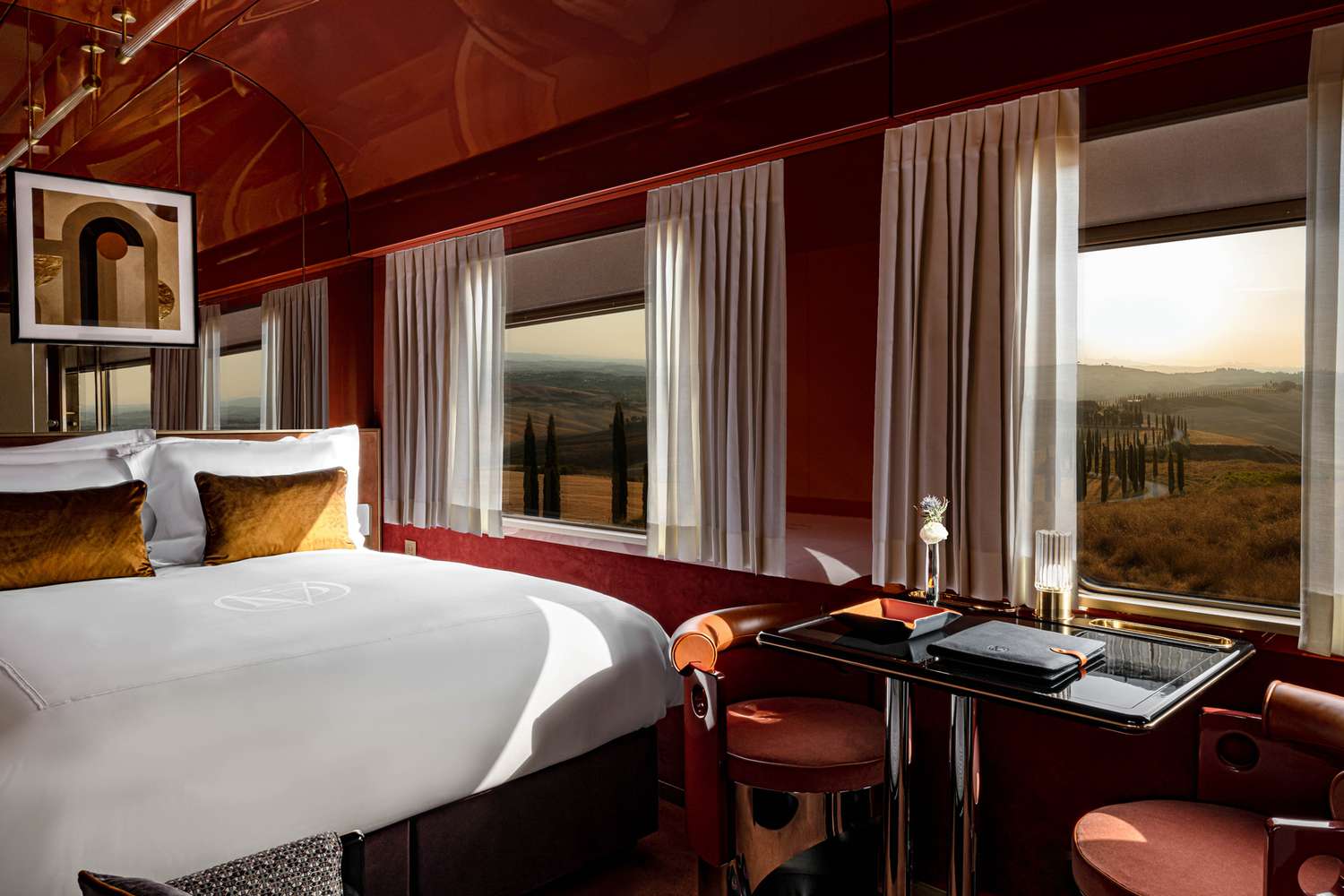
Perhaps to distinguish it from the VSOE, the LDVOE was inspired by 1960s Italian design, with details inspired by legendary midcentury architect Gio Ponti. It has 12 carriages that contain a restaurant, a bar, and 31 cabins that can accommodate up to 62 passengers.
When I rode the VSOE, I was assigned to a Historic Cabin, which has a banquette that converts into a bed, whereas on the LDVOE I stayed in a suite with a big, comfortable bed, a separate sofa, and a table and chairs. However, I also took a peek at a Deluxe Cabin on board the train to see how they compare.
The biggest difference is that on the VSOE, the Historic Cabins don’t have a shower, whereas on the LDVOE, even the entry-level cabins have a full bathroom with a shower and high-end bath products. Suites on the VSOE have luxurious bathrooms, and while guests in entry-level cabins have a washbasin, they have to use shared bathrooms located at the end of each sleeper carriage when they want to shower. This is important to keep in mind if you’re considering booking a multiday journey.
Dining and Entertainment
Accor
Meals on both trains are multicourse gourmet affairs by lauded chefs. French chef Jean Imbert has been designing the menus on board the VSOE since 2022. German chef Heinz Beck, who’s behind Rome’s only three-Michelin-star restaurant, created the menus for the LDVOE.
When I took the VSOE from Venice to Paris, I had a decadent three-course lunch in one of the train’s restaurants, was served afternoon tea in my cabin, and somehow still managed to eat a tasting menu dinner on board that evening. On LDVOE, the drinking and dining started at the chic lounge at Rome’s Ostiense Station, then continued on board with a five-course lunch that left me satisfied but not stuffed. Dinner was a private event at a historic winery in Tuscany.
After dinner, both trains offer live entertainment in the bar car. Passengers aboard the VSOE tend to dress to the nines, with many embracing vintage 1920s style and indulging in martinis or Champagne. The LDVOE was still elegant but a bit more casual. Instead of Champagne, they were serving Franciacorta (one of Italy’s best sparkling wines). I loved how Rome-based American singer Tess Amodeo Vickery, who was serenading the LDVOE’s passengers during my trip, handed out tambourines and really tried to involve everyone in her performance. Other trains or itineraries might have other performers on board.
Itineraries and Excursions
Belmond
The VSOE has itineraries throughout Europe ranging from one to five nights, while the LDVOE offers one-, two-, three-, and four-night journeys on routes throughout Italy. While the VSOE stops in cities like Paris, Venice, Amsterdam, Budapest, Vienna, and Istanbul, the experience is really more about being on board the train. Only the longer journeys include excursions.
For the LDVOE, the excursions are an important part of the experience. They’re not mandatory, and they do come with an extra cost, but every itinerary gives guests the option to go on at least one excursion or use that time to explore on their own. I really enjoyed the excursion to Argiano Winery, where we were given a tour of the owner’s private art collection and the barrel room before enjoying an aperitivo and sitting down for a four-course dinner paired with the winery’s Rosso di Montalcino and Brunello di Montalcino.
On other journeys, excursions range from walking tours of off-the-beaten-path locations to Jeep excursions on the slopes of Mount Etna and exclusive dinners in private Venetian palaces.
Cost and Inclusions
Journeys aboard the Venice Simplon-Orient-Express start at $4,084 for one night in a Historic Cabin on the classic Venice to Paris journey. That rate includes a multicourse lunch and dinner, breakfast served in the cabin, and sommelier wines, as well as a transfer from your hotel/residence to the departure station.
The rates for La Dolce Vita Orient Express start at $3,541 for a one-night trip in a Deluxe Cabin and include meals, a curated selection of wine, soft drinks, and spirits, and transfers to the station for departure.
Read the full article here