


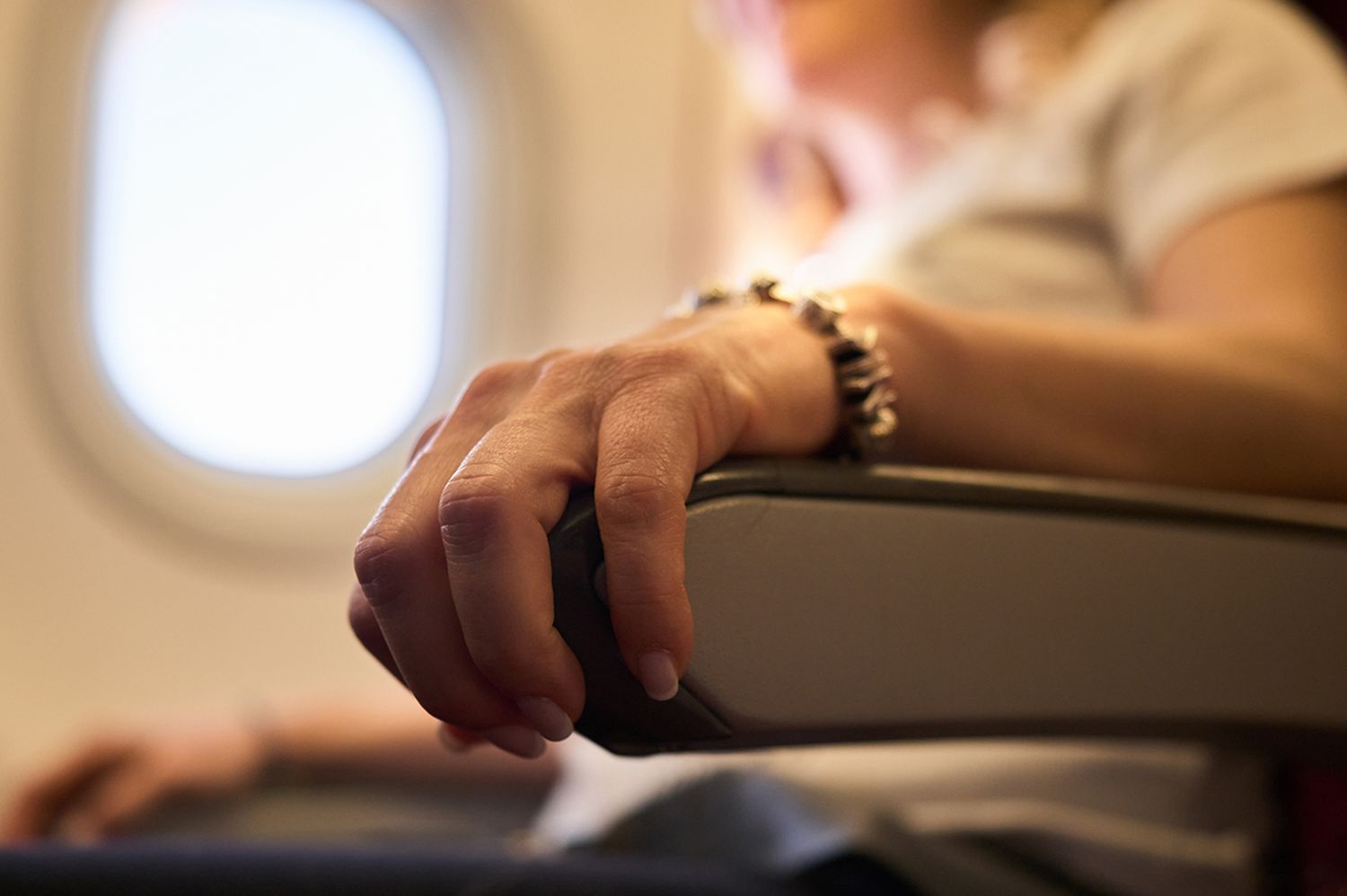
In 2017, I made the switch from news reporter to travel writer, and it’s a decision that has changed my life in ways I simply wouldn’t have the space and time to explain here. Since that day, I’ve traveled to 48 countries and counting, meeting new friends around the globe and documenting their stories, so I can come back and share them with you. Yes, it’s a dream job, and I will not diminish that. There is, however, one piece of it I wish I could do without: flying.
Yes, I’m admitting it in writing that I’m terrified of flying—and I do it for a living.
So, naturally, I’ve tried just about everything, but only one thing has seemed to make a difference: learning how to source and read turbulence forecasts for each and every flight I take. I use sites like Turbli, which combines data from official weather and aviation agencies to predict the turbulence, wind, and thunderstorm activity along your flight route.
“With a background in engineering and fluid mechanics, aviation turbulence is an area that has always fascinated me,” Ignacio Gallego-Marcos, the site’s founder, told Travel + Leisure. “I developed Turbli to give passengers the possibility of visualizing the information previously thought to be only available to pilots.”
And it turns out that visualization may be the thing helping me overcome my fears.
“Flight anxiety affects approximately 25 percent of travelers, representing a complex interplay between primitive fear responses and contemporary cognitive processing,” Bryan Bruno, the medical director at Mid City TMS, a New York City-based medical center focused on treating depression and anxiety, told T+L. “When you use tools like Turbli to predict turbulence, you’re engaging your prefrontal cortex rather than allowing your amygdala to dominate with fear responses. Knowledge transforms unpredictable threats into manageable variables.”
He added that the human brain cannot simultaneously engage in “rational analysis and panic,” thus tools like Turbli address anxiety’s core component: uncertainty. “When you know moderate turbulence is expected over Colorado, your mind stops creating disaster narratives, replacing ‘What if?’ with ‘I know what to expect.'” This, Bruno explained, mirrors exposure therapy, which makes experiences more predictable and desensitizes fear responses.
But this isn’t the only exposure therapy one can try. “Exposure-based exercises, such as gradually looking at flight videos, practicing airport visits, or using flight simulators, can retrain the brain to tolerate the sensations of flying without triggering a panic response,” Debra Kissen, founder and CEO of Light On Anxiety Treatment Centers, told T+L. “Some people also benefit from guided relaxation apps, breathing exercises, or enrolling in structured ‘fear of flying’ programs offered by airlines and therapists.”
One key breathing exercise that several experts suggest is the “4-7-8 breathing technique,” which can be used during flights. As Bruno explained, you simply inhale for a count of four, hold for seven, and exhale for eight. “This activates your parasympathetic nervous system, directly countering anxiety’s physiological effects.”
Additionally, experts note that people like me who have anticipatory anxiety days before a flight can try creating a plan to minimize stress. “For example, packing several days ahead of the trip to feel more prepared, creating a calming playlist for the morning of travel, recording a loved one’s soothing voice to listen to, downloading podcasts or meditations for use when anxiety spikes, and eating a nourishing breakfast,” Laura Ferguson, the executive director of Pathlight Mood & Anxiety Center, told T+L. She also advised avoiding caffeine (which can spike anxiety) and “planning to leave extra early to allow for any unanticipated hiccups at the airport.”
And if turbulence is the thing that gets your palms all sweaty, Gallego-Marcos is here to remind you that moderate and even severe turbulence isn’t a risk for planes. “Severe turbulence is very rare, but it does happen, so all planes are built taking it into account.”
So go ahead and try Turbli, then check out all these other expert tips, and, finally, seek out a professional if it ever interferes with you getting on that plane for your dream trip.
Read the full article here