


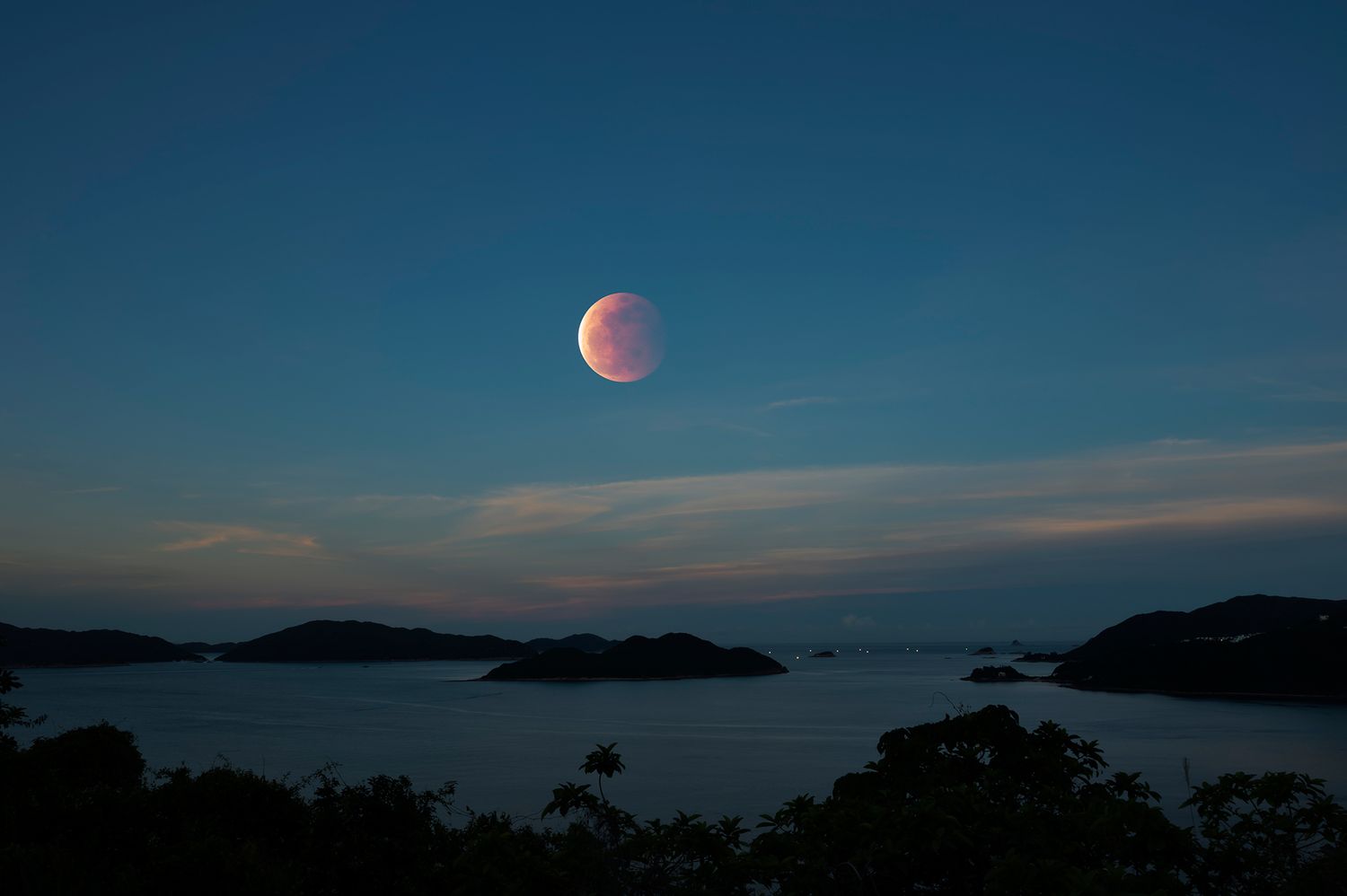
A lunar eclipse will turn the full moon a ruddy, eerie crimson this month, delivering a high-in-the-sky spectacle for viewers across western North America and beyond. But on the East Coast, space enthusiasts may be treated to an even cooler “impossible sunrise.”
The eclipse is set to unfold in the early morning hours of March 3 with totality (or the phase when the moon is completely immersed in the darkest part of the Earth’s shadow) expected to occur under fully dark skies and last nearly an hour. In addition to North America, the display will be visible in the Pacific, eastern Australia, and New Zealand.
But on the East Coast of North America, night will already be giving way to morning. Totality there will start around 6:04 a.m. ET with viewers watching the so-called “blood moon” low and sinking toward the western horizon, with morning light building fast behind them.
Rather than being at a disadvantage, there’s a consolation prize that may actually give everyone from Toronto to Miami an opportunity to view a rare atmospheric illusion.
The phenomenon is called a “selenelion,” or more commonly referred to as the “impossible sunrise.” It occurs when the sun and an eclipsed moon appear above the horizon at the same time near sunrise or sunset.
Simple geometry says it shouldn’t be possible. During a total lunar eclipse, the Earth is positioned directly between the sun and moon. If the sun is rising in the east and the moon is setting in the west, one should be below the horizon while the other is above.
The reason you can sometimes see both comes down to the way Earth’s atmosphere bends light near the horizon. That refraction lifts the apparent position of celestial objects by about half a degree—roughly the width of the sun or moon—making both look slightly higher than they truly are.
On March 3, the overlap is expected to last anywhere from one to three minutes, according to Space.com.
Witnessing this optical illusion depends on your exact location. To see if there’s a window of overlap, space enthusiasts can check their local sunrise and moonset times the night before on a website like Time and Date.
To view it, head for open, flat horizons like beaches, bays, or high overlooks for unobstructed views low to both the east and west. First locate the eclipsed moon in the western sky, then watch the eastern horizon as it begins to glow.
To improve your chances, plan to be outside by 5:45 a.m. ET.
Read the full article here