


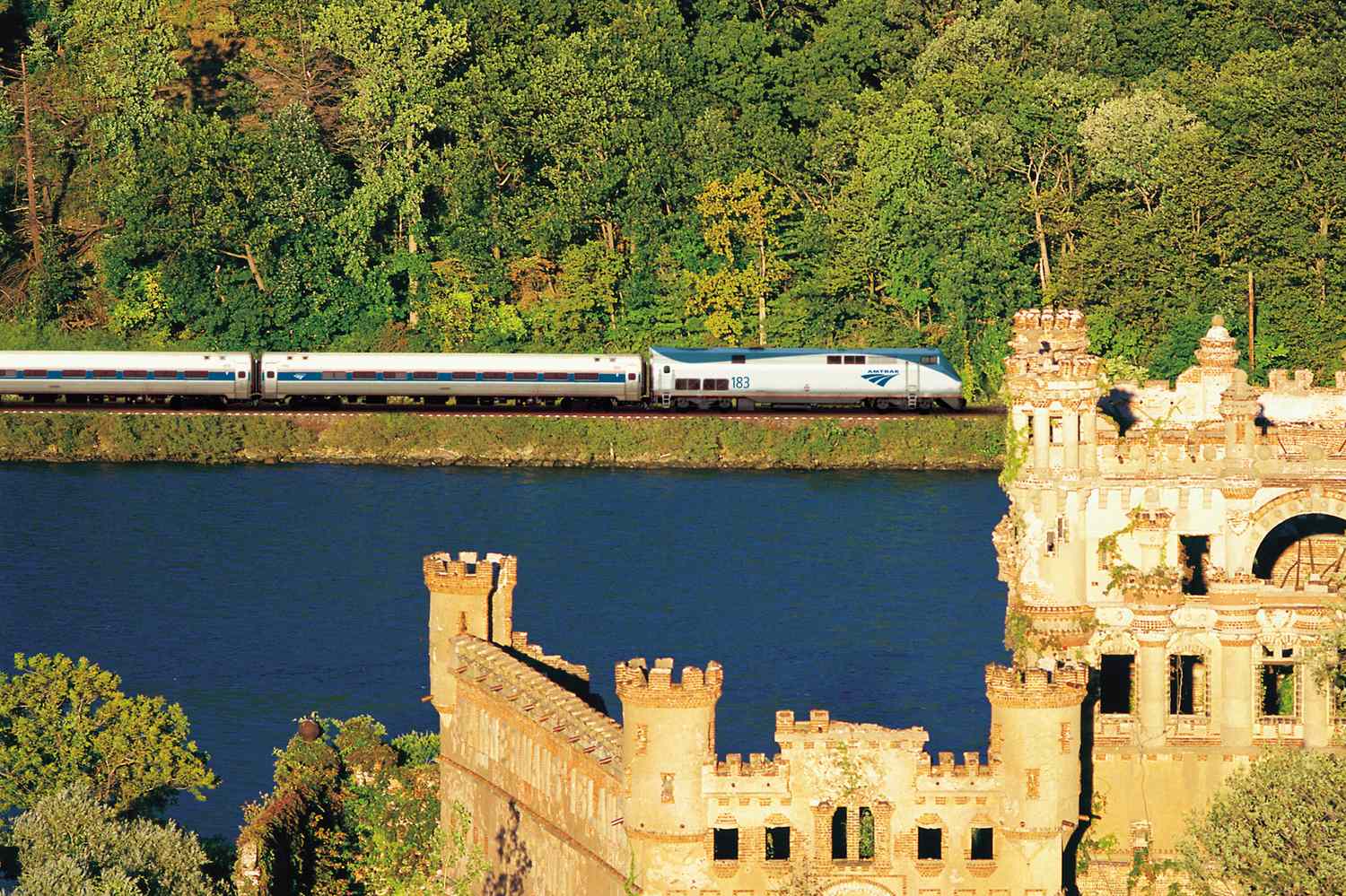
- The Adirondack is a daily train that runs between New York City and Montreal, traveling 381 miles over 11 hours.
- The train passes through several pristine natural environments, including the Hudson River, the Adirondack foothills, and Lake Champlain.
- Beyond the major cities bookending the route, there are several smaller towns worth exploring along the way—though travelers will need to stay the night and purchase another ticket if they get off.
Amtrak’s Adirondack train isn’t just a fun way to get from New York City to Montreal—it’s a route that many travelers choose specifically for the scenic views.
Running daily between the two cities, the train traverses 381 miles in about 11 hours. It departs from Moynihan Train Hall in the heart of Manhattan each morning, it follows the Hudson River north before skirting the Adirondack Mountains and tracing the western shore of Lake Champlain en route to Montreal.
For many riders, the views of the changing landscapes are the highlight, says Jason Abrams, senior pubic relations manager at Amtrak. As the train moves through the Hudson Valley and up toward the Canadian border, riverfront towns give way to wide expanses of water and distant mountain peaks.
One thing to note is that the Adirondack doesn’t have sleeper cars; there’s only coach seating, along with a café car for snacks and drinks. There is onboard Wi-Fi, and small dogs and cats are permitted on most departures. Additionally, the train only runs once per day, so travelers who get off to explore will need to stay the night and book another ticket to continue their travels.
Here’s what you need to know before riding Amtrak’s Adirondack.
New York City
Spencer Platt/Getty Images
Whether you’re just beginning your journey or arriving in time for dinner and a show, New York City is a perfect bookend to one of the Northeast’s most scenic rail routes. The Adirondack train departs from Moynihan Train Hall in Midtown Manhattan, but if you have the flexibility to tack on an extra day or two in the city, this is a great opportunity to visit world-class museums like The Met and MoMA, take in a Broadway performance, or secure a table at one of the city’s famous restaurants. Stretch your legs with a walk through Central Park or along the High Line.
If you have more time, branch out into Brooklyn to explore Williamsburg’s boutiques and cafés, and walk the Williamsburg Bridge for skyline views. In the Bronx, visit the beautiful New York Botanical Garden or the renowned Bronx Zoo. In Queens, check out the art at MoMA PS1 or spend an afternoon eating your way through Astoria or Flushing, known for standout Greek and Chinese cuisine, respectively. Finally, hop on the (completely free!) Staten Island Ferry for great views of the Statue of Liberty and Lower Manhattan.
Hudson, New York
Philip Haber/Moment Open/Getty Images
About two hours north of Manhattan, Hudson has transformed from a 19th-century whaling port into one of the Hudson Valley’s most design-centric small cities. Much of the action occurs on Warren Street, a mile-long stretch lined with antique warehouses, contemporary art galleries, independent bookstores, and carefully curated home shops.
The food scene here is also worth diving into. Lil’ Deb’s Oasis is known for its kitchy, colorful interiors and globally inspired plates like dosas and tamales, while Swoon Kitchenbar spotlights seasonal Hudson Valley ingredients. Additionally, the Hudson Farmers’ Market draws local growers and makers with fresh produce, baked goods, cheeses, and flowers on Saturdays from spring to fall.
Capital Region
AlizadaStudios/Getty Images
As the Adirondack continues north, it reaches New York’s Capital Region, anchored by Albany. Here, visitors can tour the ornate New York State Capitol, explore the modernist Empire State Plaza, and catch a performance at The Egg, the city’s striking, spaceship-like performing arts venue. For a deeper dive into early American history, the Schuyler Mansion State Historic Site offers a look at Revolutionary-era life along the Hudson. Be sure to take a stroll along the Albany Corning Preserve for sweeping river views.
Farther north, Saratoga Springs is an equally compelling stop. Best known for its mineral springs and summer horse racing season at the Saratoga Race Course, the town pairs its historic charm with a quaint downtown dotted with mom-and-pop shops and restaurants. Saratoga Spa State Park offers wooded trails and performance venues, such as the Saratoga Performing Arts Center, while the nearby Adirondack foothills offer easy access to hiking and lake country.
Lake Champlain Region
Steven Heap/iStockphoto/Getty Images
The Adirondack train runs for long stretches alongside Lake Champlain, with water views on one side and the Adirondack Mountains on the other. But the appeal isn’t limited to what you see from the window. According to Abrams, “the entire Lake Champlain region allows for outstanding opportunities to hike, paddle, birdwatch, revisit and learn history, and soak in culture through farmers’ markets, art galleries, and the region’s wineries and restaurants.”
Travelers can disembark in towns like Ticonderoga to visit Fort Ticonderoga, a key Revolutionary War site overlooking the lake, or continue north toward Plattsburgh, where waterfront trails and kayaking launches offer easy access to the water. Meanwhile, nearby wineries and cideries make good use of the Champlain Valley’s fertile soil.
Montreal, Quebec
Andia/Universal Images Group/Getty Images
By early evening, the Adirondack pulls into Montreal—a fitting finale to a cross-border journey. “Montreal is the closest you can get to a taste of Europe without having to cross the pond,” says Abrams. In Old Montreal, cobblestone streets and 18th-century stone buildings give way to cafés, wine bars, and boutique hotels. Visitors can step inside Notre-Dame Basilica, browse the Jean-Talon Market, or wander the independent shops and murals that make up the arty Plateau neighborhood.
Additionally, the city’s French influence is evident not just in the language but in its dining scene, from neighborhood bistros to refined tasting menus like those at Toqué!. By the time you sit down for dinner, the shift in culture and cuisine feels unmistakable—a reminder of how much ground the Adirondack train covers in a single day.
Best Time to Ride
Oleg Albinsky/Getty Images
Fall is the most popular time to ride the Adirondack, and for good reason. In late September and October, the Hudson Valley and Adirondacks erupt into a kaleidoscope of autumnal colors—red, orange, and gold—especially along the stretches that hug the river and Lake Champlain.
Read the full article here