


Top 5 Can’t Miss
- See Victorian estates, castles, and remnants of ancient farms at some of England’s most intriguing historic sites.
- Watch for meteors, planets, and constellations in the U.K.’s largest Dark Sky Reserve.
- Stroll through ancient oak forests to multiple waterfalls on Ingleton Waterfalls Trail, a designated Site of Special Scientific Interest.
- Try Michelin-starred dining in a 16th-century inn at the U.K.’s original gastropub.
- Check into heavenly rooms at Denton Reserve, which is surrounded by 2,500 acres of woodland and moor.
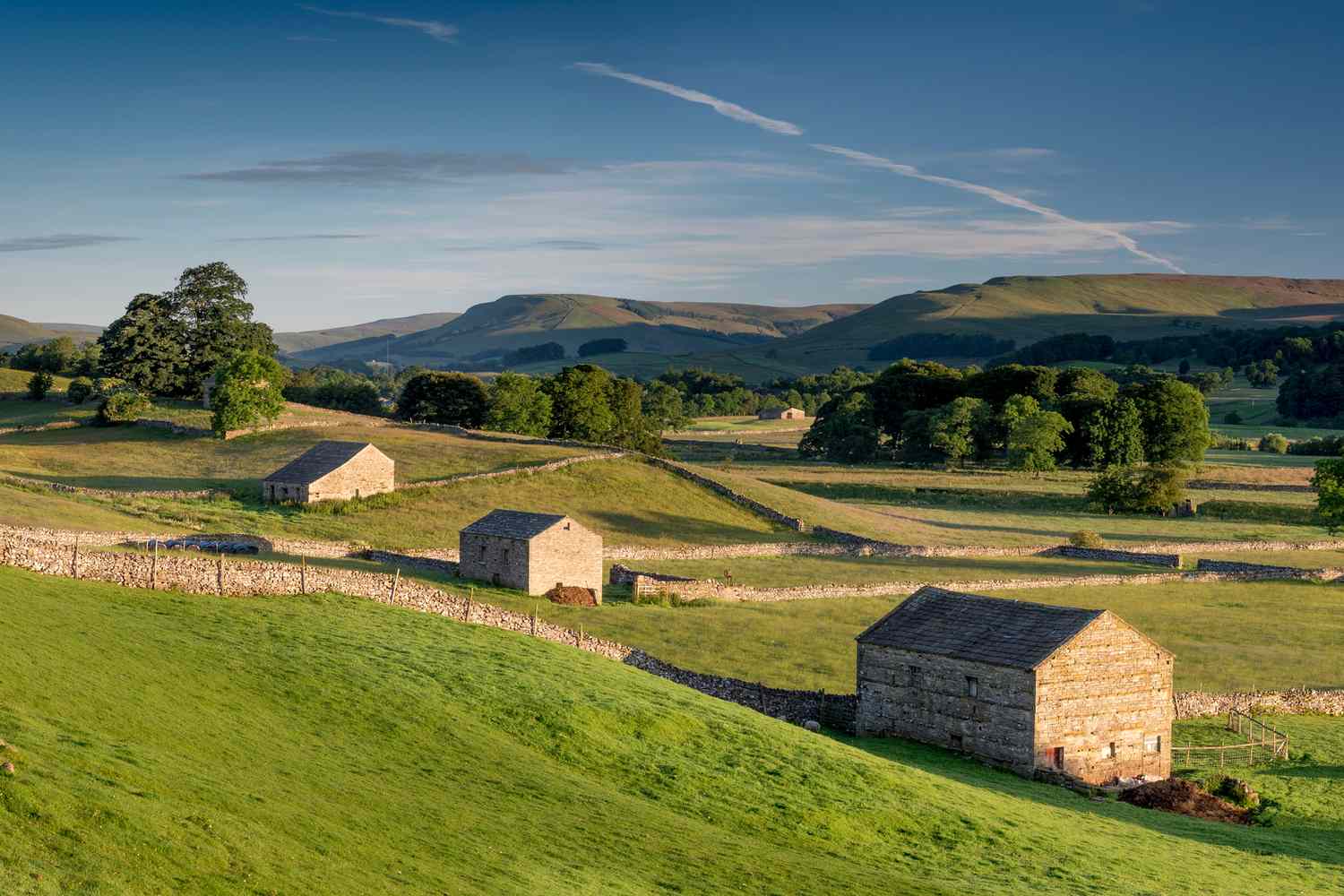
Best known for its heather-strewn moorlands and misty green hills, Yorkshire Dales National Park is named for its deep valleys that have charmed travelers for centuries.
Here, visitors will also find archaeological sites, more than 1,000 working farms, and a species of moss that doesn’t grow anywhere else on earth. But perhaps one of the most unique things about this park is that 95 percent of it is privately owned. Unlike American national parks, Yorkshire Dales quite literally belongs to the people who live and work there.
Established in 1954, this park has some of England’s best hiking spots, mountain bike trails, countless waterfalls, and the U.K.’s most extensive cave system. It’s also Britain’s largest Dark Sky Reserve, which means you probably won’t find better stargazing anywhere else in the country. But though the scenery is stunning, it’s truly the land’s human history that makes the park so special.
“The Yorkshire Dales feels both timeless and alive,” says Craig Summerill, who plans U.K. trips for Inntravel, a walking holiday planning site.” … villages sit where Anglo-Saxon and Viking settlers first made home. Add medieval castles, ruined abbeys, wildlife along the River Ure, and some of the darkest night skies in England, and you have a place that rewards both wandering and just taking your time.”
The park’s landscapes are so distinctly English that they’ve been featured in several films and TV shows, including The Witcher, the Harry Potter series, and two movie adaptations of Wuthering Heights—a trip here is nothing short of magical.
Here’s what you need to know before planning a trip to Yorkshire Dales National Park.
Know Before You Go
Yorkshire Dales National Park is open all day, every day, year-round. While there’s no admission fee to enter, some popular sites charge for parking. Bear in mind that, unlike America’s national parks, most of the land is owned by locals who live and work there. Respect for the people who live and work in the area is essential.
As with any wild or remote place, planning is mandatory. “Weather can change quickly, villages are small, and once you leave the main towns, services get limited,” says Summerill. When in doubt, follow the Countryside Code, the U.K.’s guide of golden rules for behaving responsibly in the outdoors.
Best Time to Visit
James Elkington/Adobe Stock
Though the weather can be somewhat unpredictable in Yorkshire Dales, a visit in any season is sure to be memorable.
In the depths of winter, brisk daytime walks can end fireside at quaint countryside pubs with great local food, while dark skies at night offer some of the world’s best stargazing. Spring’s first wildflowers make picturesque backdrops for a visit to one of the area’s open farms, where newborn lambs and calves can be seen wandering in open pastures. Summer’s long days are the best for touring formal gardens, and bring popular festivals that celebrate the region’s music, arts, and food. Autumn is an incredible time to seek out historic monuments like castles or mining sites on the vast high moorlands where pink and purple heather extends for miles. Outdoor activities are best experienced from June to September when there is less rain.
“If I had to pick a favorite, late spring to early summer wins,” Summerill says. “The flowers, wildlife, and landscapes all come together. Plus, markets and local events make it lively and colorful.”
How to Get There
Svetlana/Adobe Stock
Located in northern England and surrounded by four other national parks, Yorkshire Dales National Park is the perfect place to see some of Britain’s most beautiful scenery.
Park officials encourage exploring sustainably whenever possible by using public transport from nearby cities like York, Leeds, or Carlisle. Dales Bus offers up-to-date schedules for regional trains and buses. The closest major airport is Leeds Bradford Airport (LBA), which is just 15 miles away, but you may find more flight options from Manchester Airport (MAN), about 60 miles southeast.
And with multiple entry points across 841 square miles, you can access the park from many spots, but Summerill says a few towns in particular make ideal starting points.
“Hawes is a classic market town in Wensleydale,” he says. The town, located just north of the park, is known for its cheesemaking history and idyllic atmosphere. “[The] shops and cafés are great, but it doesn’t feel touristy.”
Settle, another traditional market town with shops, cafes, and places to stay, is perfect for exploring the southern and western Dales. “The Settle-Carlisle railway starts here,” he continues, “and the journey is just as good as the scenery. You also get limestone landscapes and interesting spots like Victoria Cave.”
Best Things to Do
BriBar/Getty Images
Ride the Settle-Carlisle railway.
Arguably one of Europe’s most beautiful train journeys, the 72-mile route along this Victorian-era railway between Settle and Carlisle takes in iconic Yorkshire Dales scenery—green hills, ancient drystone walls, and historic market towns. Rising more than 100 feet above moorland and across impressive arched viaducts, it’s an unforgettable way to experience the landscape.
Visit archaeological sites.
From medieval estates and castles, to abandoned lead mines and traditional farm buildings amid ancient drystone walls, the park holds an incredible variety of historic sites that tell the story of the land’s earliest inhabitants. Standout spots include the remains of a 12th-century Cistercian monastery at Jervaulx Abbey; imposing Middleham Castle, the former childhood home of Richard III; and Old Gang Lead Mines, where remains of the early 19th century industry create an imposing backdrop on the moor.
Try local food and drinks.
From craft breweries and farm-to-table restaurants to Wensleydale cheese and traditional Sunday roasts with Yorkshire pudding, food can actually be a big part of a visit to Yorkshire Dales. “Eating local helps keep the farms going that make the Dales what it is,” says Summerill. “Wensleydale cheese is a must-try … with fruitcake or apple pie. Don’t knock it till you try it. If you are lucky, you might stumble on a festival or market, which adds a bit of extra color to a visit.”
Chase waterfalls.
Hardraw Force, Janet’s Foss, Ingleton, and Aysgarth Falls. These are just a few of the dozens of mesmerizing waterfalls across the park. From England’s highest single drop to popular swimming spots, some of Britain’s most spectacular waterfalls can be found here. A popular destination for centuries, visited by William and Dorothy Wordsworth and sketched by J.M.W. Turner, you may also recognize Aysgarth’s famous tiers from the 1991 film Robin Hood: Prince of Thieves.
Stargaze.
The entirety of Yorkshire Dales National Park is a designated Dark Sky Reserve. As the U.K.’s largest, you’ll have an unparalleled experience of viewing stars, planets, meteors, the International Space Station, and even, on occasion, the Northern Lights here.
Best Hikes
Alan/Adobe Stock
Hundreds of miles of footpaths, including many accessible ones, wind through the national park, including Britain’s first long-distance hiking trail, the Pennine Way, and its parallel, horse and cyclist-friendly Pennine Bridleway. For iconic Dales views, try some of the following.
Ingleton Waterfalls
Follow a well-worn, 4.5-mile circuit along the Twiss and Doe Rivers and through old-growth oak forests to see multiple impressive cascades. This designated Site of Special Scientific Interest, home to rare flora and fauna, has been drawing visitors for more than a century.
Muker to Keld
From the village of Muker, cross the famed Muker Hay Meadows—blooming with multicolored wildflowers in spring and summer—along the River Swale and past the small waterfall Kisdon Force to the village of Keld. With a gentle ascent, this six-mile circular walk is well-signposted and gives sights of drystone walls and ruins, farms, mountains, and valleys along the way.
Whernside
A 7.5-mile circular route climbing to Yorkshire’s highest peak, this popular trail starts at Ribblehead Viaduct—24 stone arches of impressive Victorian engineering that carry the Settle-Carlisle Railway. Traversing the summit of Whernside, then winding back past farms and old drystone walls, spectacular views to the Lake District and the Howgill Fells are just some of the reasons this trek leaves a lasting impression.
Best Places to Stay
Martin Berry/UCG/Universal Images Group via Getty Images
Denton Reserve
Just outside the park, this handsome estate has been reimagined as an ecofriendly retreat. Surrounded by 2,500 acres of woodland and moor, its Georgian country house Hall, off-grid micro-cabins, and historic coach houses are heavenly escapes into calm hues, blissful bedding, and sleek, Scandi-inspired furnishings. With locally made organic bath products and chef-made meals available for in-room prep—plus an excellent, estate-owned restaurant just minutes away. It’s a perfect base for exploring the Yorkshire Dales.
Aysgarth Falls Hotel
Set beside its namesake waterfall, Aysgarth Falls has 11 newly renovated rooms, an on-site restaurant serving high-end British favorites, and maximum countryside charm to match its stunning location.
Simonstone Hall
With spectacular views all around, this cozy country house hotel with 19 rooms is located in the heart of the park. It’s renowned locally and beyond for its impeccable service, dog-friendly accommodations, outdoor terrace with fire pits, and an award-winning onsite restaurant.
Woldhaven Hall
Available through the Wow House Company (a carefully curated selection of cottages, manor houses, and castles across the U.K.), this spectacular, stone-built country house with just eight rooms is a great option for groups—especially those who want to experience misty moorlands and historic architecture befitting of a great Gothic novel.
Places to Eat
Geography Photos/Universal Images Group via Getty Images
The Nettle
This Settle-based restaurant works with local farmers, dairies, and artisans to serve a seasonal, sustainable menu of breakfast, veggie-heavy small plates for lunch and dinner, and weekend brunch. With its warm interiors of natural, foraged materials and friendly service, The Nettle is a neighborhood favorite.
The Angel at Hetton
Considered the U,.K.’s “original gastropub,” The Angel at Hetton is a Michelin-starred experience within a 15th-century inn. Situated in one of the most beautiful corners of the North Yorkshire Dales, locals and travelers alike come for the scenery and solitude as much as the seasonal menus and warm service.
The White Hart Inn
A former coaching inn that’s welcomed travelers since the 16th century, The White Hart Inn is situated directly on Britain’s first long-distance hiking trail, the Pennine Way, in the historic market town of Hawes. Serving updated versions of British favorites made from locally sourced ingredients, its open fire and cask ales make it a quintessential Yorkshire Dales experience.
Read the full article here