


Key Largo’s John Pennekamp Coral Reef State Park, the first undersea park in the United States, remains one of the only places in Florida where you can snorkel or scuba dive among truly healthy coral. I’ve done the famed Christ of the Abyss dive here, finning through schools of blue tang and parrotfish grazing on brain coral, and it’s one of the most awe-inducing underwater experiences in the state.
Spread across 70 nautical square miles, Pennekamp is a rare blend of tropical hammocks, mangrove tunnels, and protected reef, all rooted in a conservation legacy that began in the 1950s. The visitor center’s Maritime Heritage Exhibit and 30,000-gallon saltwater aquarium add another layer of discovery, letting you virtually explore six nearby shipwrecks and browse artifacts recovered from Key Largo’s historic waters.
Out on the reef, glass-bottom boat tours, snorkeling trips, and scuba dives reveal rainbow gardens of elkhorn and staghorn coral, goliath grouper, sea turtles, and more. “Going out on the water and snorkeling or diving really gives you a chance you can’t get many other places,” says Jill Kuehnert, campus director of the Reef Environmental Education Foundation (REEF). “The proximity to the water, the birds, the fish—it’s part of our everyday life here.”
Planning Your Visit
Jeffrey Greenberg/Universal Images Group via Getty Images
John Pennekamp Coral Reef State Park is open daily from 8 a.m. to sunset, and capacity limits mean it will close once it reaches full capacity. Entry is free for Florida State Park pass holders or $4.50 for a single-occupant vehicle ($8 per multi-occupant vehicle, plus 50 cents per person, up to a maximum of eight people). Pets are allowed if they’re on leash.
Campsites book up quickly; the park’s 42 reservable sites offer full hookups, picnic tables, and grills, with most accommodating RVs up to 40 feet. A primitive group camp sits at the end of the campground road, and the marina offers dock slips and mooring buoys for overnight boaters. Kayaks, paddleboards, snorkel gear, and boat tours all depart from the concession area, and the Blue Heron Cafe makes it easy to grab a casual bite between outings.
For the best experience on the water, come prepared—and early. “If you’re going to visit on a big holiday, line up at the gate in the morning because they have limited parking and vehicle space,” says Kuehnert. She also recommends bringing your own snorkel gear, even if you’re not heading out to the reef. “Put your mask on right from the beach, and you’ll see baby fish, or carry it with you when you kayak. Don’t be afraid to hop in and look under the mangroves.” Free Wi-Fi at the concession and dive shop buildings, plenty of picnic tables, and first-come, first-served pavilions round out the park’s amenities.
How to Get There
Felix Mizioznikov/Adobe Stock
Reaching John Pennekamp Coral Reef State Park from Miami is straightforward. Take Florida’s Turnpike south until it meets U.S. 1, then follow U.S. 1 into Key Largo. The park entrance sits on the left at Mile Marker 102.5.
Best Time to Visit
SR Productions/Adobe Stock
The park is enjoyable year-round, but the sweet spot is fall through spring, when temperatures dip, breezes pick up, and the land-based trails and mangrove tunnels are far more comfortable. “The beginning of October to the end of May…those cooler months have less mosquitoes and are just generally more pleasant,” says Kuehnert. She adds that the shoulder seasons—October and November, or March through May—offer the best mix of mild weather and fewer crowds, making them ideal for snorkeling, kayaking, and exploring before or after the peak winter rush.
Best Things to Do
Daniel Eidsmoe/Getty Images
Go snorkeling.
Reef trips are the headline experience here for good reason; this is one of the few places in the continental U.S. where you can still snorkel healthy coral. “There’s plenty of soft corals, purple sea fans, all kinds of fish,” says Kuehnert. But don’t overlook the nearshore habitats. The park’s mangrove and seagrass areas are shallow, protected, and perfect for beginners or windy days. Move slowly, keep your fins high, and you’ll spot juvenile fish weaving through mangrove roots, bursts of orange sea stars, delicate sea slugs, and the occasional manatee or sea turtle cruising by. Snorkel boats head out four times a day, and Cannon Beach offers a gentler introduction with artifacts from a 1715 shipwreck just offshore.
If you want to go deeper, several local groups—including Coral Restoration Foundation and I.CARE—run hands-on programs in park waters, where visitors can learn about coral disease, restoration, and even help plant coral fragments. “If a person wants to get involved, they can certainly find an experience that takes them into the park waters to learn more and help,” Kuehnert says.
Join a tour.
The park offers glass-bottom boat trips and snorkel tours multiple times daily, giving you about 90 minutes on the reef. These excursions are a low-effort way to appreciate the living structure beneath the waves, and the Encounter vessel is fully wheelchair-friendly.
Spend an afternoon scuba diving.
With a PADI 5-Star Gold Palm dive shop and three reef systems offshore, Pennekamp is a bucket-list dive destination. Two-tank, two-location tours run daily, and beginners can sign up for a resort course to get underwater the same day. The Christ of the Abyss statue sits in park waters, rising from the sandy bottom with outstretched arms. “That’s something people should not miss a chance to see if they can,” Kuehnert says.
Explore the park on a hike.
Even with so much attention on the reefs, this park shines on land, too. Three short trails wind through tropical hardwood hammock, butterfly gardens, and old orchard remnants. Look for marked native species along the Wild Tamarind Trail or the boardwalk views along Mangrove Trail.
Paddle through the mangrove tunnels.
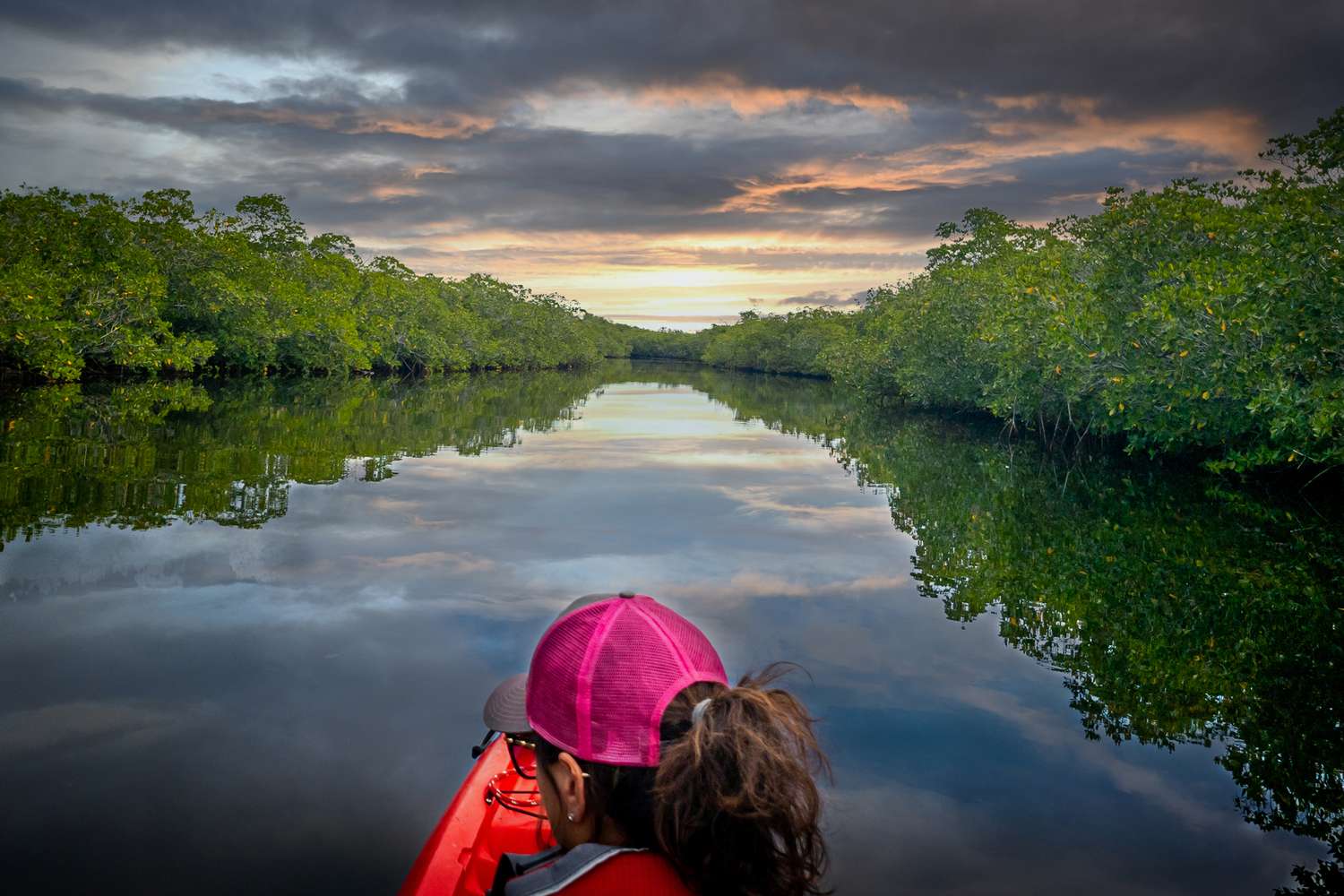
Kayaking through the mangrove tunnels is one of the park’s most peaceful experiences. Rentals and laminated trail maps make it simple, even for beginners. “There’s no easier place,” Kuehnert says. “Just taking your time, getting away from the sound of the highway… You can be on your own in a very cool way in the mangroves.”
Attend free programs and ranger talks.
From fall through winter, The Point hosts evening ranger programs around a fire circle. Inside the auditorium, REEF’s Thursday fish ID sessions help new snorkelers feel more confident identifying what they’ll see offshore. “You can just wander in,” Kuehnert says. “If you know how to identify one or two fish species, you feel more comfortable and have something to look at.”
Must-see Wildlife and Natural Features
benedek/Getty Images
More than 600 fish species and 70 types of coral thrive here, and it’s not unusual to spot sea turtles, rays, or even a hefty goliath grouper on a reef trip. “We see turtles, we see all the fish,” says Kuehnert, who notes that the diversity is “pretty phenomenal,” even close to shore.
Kayakers and shoreline wanderers can peer into mangrove nurseries pulsing with juvenile fish, small sharks, and rays, while manatees may drift through the marina or Largo Sound. On land, hardwood hammocks shelter songbirds, while shorebirds and pelagic species work the edges of the beaches, rounded out by the everyday charm of lizards, insects, and the park’s quieter wild inhabitants.
Read the full article here