


While Yellowstone might be what comes to mind when you think of bison, Custer State Park has a leg up on the famed Wyoming-Montana destination: Stretching across 71,000 acres, South Dakota’s first and largest state park is home to one of the biggest publicly owned bison herds in the world. And every September, the bison, more than 1,300 of them, are herded by a group of experienced cowboys and cowgirls down to corrals, past a cheering group of onlookers. In 2025, a grand total of 22,275 attendees drove into the park to watch the decidedly Western affair.
Although the annual Buffalo Roundup is certainly one of the events that puts the state park on the map, there are a handful of other reasons to venture out to this part of South Dakota. “It’s a place where you can find something for everyone. The park has it all—from hikes to scenic drives, wildlife, history, food, and just plain fun,” Lydia Austin, the park’s visitor services supervisor, tells Travel + Leisure. After spending a few days in the park myself, I left thoroughly impressed with the landscape—the wide-open grasslands, the dramatic pinnacles and spires, and the awe-inspiring buttes—and a sense that Custer State Park is one of our nation’s true underrated gems. Here’s how to plan a trip.
How to Get There
Lauren Breedlove/Travel + Leisure
Custer State Park is located in the Black Hills of South Dakota; the closest town to the park is Custer. Those flying into the area can look at flights to and from Rapid City Regional Airport (RAP). It’s about 37 miles from the park and served by American, Delta, Allegiant, United, and Sun Country. From there, turn the final leg of the journey into a road trip by renting a car and seeing other top sites in the area, including the Crazy Horse Memorial, Wind Cave National Park, and Mount Rushmore National Memorial.
Know Before You Go
Lauren Breedlove/Travel + Leisure
First things first: Custer State Park is not a national park; your America the Beautiful—the National Parks and Federal Recreational Lands Pass will not work here. Instead, you’ll need to purchase either a daily pass ($15 per vehicle for non-residents), a weekly pass ($25), or an annual pass ($40 for residents, $60 for non-residents). Passes can be purchased online or upon arrival at the park.
Start your adventure at the Custer State Park Visitor Center, located where Wildlife Loop Road meets Highway 16A. Open year-round, this is a great spot to ask the staff all of your burning questions. If you’re interested in the bison herd in particular, swing by the Bison Center on Wildlife Loop Road to learn more (but note it is subject to seasonal closures).
A couple of other things to keep in mind: You’re bound to see wildlife in the park; the bison, pronghorn, elk, bighorn sheep, and prairie dogs are a large part of the draw for many visitors. That said, always keep your distance. Visitors are asked to stay at least 100 yards from wildlife. You’ll also want to pack sunscreen, water, and bags to clean up after your pets (who will need to be kept on a leash).
Finally, give yourself at least a couple of days to properly explore Custer State Park. “Most first-time guests don’t allow enough time to enjoy everything the park has to offer,” says Randy Anderson, manager at Buffalo Safari Jeep Tours. Austin echoes his sentiment, adding, “Even after years of working and visiting here, I still find something new, learn something new, or make a new memory with my family.”
Best Time to Visit
Christopher Larson/Travel + Leisure
“Custer State Park is open year-round, and each season offers a unique experience,” says Austin. “While there’s never a ‘bad’ time to visit, some periods—like the Sturgis Rally or the Buffalo Roundup—can be very busy and bring in large crowds.” The Sturgis Rally takes place over 10 days every August, bringing hundreds of thousands of motorcycle enthusiasts to the city of Sturgis. While it’s over an hour away, the increase in visitors to the area is reflected within the park.
Anderson agrees that there’s always something to do in the park, no matter the season, but spring is certainly a highlight. This time of year, the new bison calves will be arriving, so visitors can “just sit and watch the young babies” for a unique, wholesome experience. Peak hiking season starts in May and runs through early September, but the winter off-season gives way to activities like snowmobiling and ice fishing. Just note that some of the roads, including Needles Highway, may be closed to cars during the winter.
Best Things to Do
Visit South Dakota
Come for the Custer State Park Buffalo Roundup.
There are some experiences you can’t replicate anywhere else—and the Buffalo Roundup is certainly one of them. The purpose of the annual extravaganza is to manage the herd’s size and brand and vaccinate the new calves, as well as get ready for the annual buffalo sale, where a couple hundred of the animals are auctioned off. Functional, yes, but this event is also known to get a little “ranchy” and “Western,” as you’ll hear South Dakotans say. There are two viewing areas where thousands of visitors congregate as they wait for the highly coordinated affair to thunder across the plains. Cowboy and cowgirl hoots and hollers complement the rumbling of the massive animals’ hooves as they’re rounded up into the corrals. Afterward, head over to the Buffalo Roundup Arts Festival to shop with more than 100 different Western and Midwestern arts and crafts vendors.
Drive the Wildlife Loop Road—or go on a guided safari.
“A drive down Wildlife Loop Road is a must. There, guests can see bison, pronghorn, deer, and take in the beauty of the park,” says Austin. The 18-mile Wildlife Loop Road is open year-round and takes about 45 minutes to complete. You also have the option to go on a guided safari; Buffalo Safari Jeep Tours offers daily 1.5- to two-hour tours, bringing guests along the scenic route as well as private dirt roads they typically wouldn’t have access to.
Discover Needles Highway.
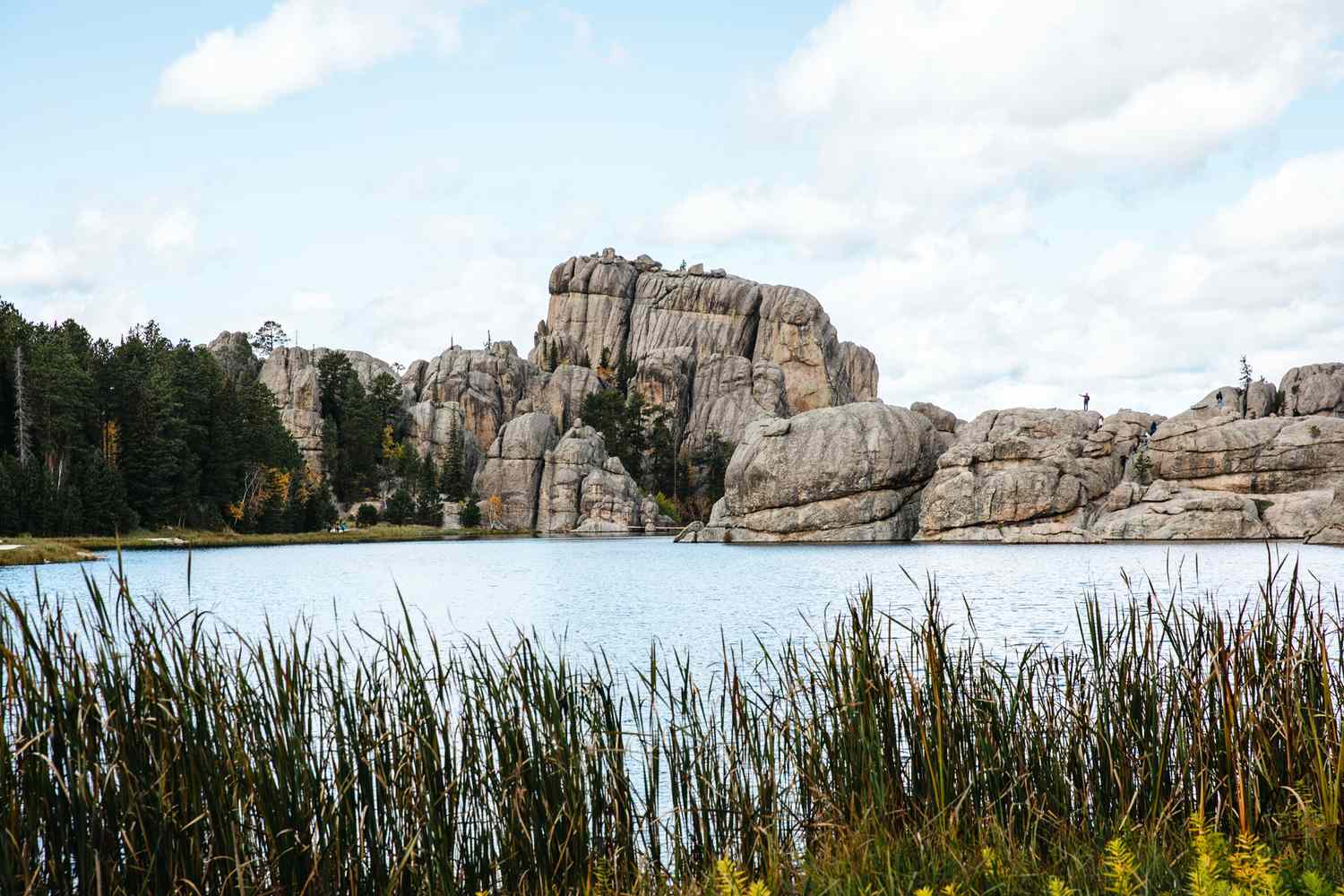
If you thought South Dakota was all prairies and flat lands, Needles Highway will prove you wrong. “The Needles Highway takes guests through some of the most stunning rock formations. Get out and explore—the hikes offered in the park are amazing and take you into the heart of it all,” says Austin. Without stopping, the drive is between 45 and 60 minutes, with the highlight being the eponymous “needle-like” granite formations and narrow rock tunnels.
Go for a hike.
Hiking boots (or at least some sturdy sneakers) are an important addition to your Custer State Park suitcase. “My two personal favorite [hikes] are Lovers’ Leap, a four-mile hike near the State Game Lodge that takes you through the heart of the pine forest and offers great views of the valley [and] Little Devils Tower,” says Austin. “Little Devils Tower is a bit more strenuous and includes some rock scrambling, but the views at the top are absolutely worth it. Anderson also recommends Lovers’ Leap, but suggests completing Black Elk Peak by Sylvan Lake Lodge if you’re not afraid of heights. “Black Elk Peak takes you up to the highest point of the Black Hills, over 7,200 feet of amazing views,” he says.
Explore the park on horseback.
Described by Anderdon as one of “the top adventures you don’t want to miss,” a horseback ride through the park is the best way to embrace your inner cowpoke. Rides leave from Blue Bell Lodge Stables and follow along French Creek. There are various levels of rides, with the half- and full-day rides that go deeper into the backcountry being the most advanced.
Where to Stay
Visit South Dakota
Park Lodges
“The experience of staying in one of the four lodges in the park will make memories for life. We offer all types of accommodations that will fit every family’s needs and expectations,” says Anderson. Built in 1920, State Game Lodge has historic hotel rooms, more modern accommodations, and standalone cabins. As its name suggests, Legion Lake Lodge is a lakeside property, complete with cozy cabin rentals. Blue Bell Lodge also has cabins, and Sylvan Lake Lodge, located at the top of Needles Highway, has both lodge rooms and cabins.
Campgrounds
Travelers seeking a more rugged experience have the option to camp in Custer State Park. Backpackers will find good spots in the French Creek Natural Area, and the full list of campgrounds—including Blue Bell Campground and Sylvan Lake Campground—can be found online. Reservations are required, and nightly fees vary by location.
Hotels
South Dakota isn’t known for its five-star or luxury hotels, but you’ll find a clear, comfortable place to stay at the Bavarian Inn in downtown Custer. If you’re down to make the drive from Rapid City, book a room at The Rushmore Hotel & Suites. Not finding anything that suits your fancy? There are also nearby rental properties available on Airbnb.
Where to Eat
Visit South Dakota
Park Lodges
The four park lodges have dining establishments for both guests and non-guests, but they’re only open seasonally (from May through the end of September or mid-October). For the most part, reservations are recommended, although there are grab-and-go options. The highlight of the culinary scene in Custer State Park, however, is the Hayride & Chuck Wagon Cookout. The 2.5-hour adventure includes a scenic wildlife tour as the hayride makes its way from Blue Bell Lodge to the chuck wagon feast. There’s also live entertainment and fun cowboy souvenirs; you’ll get your own hat and bandana.
Downtown Custer
Downtown Custer has a decent amount of options for breakfast, lunch, and dinner. Fuel up for your day in the park at Feel Good Cafe, open seasonally, just next to the Bavarian Inn. Mt. Rushmore Brewing Company has both a taproom menu and a standard restaurant menu; expect hearty, flavorful fare like nachos and wings, as well as more elevated entrees like prime rib, quail, and walleye (a South Dakota specialty). Skogen Kitchen, helmed by owners Joseph and Eliza Raney, is the perfect way to celebrate the end of your Custer State Park adventure—toast over Japanese A5 Wagyu, lobster steam buns, and bluefin tuna sashimi.
Read the full article here