


At first glance, Buck & Johnny’s, a restaurant just outside Lafayette, Louisiana, looks unremarkable: a warehouse-like space with exposed brick, a large dance floor, and walls decorated with football helmets and old oil company signs.
Then, a five-piece band strikes up in the corner. Louisiana zydeco rolls across the room, driven by accordion and the full-body washboard frottoir (a percussion instrument). Couples of all ages gravitate to the dance floor, stepping, spinning, and swaying with varying degrees of confidence.
This could be anywhere in Louisiana, one of America’s most musical states. Except for when you glance at your watch. It’s 9 a.m. And the dance floor is packed.
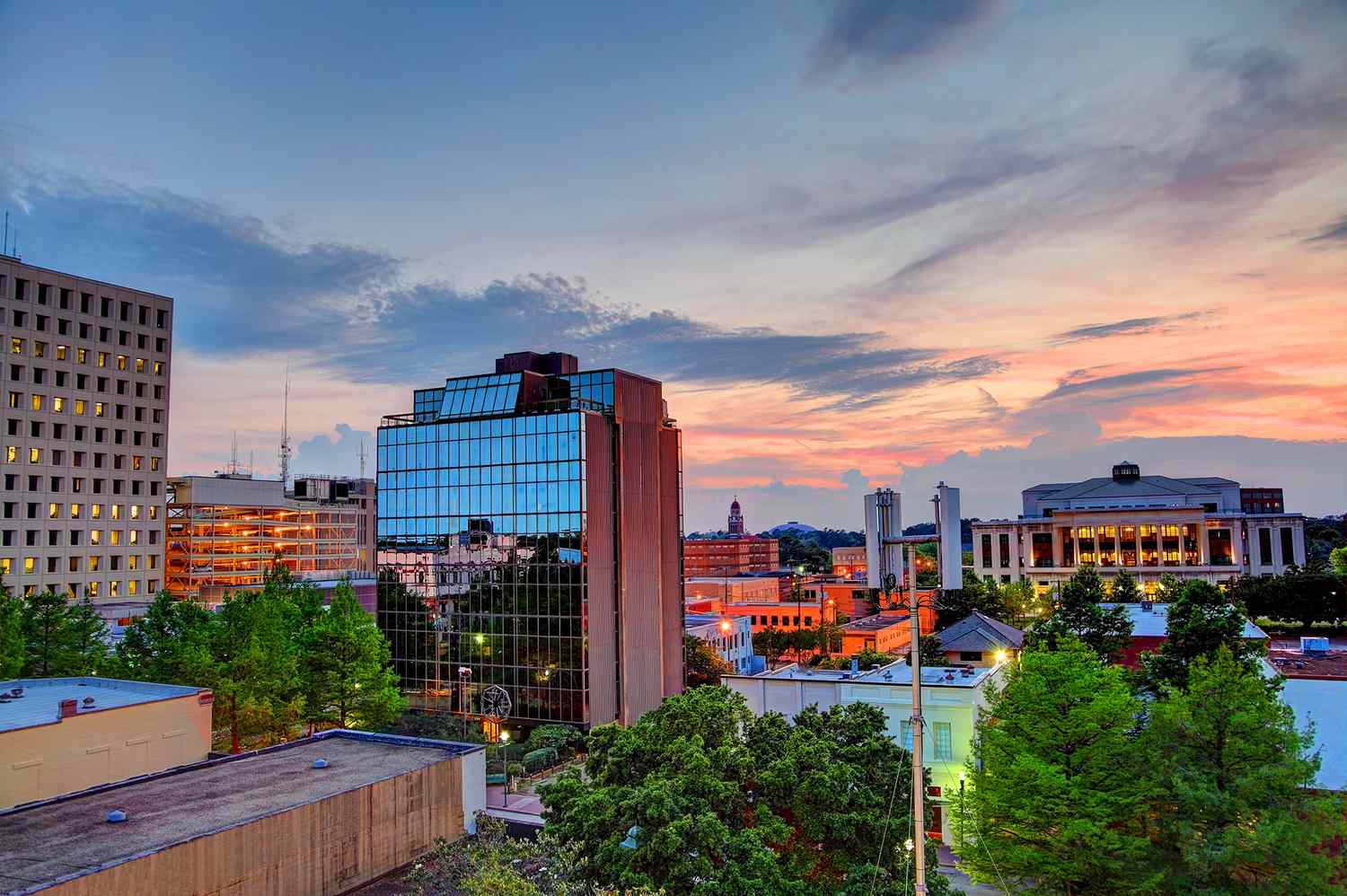
Set 135 miles from New Orleans and 215 miles from Houston, in the heart of Louisiana’s Cajun Country, Lafayette appears as unassuming from the outside as Buck & Johnny’s, with no obvious landmarks demanding a detour. Yet, it has repeatedly been named the happiest city in America, first by The Wall Street Journal in 2014 and more recently by The Times.
I should have seen the morning spectacle at Buck & Johnny’s coming. Fire hydrants and power boxes across town are painted with bright murals declaring “allons danser” (let’s dance). Casual Uber-driver chats escalate quickly into genuine concern when you admit you haven’t yet eaten at their favorite spot, sometimes followed by an invitation to join them there for lunch.
The Secret to Happiness
Ask locals what explains Lafayette’s happiness and the answers overlap.
Locals believe in friendliness as a social obligation and enthuse about a culture shaped by multiple influences: French, West African, Native American, German, Sicilian, Mexican, and Lebanese, all layered rather than separated. The effect is felt everywhere—in the music, food, even the way people welcome strangers.
Local historian Barry Jean Ancelet puts it succinctly. Everything that makes Lafayette distinctive—how it dances, sings, and eats—is the result of fusion. “There’s no sheet music to this,” he. “It’s all improv.”
Phil Thomas/Travel + Leisure
Food As a Love Language
If there’s a single metaphor for Lafayette’s happiness I hear repeatedly, it’s gumbo. You can identify every ingredient if you like, but that misses the point. The pleasure is in how it works together.
I see this logic play out on an afternoon food tour led by Marie Ducote-Comeaux, owner of Cajun Food Tours. Ducote-Comeaux drives a converted school bus between neighborhood eateries while narrating with the zeal of a revival preacher.
“Food is definitely our love language,” she says, before explaining that Cajun and Creole cooking was communal long before it was fashionable. Families pooled what little they had, cooked in bulk, and ate together, accompanied by a generous helping of news and gossip. The Cajun classics—gumbo, jambalaya, red beans, and rice—are still made this way today, bubbling away in cast-iron “Cajun hot tubs” for family gatherings, football games, and the city’s near-constant run of festivals. Food trails from the Cajun Boudin Trail to the Louisiana Hot Sauce Trail link the city, providing a tasty enticement for visitors to delve deeper.
The Local Palate voted Lafayette one of the best culinary towns in the South and the places we visit underline why. At Olde Tyme Grocery, Gulf shrimp takes center stage in standout po’boy sandwiches, and lines snake down the street during meat-free Lent. Elsewhere, tradition bends cheerfully at The Cajun Table, with crawfish reappearing year-round as Cajun nachos—fried tortillas smothered in seafood cheese sauce, topped with crawfish tails, and served alongside locally sourced gator bites. It’s as good as it sounds.
Borrowing, adapting, and improving is simply how things work here. “It’s not stealing,” Ducote-Comeaux says. “It’s progress.”
Living Among Gators
During my stay, I also visit Bayou Vermilion, just beyond the city limits, where many locals find a different kind of contentment. Food and music may anchor daily life in Lafayette, but the surrounding swampland—and its hunting, fishing, birding, and kayaking—completes it. Louisiana has declared 2026 its “Year of Outdoors,” inviting visitors to explore the state’s often-missed features.
On a lazy fall afternoon, I opt for a paddle with Pack & Paddle, digesting lunch as the bayou slides past beneath overhanging branches. The quiet is broken only by the swoop of herons and, less poetically, the occasional 737 descending into the nearby airport, which the waterway loops around with indifference.
My guide, Mike, is a born-and-bred Cajun. After a brisk audit of my itinerary to confirm I’ve been eating, drinking, and dancing properly, he turns his attention to the landscape, pointing out centuries-old oaks and dwarf palmettos. “Didn’t expect palm trees in Louisiana, right?” he asks, grinning.
For Mike, the city’s happiness comes down to something simple: everyone talks to everyone. People share what they love because they assume others will care—and when it’s the shared language of food, music, and outdoor pursuits, it’s a pretty safe bet.
A ripple close to the bank catches my eye just in time to see an alligator glide lazily under the surface.
“Just a tiddler,” Mike says, as I paddle a little faster.
To locals, gators are no more remarkable than ducks, though occasionally more disruptive. Mike tells me about mornings when students at the University of Louisiana at Lafayette wake to emails announcing classes are canceled because one of the resident gators has wandered onto campus.
“That’s one way to avoid class” he says, before calmly reciting his grandmother’s recipe for gator steaks.
We finish at Vermilionville, a living history park where volunteers portray 19th-century Cajun, Creole, and Native American life. Pride in local tradition runs deep here, though it is telling that even in period costumes, people are quick to break character to ask where I’ve had the best jambalaya—and then direct me elsewhere.
Allons Danser!
Lafayette celebrates every strand of its identity loudly and often. Chief among its gatherings is the Festivals Acadiens et Créoles, held each October—a joyful assertion of the region’s French-speaking heritage.
In a city park temporarily surrendered to music and food, announcements over the PA system (“N’oubliez pas ton bloody mary!” (Don’t forget your bloody mary!)) compete with live bands singing in Cajun French. Couples dance on the grass while chefs across the park tend bubbling pots of jambalaya and gumbo. One of them sums it up neatly: “You don’t need to visit a museum to see our culture—just follow your ears or nose.”
As evening falls, the crowd drifts downtown to the Blue Moon Saloon, a honky-tonk that resembles a back porch more than a concert venue. Local musicians rotate casually on and off the tiny stage. The dance floor fills again.
An elegant woman with just a touch of sunburn takes my hand and leads me onto it, guiding my clumsy feet through a basic Cajun two-step while asking what I’ve made of Lafayette so far. When I mention Buck & Johnny’s, her face lights up.
“Well, sweetheart,” she says. “Dancin’ makes us all happy. And you can’t dance all day if you don’t start in the morning.”
Getting There
Air: Lafayette Regional Airport (roughly 2 miles from downtown) has direct flights to Atlanta, Charlotte, Dallas, and Houston.
Car: Lafayette is easily accessible along I-10 from New Orleans (about 2 hours) or Houston (about 3.5 hours).
Bus: Both Greyhound and FlixBus provide services connecting Lafayette to destinations across the South.
Train: The three-times weekly Sunset Limited Amtrak service calls at Lafayette on its journey between New Orleans and Los Angeles.
Where to Eat
Old Tyme Grocery: Likely the best po’boy you’ll ever try in a welcoming mom-and-pop grocery setting.
Vestal: All dishes are cooked over a wood fire in the open kitchen, making this downtown spot a full-on sensory experience.
Poupart Bakery: The only authentic French bakery in Lafayette, serving up year-round king cake and patisseries.
Read the full article here