


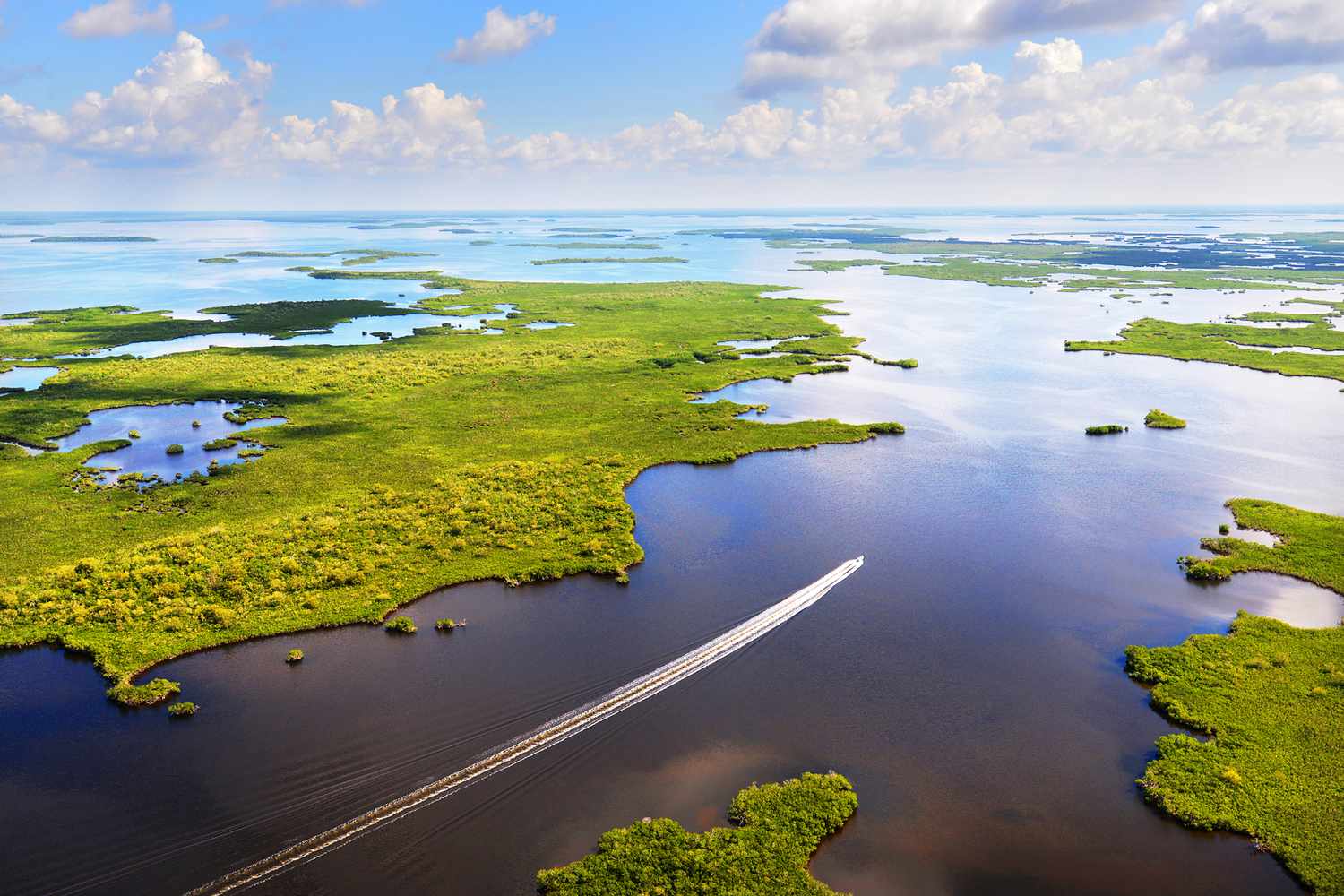
- Everglades National Park spans 1.5 million acres and is accessible through three main entrances located hours apart.
- Known for its biodiversity, the park provides a protected habitat for Florida panthers, West Indian manatees, and both alligators and crocodiles, among other animals.
- Visit during the dry season, December to April, for cooler weather and abundant wildlife viewing opportunities.
Those who associate wide-open wilderness areas with the Western United States likely haven’t been to Everglades National Park. The Florida park stretches across 1.5 million acres and protects the largest designated wilderness area east of the Rocky Mountains. In the Everglades, alligators and crocodiles coexist (and are seen regularly), and the flora and fauna are so robust that this national park was the first set aside purely for its biodiversity.
“Everglades is not only a national park, but also a World Heritage Site, an International Biosphere Reserve, a Wetland of International Importance, and a specially protected area under the Cartagena Treaty,” explained Allyson Gantt, chief of communications and public affairs for Everglades National Park and Dry Tortugas National Park, in an interview with Travel + Leisure. “I love sharing the complexities and beauty of this park with visitors.”
Meet the Expert
Allyson Gantt has been a National Park Service ranger for over 25 years and is currently serving as the chief of communications and public affairs for Everglades National Park and Dry Tortugas National Park.
Read on for tips from Gantt, who knows first-hand what makes Everglades National Park a special place and what first-time visitors need to know.
Stephanie Pollak/Travel + Leisure
Planning Your Visit
Everglades National Park is massive, so Gantt says it is vital to show up with a plan for what you will do and see. “Because of the geographic spread of the park, visitors may want to focus on one area if they only have a few hours or one day.”
The park is open year-round, but offers two very different experiences based on when you visit. The dry season (December to April) is busier, with better weather, more wildlife, and fewer mosquitoes, while the wet season (May to November) is quieter. Visitors can buy a park pass in person at the Homestead or Shark Valley entrances to the park or at the Marjory Stoneman Douglas Visitor Center at the Everglades City entrance. If you’re visiting during the busy dry season, especially on a weekend, buy your park pass online through Recreation.gov to avoid waiting in long lines at the entrance gate. A pass for a single vehicle or vessel is $35 and valid for seven days.
Even if you do buy a park pass in advance, the Homestead and Shark Valley entrances are notoriously congested with limited parking during the busy winter season. The park website says, “It is recommended to visit these areas on weekdays, arrive early in the day (before 10 a.m.), and carpool to the park if possible.”
How to Get There
Due to its size, Everglades National Park has three entrances in three different cities. The southern section of the park is best accessed from the Homestead entrance, which is the park’s primary entrance. A trolley service is offered from Homestead between December and April, but reservations are recommended. The Homestead entrance is outside the town of the same name, and has the Ernest F. Coe Visitor Center and the Guy Bradley Visitor Center (at Flamingo). Homestead also provides access to the neighboring Royal Palm State Park.
The northern section of the park is best accessed from the Miami or Everglades City entrances. The closest entrance to Miami is Shark Valley, which has the Shark Valley Visitor Center. The entrance closest to Naples is the Everglades City entrance, which has the Marjory Stoneman Douglas Visitor Center.
lucky-photographer/Getty Images
Best Time to Visit
As we mentioned, there are two very distinct seasons in Everglades National Park: dry season and wet season. If you visit between December and April, you’ll experience the dry season, characterized by cooler temperatures and fewer mosquitoes. The dry season’s preferable climate aligns with the park’s busy season—and it’s also when most of the wading birds (and their predators) can be seen.
The wet season in the Everglades typically runs from May to November, and it’s rainy with lots of mosquitoes. The weather and bugs that come along with South Florida summers lead to fewer visitors, which can be a major plus.
“The wetter summer season offers incredible cloud formations and calmer waters for boating and fishing,” Gantt adds. “The shoulder seasons, especially November/early December and late April into May, can be less busy times to visit, but still have plenty of opportunities to enjoy all the park has to offer.”
Best Things to Do in Everglades National Park
It’s impossible to feel bored during a visit to Everglades National Park. The expansive park has more than its fair share of interesting ecosystems and wildlife. There are marine and estuary topographies, cypresses, and mangroves. There’s a lot to see and do, but for a first-time visitor, Gantt has a few specific recommendations.
Drive the Homestead Entrance Road and hike.
“The Homestead entrance has a 38-mile road with multiple stops with short trails through a variety of the park habitats,” said Gantt, who notes that this is a good way to get acquainted with the southern section of the park.
She specifically recommended the Anhinga Trail, a short route that is wheelchair accessible and starts from the Royal Palm Visitor Center. Alligators, turtles, herons, and egrets are often seen along this trail.
Join a tram tour for wildlife sightings.
Near the Shark Valley entrance is a paved 15-mile loop that goes along the Shark River Slough, where alligators, turtles, and many bird species are often found. The trail is great for walking, but if you want to do the full 15 miles, your best bet is to rent a bike or hop on the tram—both of which are available through Shark Valley Tram Tours. There’s also an observation tower in the Shark Valley area with a viewing deck that overlooks alligators, turtles, fish, and birds.
Gantt notes that at this part of the park, “Visitation is higher and parking can be challenging on busy weekends and holidays.”
Visit Florida
Take an airboat tour.
There are three airboat companies that operate in the park, and Gantt says cruising through the Everglades on a flat-bottomed boat is a must during your visit. The three operators with permission to operate in the park are Coopertown, Everglades Safari Park, and Gator Park.
Visit the mangroves and Florida Bay.
From the Homestead entrance, you can get to the Flamingo area, which is considered the gateway to Florida Bay. The bay and the mangrove-lined waterways that feed into it are home to much of the park’s marine life.
“At Flamingo, we offer narrated boat tours through the mangroves and also on the open water of Florida Bay. There are several great trails in the area for paddling, as well as the open area of Florida Bay. Manatees, crocodiles, and osprey are frequently seen around the marina,” said Gantt.
Beyond the marina, which has a small store and a gas station, the Flamingo area of the park has a campground and kayak, canoe, and bicycle rentals (through Flamingo Adventures).
Cruise through the Ten Thousand Islands along the Gulf.
If you want to play along the watery landscape of the Gulf Coast, head to the Everglades City entrance near Naples. This area is the gateway for expeditions to the Ten Thousand Islands, a maze of mangrove islands that are only accessible by boat, and you can book a boat tour with Everglades National Park Adventures. The two-hour tour takes place on a 49-passenger pontoon boat with a trained guide and occasionally an Everglades park ranger.
Troy Harrison/Getty Images
Must-see Wildlife and Natural Features
The Everglades is essentially a giant wetland that consists of sawgrass marshes, pine flatwoods, and coastal mangroves. The boggy wilderness is both beautiful and daunting, especially when you consider that it’s home to a huge number of animals, including the Florida panther, the West Indian manatee, and the endangered leatherback turtle.
But no creatures are as synonymous with the Everglades as the alligators and crocodiles. Gantt notes that “South Florida is the only place in the world where [alligators and crocodiles] coexist thanks to the combination of freshwater and saltwater areas.”
Beyond frequent sightings of the large reptiles, Gantt says the park has a huge number of birds, and it’s “on the migratory path for a number of species, thus offering fantastic birding opportunities, especially in the winter.”
Animals aside, Everglades National Park has a large number of plants, trees, and landscapes, from coastal mangroves to hardwood forests. Remember, the park was originally protected because of its biodiversity, which is its biggest draw.
Where to Stay
Flamingo Lodge
There is only one hotel within Everglades National Park. The Flamingo Lodge is located at the southernmost tip of the Florida peninsula and can be reached via the Homestead entrance. The lodge has 24 rooms, including eight two-bedroom suites that can accommodate up to six people. The highlight of each room is the east-facing balcony overlooking Florida Bay, giving guests the chance to catch spectacular sunrise and sunset vistas.
Flamingo Glamping Tents and Houseboats
Beyond the lodge, the Flamingo area of the park has two “glamping” options—one on land and one on water. Visitors can rent one of the safari-style glamping tents, which have a fan and electricity. You will need to bring your own sleeping pad and bag.
For a unique lodging option, book one of the 42-foot houseboats, which have kitchens, bathrooms, linens, and air conditioning. The houseboats can sleep up to six people and can be taken out on the water.
Long Pine Key and Flamingo Campgrounds
The only other in-park lodging options are the Long Pine Key and Flamingo campgrounds. Both campgrounds can be driven to and have RV and tent sites. The Long Pine Key Campground is the most accessible and is located near the Homestead entrance, while the Flamingo Campground is set deeper inside the park in the Flamingo area. Both campgrounds offer great stargazing and easy access to the Flamingo Marina, a popular launch site for fishing trips.
Boogich/Getty Images
Where to Eat
Flamingo Restaurant, adjacent to the Flamingo Lodge, is the only full-service restaurant in the park. It offers breakfast, lunch, and dinner as well as a full bar. “Anglers heading out on the water with a licensed fishing guide can also try the restaurant’s Cook Your Catch offering, bringing back their fresh fish to be prepared by the restaurant,” said Gantt.
There are plenty of dining options in cities surrounding the Everglades—Miami, Naples, and Homestead—but most visitors bring their own food and drinks into the park. There are picnic tables at Long Pine Key and Flamingo campgrounds.
For grab-and-go snacks and drinks, Gantt says you can find a limited selection at the park’s visitor centers (Ernest F. Coe Visitor Center, Royal Palm Visitor Center, and Shark Valley Visitor Center) and at the Flamingo marina shop.
Read the full article here