


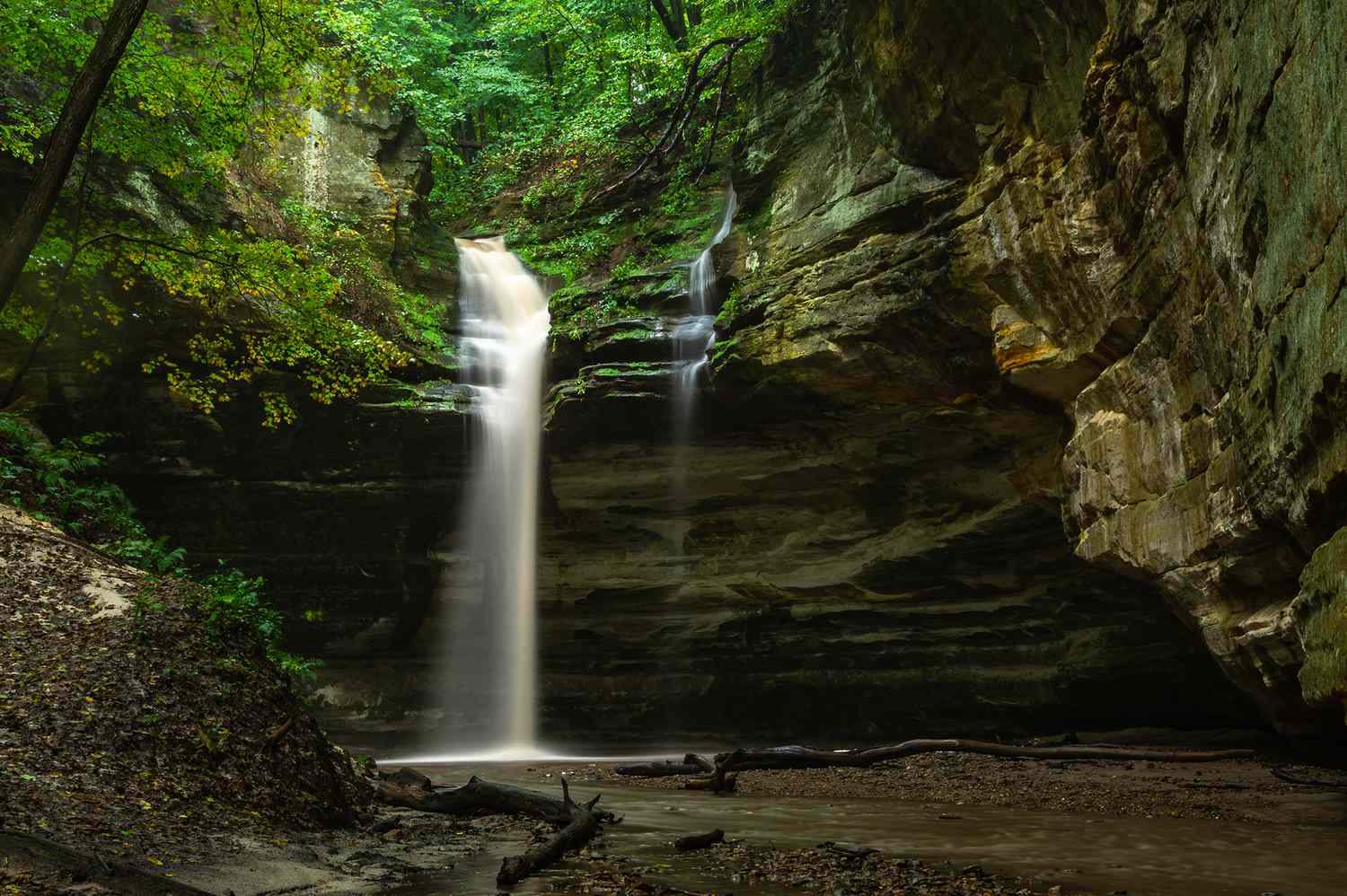
- Starved Rock State Park, about two hours west of Chicago, has 18 sandstone canyons shaped by glaciers and seasonal waterfalls.
- The park’s waterfalls flow strongest from March through June and transform into dramatic icefalls in winter.
- Visitors can hike 13 miles of trails, fish or paddle on the Illinois River, camp overnight, or stay at the historic Starved Rock Lodge.
If you drive about 100 miles west of Chicago—a journey mostly spent on I-80—you’ll come across an area that looks dramatically different than what you’ll see along the shore of Lake Michigan. In about two hours, you’ll go from one of America’s best cities to Starved Rock State Park, a wilderness area located on the Illinois River. It also just received a major upgrade. According to CBS News, the park is currently undergoing an $18 million trail improvement project, but in the meantime, it remains open.
Established in 1911, Starved Rock is Illinois’ second state park and a popular destination among those who love the outdoors, history, and photography. Its name comes from a Native American legend that recounts a 1760s battle in which members of the Illinois Confederation fled to the top of the park’s now eponymous 125-sandstone bluff for refuge. The park’s history goes back much further, though. Over 14,000 years ago, the 18 sandstone canyons within the park were shaped by meltwater from glaciers. Today, these canyons are filled with small creeks, wildlife, and one of the park’s highlights: waterfalls.
Nearly everywhere you go, no matter the season, you’ll stumble across jaw-dropping natural beauty. However, you will have to time your trip correctly if you want to see these rain and snowmelt-fed waterfalls. While Starved Rock State Park is open all year-round, its waterfalls are seasonal. For the most part, they occur from March through June. Come June (and typically lasting through October), there’s a chance the waterfalls will have dried out. From November through March, rain, snow, and snowmelt typically replenish the waterfalls.
When January arrives, the waterfalls often transform into icefalls. According to the park, there are usually around eight visitor-accessible icefalls. Most visitors simply hike to the icefalls and admire their beauty, but there are also those who choose to go ice climbing. Bringing your own equipment is required—and only four canyons are open to this type of activity.
Not into ice climbing? There are plenty of other things to do in Starved Rock State Park. 13 miles of trails allow visitors to hike among white and red oaks, maples, hickories, and northern white cedars, among other tree species. On the west end of the park, you can launch a boat on the Illinois River and fish for bullhead, walleye, and crappie. Kayaking and canoeing are also possibilities, but you’ll have to bring your own vessel; the park doesn’t have rentals.
Starved Rock is certainly doable as a day trip from the Windy City, but those in the know understand its beauty is worthy of a longer trip. Book one of the sites at Starved Rock Campground (although these coveted spots fill up quickly) for an overnight experience, or stay at the Starved Rock Lodge & Conference Center, a 90-key property that dates back to the 1930s.
Read the full article here