


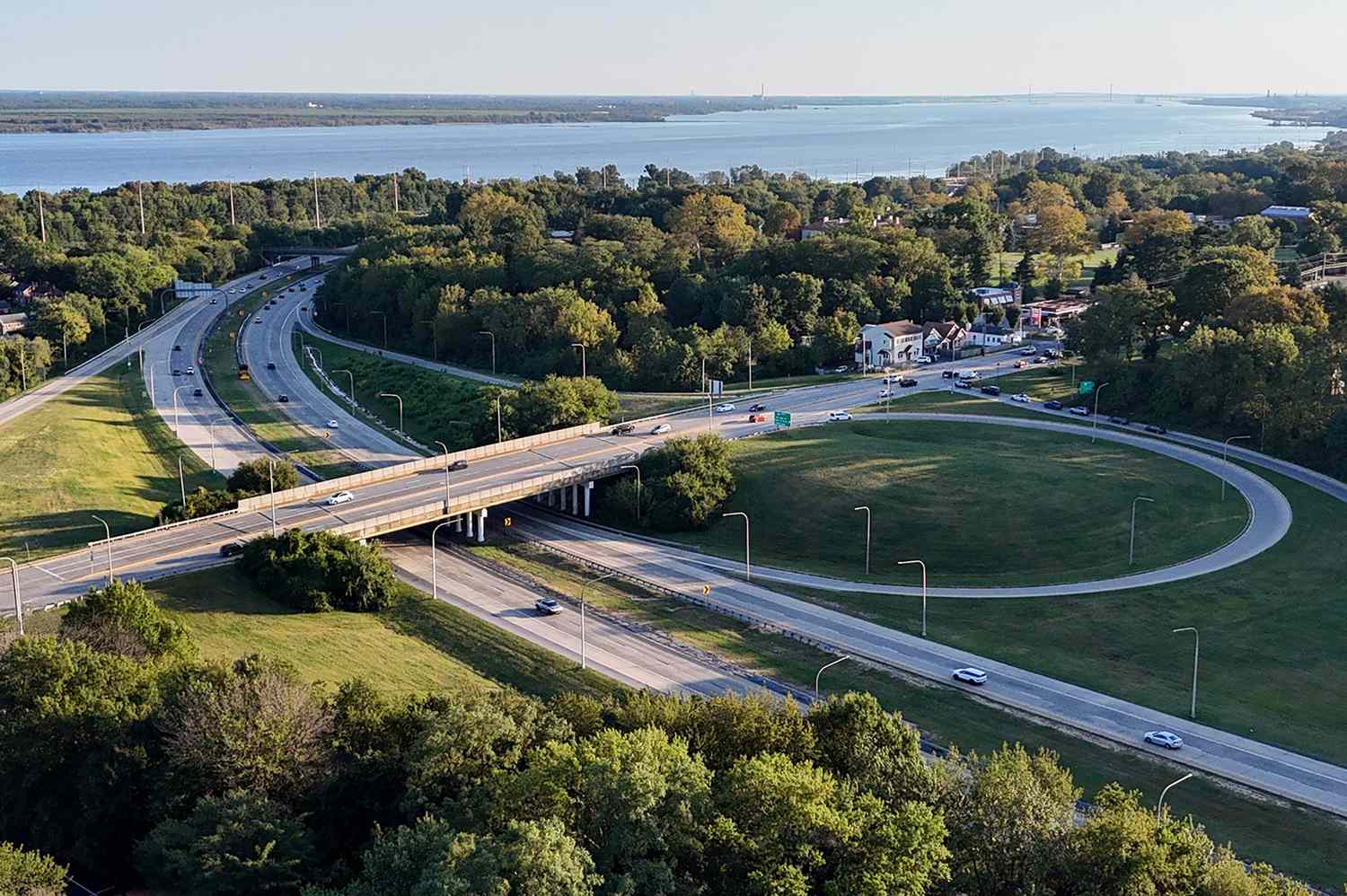
- A new report ranked Delaware as the No. 1 state for EV road trips thanks to its dense charging network and low average charging costs.
- California followed closely behind with 28 charging stations per 100 miles, especially along scenic routes like Highway 1.
- Experts recommend planning charging stops strategically, monitoring weather and speed, and building in a range buffer to reduce stress.
Americans have fallen back in love with road trips—and in this new age of electric cars, road trips are looking a little different. With summer road trip season just around the corner, Signal + Power, an EV cord and power adapter manufacturer, recently put together a report on the best states to take an EV road trip.
For its analysis, Signal + Power ranked all 50 states across a few critical data points that matter most to EV drivers, including things like EV charging availability, affordability, road mileage, tourist attractions, and the average hotel prices in each state. After looking at all the numbers, it named Delaware as the No. 1 state for roadtripping in an electric vehicle.
“Delaware places No. 1 overall, driven by its dense public charging network and relatively low charging costs,” the team shared in the findings. “The state offers 12 charging points per 100 miles of road, with an average charging cost of $0.33 per kilowatt-hour, making it especially appealing for EV drivers planning longer journeys.”
Its topography, Jae Roe, a power cord expert at Signal + Power, shared, also makes it a top-notch EV destination.
“Delaware is almost tailor-made for electric vehicles. It’s compact, relatively flat, and well-covered by charging infrastructure along the I-95 corridor and coastal routes,” Roe told Travel + Leisure via email. “Because the state is under 100 miles long, most modern EVs can explore it comfortably on a single charge. That dramatically reduces range anxiety, especially for first-time EV travelers.”
That, and the state’s short, scenic drives that connect beach towns like Rehoboth Beach and Lewes, “makes Delaware a stress-free proving ground for EV road trips.”
Coming in a close second is California, which has an impressive 28 charging points per 100 miles, with a particularly strong presence along key routes like Highway 1.
“California’s Highway 1 corridor is arguably the gold standard for EV infrastructure,” Roe said. Charging stations are integrated into shopping centers, restaurants, and scenic overlooks, so charging becomes part of the experience.”
Other top spots on the list include West Virginia at No. 3, followed by Rhode Island and New Jersey, Connecticut, Massachusetts, Maryland, New Hampshire, and Ohio, rounding out the top 10.
But no matter where you drive your EV this summer, Roe has a few tips.
“The biggest shift with an EV road trip is moving from a ‘drive-until-empty’ mindset to a ‘plan-and-enjoy-the-stops’ mindset. You want to think in terms of charging from about 10 percent to 70 or 80 percent, which is the fastest part of the charging curve, rather than filling to 100 percent every time,” Roe said.
He added that drivers should always check charger reliability and have a backup location nearby. “Apps like PlugShare and route planners that factor in terrain and weather make a huge difference in reducing stress,” he shared.
Roe’s last tip is perhaps the most practical—and often-overlooked. “Weather and speed matter more in an EV than people expect. Cold temperatures, high highway speeds, and roof cargo can significantly reduce range, so building in a 15 to 20 percent arrival buffer is smart planning,” he said.
But overall, Roe recommends taking it easy—and try to make charging a part of the fun. “Align charging stops with meals, sightseeing, or rest breaks, so the journey feels more relaxed than a traditional gas-powered trip,” he says.
Read the full article here