


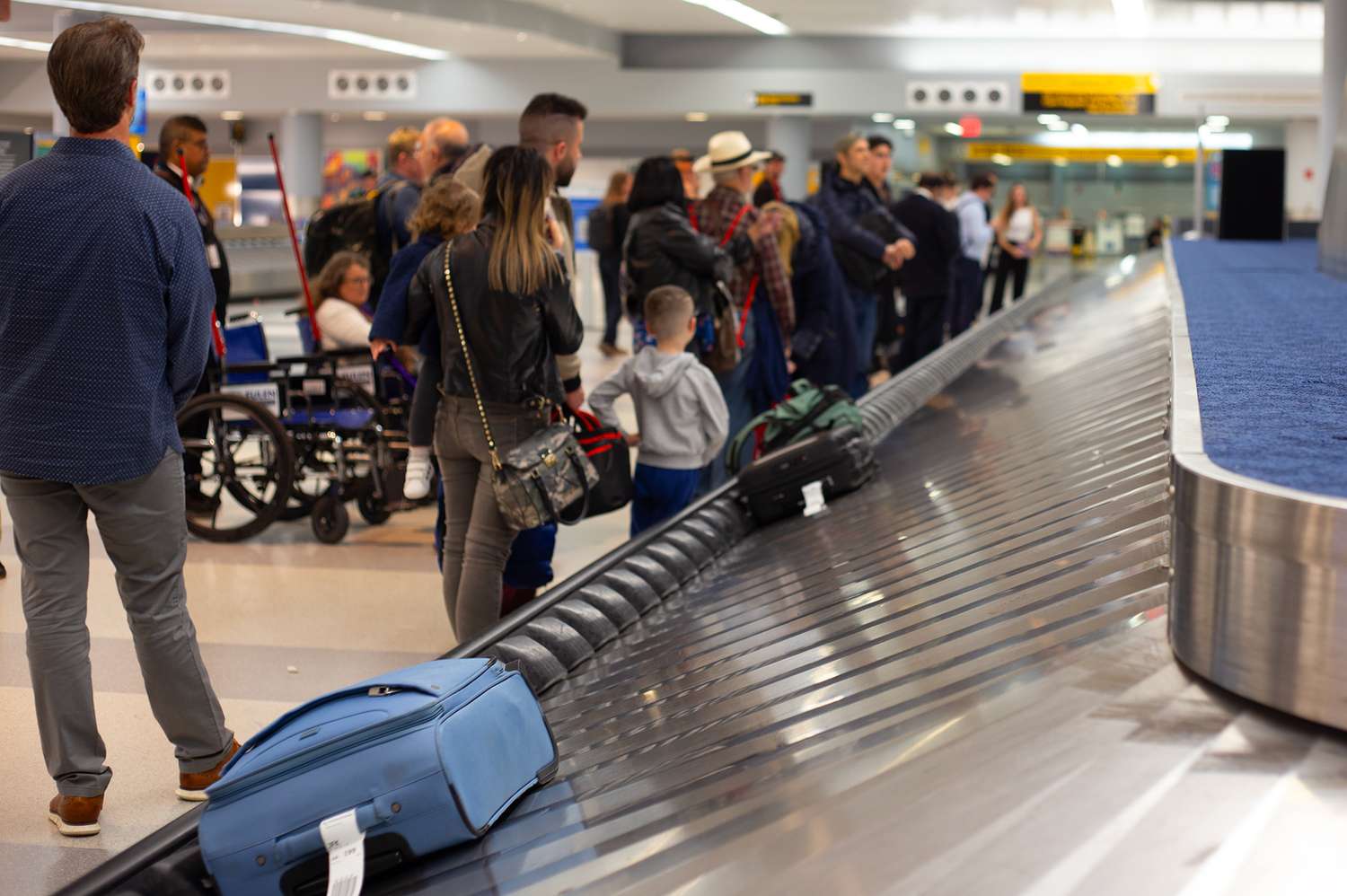
Most frequent fliers have experienced that sinking feeling of waiting for their bag to come down the conveyor belt, dreading the possibility of a delayed or lost bag. But in reality, very few bags are actually lost, delayed, stolen, or damaged.
In 2024, airlines globally mishandled 6.3 bags per 1,000 passengers, according to SITA’s (an air transport communications and information technology company) Globe Baggage Report. U.S. carriers had better luck at only 5.5 bags per 1,000 passengers for the year, according to the Department of Transportation.
But when it does happen, what becomes of the luggage that never makes it to its owner? The answer involves a 90-day waiting period and eventually, a massive sorting facility in Alabama.
The 90-day Window
Eric Lee/Getty Images
Most bags find their way home quickly, according to Sonni Hood, senior manager of public relations and communications at Unclaimed Baggage, a company that purchases unclaimed items from airlines. It is the only retailer of lost luggage items in the U.S.
“99.5 percent of bags will reach their rightful owners immediately,” Hood says. “For those that do not, the airline industry standard requires a bag to remain lost for a minimum of 90 days before it’s officially deemed ‘unclaimed.'”
Hood says airlines conduct extensive tracing and generally have a high success rate during those 90 days. According to Hood, less than 0.03 percent of checked bags will go permanently unclaimed—that’s about three bags out of every 10,000.
Why Bags Get Lost in the First Place
Robyn Beck/Getty Images
Some airlines are adopting new technology to reduce the number of bags that go astray. Air Canada, Delta Air Lines, and United Airlines have all integrated Apple’s AirTag tracking into their mobile app, allowing passengers to share their device’s location directly with the airline. The feature helps ground crews locate misplaced bags more efficiently, potentially reducing the number of items that enter the unclaimed system. But bags aren’t always lost unintentionally, according to Evan Oshan of Oshan & Associates, an aviation attorney with over 20 years of experience.
“I’ve handled cases where weight distribution requirements for cargo holds actually led to bags being offloaded and ‘lost’ deliberately to meet safety requirements,” Oshan says. “Ground crews working on tight turnarounds sometimes prioritize speed over accuracy, and that’s where the system breaks down.”
Know Your Rights As a Passenger
poco_bw/Getty Images
Understanding compensation can be complicated, according to Oshan, and having proper documentation is crucial.
“Passengers assume their travel insurance will cover lost bags, but most policies have significant exclusions,” Oshan says. “The baggage handling contract you agree to when checking luggage gives airlines enormous discretion, and challenging their determinations requires understanding both contract law and aviation regulations.”
If you’re checking a bag with valuables, keep receipts for high-value items and take photos of your bag’s contents before checking it in. Items that are worth more than the airline’s standard liability limit should be declared as well. Although the chance of a bag being lost forever is low, these practices can help protect you and your valuables if something does get lost or damaged.
What Happens After 90 Days
Laurent Coust/Getty Images
Once the 90-day period passes and the owner of a lost bag still hasn’t been located, Oshan says airlines essentially write off the bag as a loss. Passenger compensation can depend on a variety of factors, such as if the flight was an international or domestic one. After claims are processed, Hood says that’s when Unclaimed Baggage steps in.
“We purchase the remaining unclaimed bags sight unseen and transport them to our facility, where every item is carefully sorted and given a second life through reselling, recycling, or repurposing through donations,” Hood says.
Inside the Sorting Process
Twenty47studio/Getty Images
At Unclaimed Baggage’s facility in Scottsboro, Alabama, Hood says each bag is opened by trained processors who evaluate the contents one piece at a time. Items are then sorted into three primary categories: resell, recycle, or donate through the company’s charitable foundation, Reclaimed For Good.
“We’re not a thrift store, so only pieces that meet our resale criteria make it to the store or website,” Hood says, noting that electronics are tested and wiped clear of personal information. All clothing items are laundered as well. Items that don’t meet resale standards but are still usable are donated, and only a small fraction are discarded due to safety or hygiene concerns.
Hood continues that oftentimes, there is a misconception that airlines don’t do enough to reunite bags with their owners. “In reality, they work incredibly hard to make that happen,” Hood says. “There’s a robust, multi-step tracing process in place, and airlines successfully reunite more than 99.97 percent of all checked bags … Our role is to provide a sustainable and responsible solution for orphaned items.”
Read the full article here