


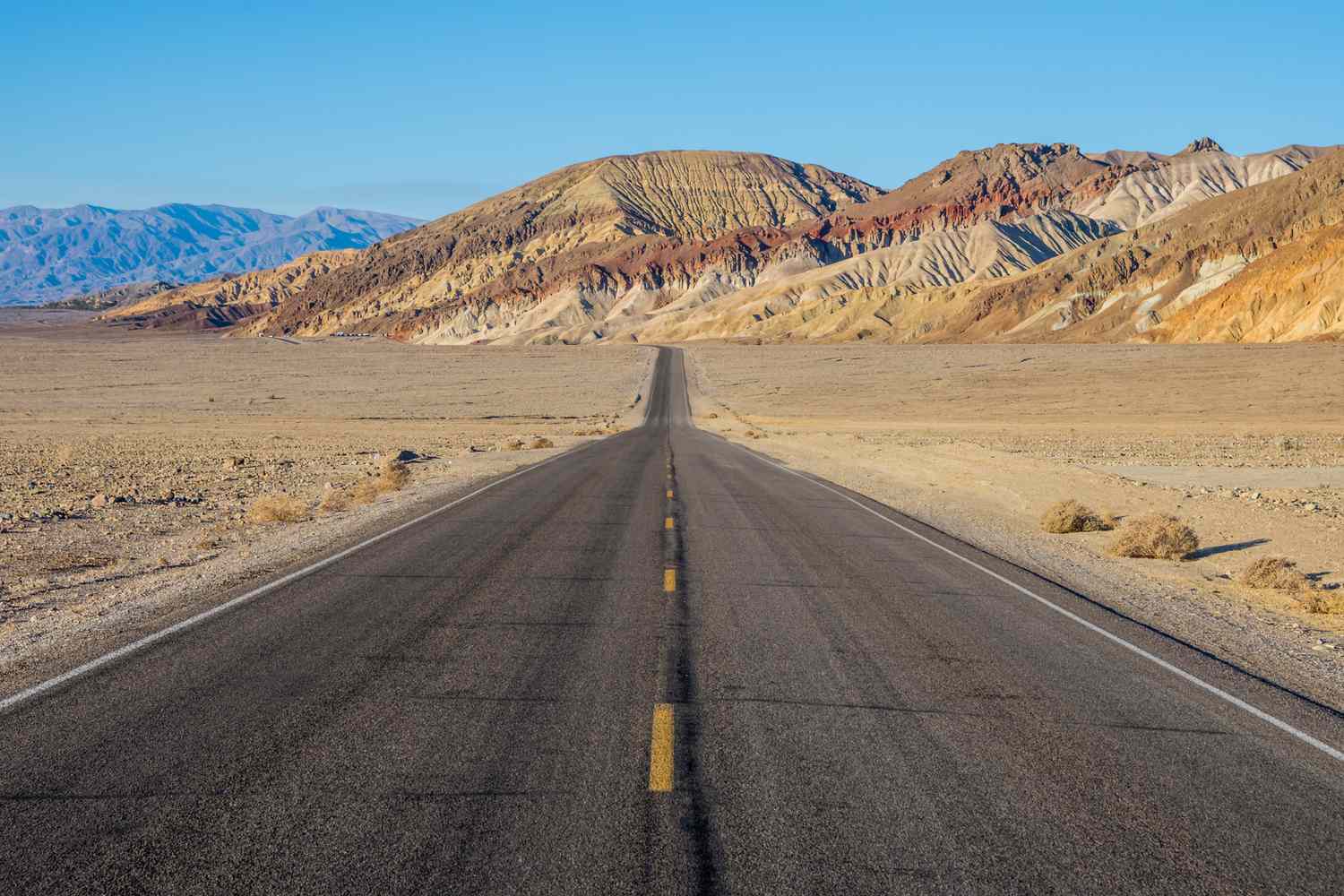
- The route sometimes referred to as the “Death Drive” is a 370-mile loop from Las Vegas through the dramatic landscapes of Death Valley.
- Timing is essential, with spring and fall providing the safest and most enjoyable conditions.
- Travelers should prepare for limited cell service and possible road closures by carrying supplies and checking conditions before setting out.
When you hear the name “Death Drive,” you might imagine danger, isolation, or harsh conditions. In reality, this 370-mile loop stretching from Las Vegas into Death Valley and back is one of the state’s most compelling road trip adventures. It combines mountains, desert basins, and ghost towns with quirky roadside stops, dramatic scenery, and a sense of solitude that’s hard to find elsewhere. Here’s why it ranks among the best trips in Nevada and what you should know before you go.
Editor’s Note: Some roads are currently closed due to damage. Check the National Park Service website for current closures before you plan your trip.
Know Before You Go
picturist/Getty Images
Unlike some remote wilderness routes, the Death Drive is easy to reach from Las Vegas and can be completed in just a few days. Since it’s a loop drive, you don’t have to go back the same way, and each part offers new scenery. While it’s possible to complete the loop in under six hours without stopping when all portions are open, it’s better to take your time, explore nearby attractions, and stay overnight along the route.
Timing is one of the most important factors when considering the Death Drive. Summers in Death Valley are notoriously harsh, with temperatures often exceeding 110 degrees Fahrenheit and frequently reaching 120. These conditions make hiking dangerous, and even driving can be challenging. Spring and fall are the best times to visit, as the days are warm but not too hot, and the nights are comfortable. Winter is less popular, and travelers should be prepared for snow or icy conditions at higher elevations, especially near Mount Charleston.
In remote areas, cell phone reception may be limited. Gas stations and restaurants are scarce once you leave larger towns, so it’s smart to carry extra water, food, and a spare tire. Road conditions are mostly good, but some detours can be rough, and weather events might cause closures, so always check road conditions with the National Park Service before you start driving.
Stops Along the Way
weltreisendertj/Getty Images
Leaving Las Vegas, the first major geologic wonder you’ll encounter is Red Rock Canyon, famous for its sandstone cliffs, hiking trails, and petroglyphs. Heading west to Pahrump are several wineries like Artesian Cellars, which offers a full-service restaurant where you can take a break for lunch. Make a brief stop at Coffin It Up, a quirky coffin-themed roadside shop just outside Pahrump, for a playful scare and to pick up some spooky souvenirs before heading to Death Valley Junction in California.
Must-see stops during this part of the journey include the Amargosa Opera House, Dante’s View, Zabriskie Point, and Artist’s Palette. At Badwater Basin, the lowest point in North America sitting nearly 282 feet below sea level, the landscape of white salt flats stretches endlessly in every direction. Here, you can walk the salt flats and visit the Natural Bridge Trail and the Devil’s Golf Course.
After visiting the basin, it’s best to call it a day and spend the night at the Oasis at Death Valley, near Zabriskie Point. This complex features the Inn at Death Valley, the Ranch at Death Valley, casitas, cottages, and a campground, as well as six dining venues, a spa, and access to the 18-hole Furnace Creek Golf Course.
On the return segment, you can take Daylight Pass Road toward Las Vegas to explore the half-mile-wide Ubehebe Crater, Leadfield ghost town, Klare Spring, and Titus Canyon, a narrow gorge with stunning slot canyons and colorful rock formations. In Rhyolite, the ruins of a bank, bottle house, and train depot serve as reminders of a once-booming mining town. Just outside Rhyolite is the Goldwell Open Air Museum, where life-sized ghostly figures and colorful sculptures create a surreal and eerie contrast against the desert backdrop.
In the Amargosa Valley, the Amargosa Big Dune Recreation Area features staggering formations of sand dunes that rise hundreds of feet over the surrounding terrain. Travelers can explore the open dunes on foot, by ATV, or in dune buggies. Nearby is the Ash Meadows National Wildlife Refuge, which is home to critically endangered Amargosa toads and pupfish.
Near Mount Charleston, alpine scenery feels like a world away from the desert floor. Here, you can spend a night in the mountains at The Retreat at Charleston Peak and hike along the Mary Jane Falls Trail, the Bristlecone Loop, and the challenging Griffith Peak Trail. Travelers can also choose to enjoy a luxurious stay in Las Vegas at properties like the Bellagio or the newer Fontainebleau Las Vegas before and after the drive, for some pre- and post-drive pampering, a change of pace, and the thrill of Sin City.
Read the full article here