


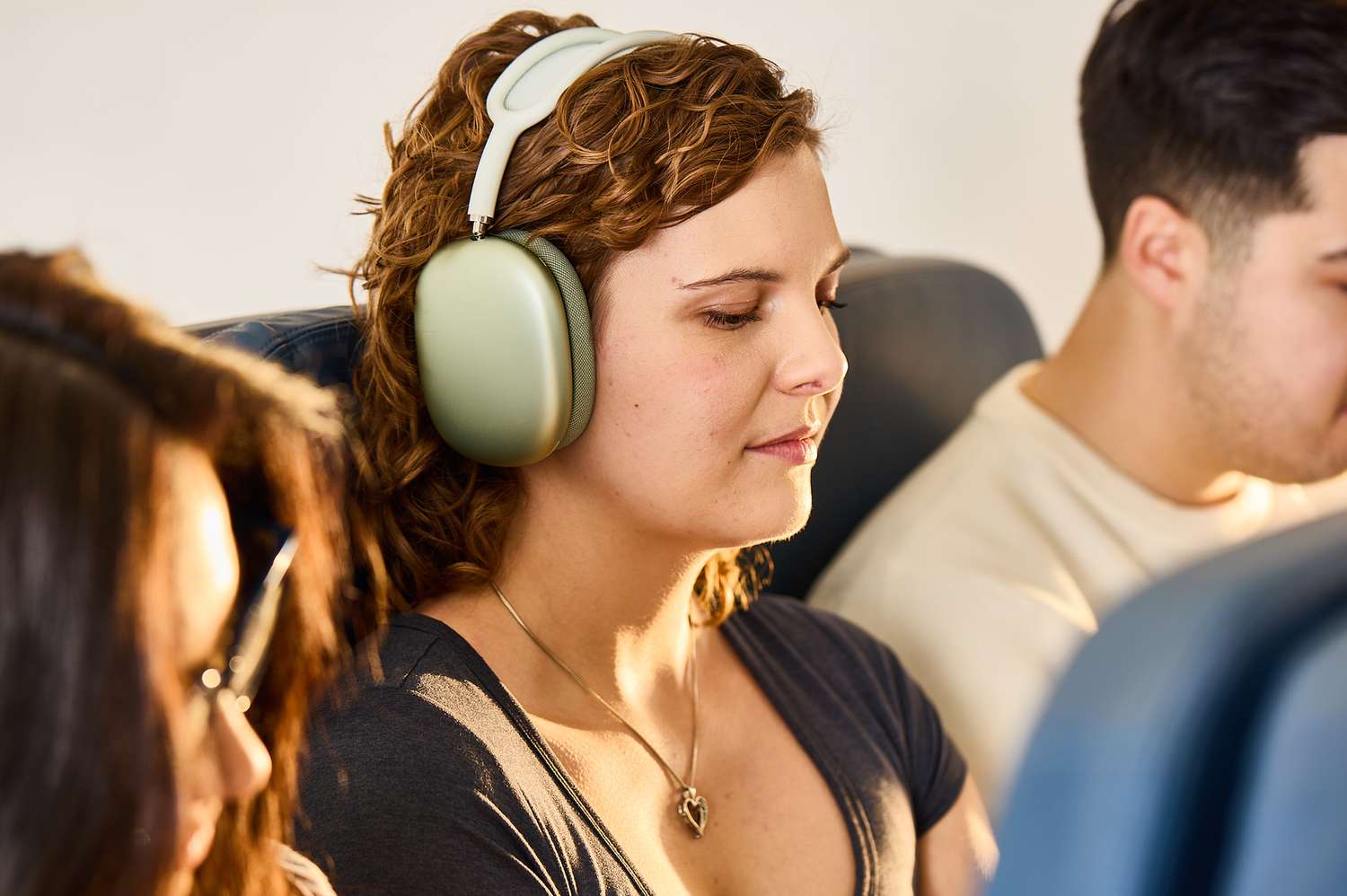
There are plenty of inconveniences frequent air travelers have become accustomed to, from long security lines to shrinking overhead storage bins, but few are as disconcerting as heavy turbulence in flight. Unfortunately, turbulence is getting worse as global weather patterns change, which can leave even confident passengers clutching their armrests from time to time. Good news: a simple setting on your go-to headphones—active noise cancellation, or ANC—can actually help manage turbulence-related anxiety.
“What we hear, or don’t hear, has a powerful effect on how we experience our surroundings,” said James Grifo, an audio technology expert and the owner and CEO of Audio Visual Nation. “The same principle applies when you’re 35,000 feet in the air.”
According to Grifo, the secret is activating Active Noise Cancellation (ANC) on your headphones. This technology, he noted, is found in many modern headphones and earbuds, and is capable of doing far more than just blocking out crying babies and chatty seatmates. According to Grifo, it can actually help your body handle turbulence better.
“Most people think of noise cancellation as just a way to enjoy their music or podcasts,” says Grifo. “But when it comes to flying, especially through rough air, it’s working on a much deeper level with your body’s sensory systems.”
While you may be familiar with the tech, you may be less familiar with how it actually works.
Grifo explained that ANC uses built-in microphones to detect external sounds, then generates sound waves that are the exact opposite, which, as the name implies, cancel out the noise before it reaches your ears. This is particularly helpful during flights, when plane engine noise and passenger chatter can wear on travelers’ nerves.
That noise reduction does more than just make the flight more pleasant. Cabin noise during a typical flight can exceed 85 decibels, roughly equivalent to a lawnmower’s loudness. Research has linked prolonged exposure to that level of ambient noise to elevated stress and anxiety, so by quieting that baseline sensory load, ANC creates the right environment for some calming music or a meditation app to do its job. In fact, layering in that music (which you can now hear well, thanks to the ANC) can lower your heart rate and steady your breathing, which in turn can reduce emotional distress during turbulence.
One more pro tip for maximizing the technology’s effectiveness? Turn it on before you even leave the gate. “Your body benefits most when it’s in a calmer state from the beginning,” Grifo said. Then throw on your favorite calming playlist, sit back, and enjoy the flight.
Read the full article here