


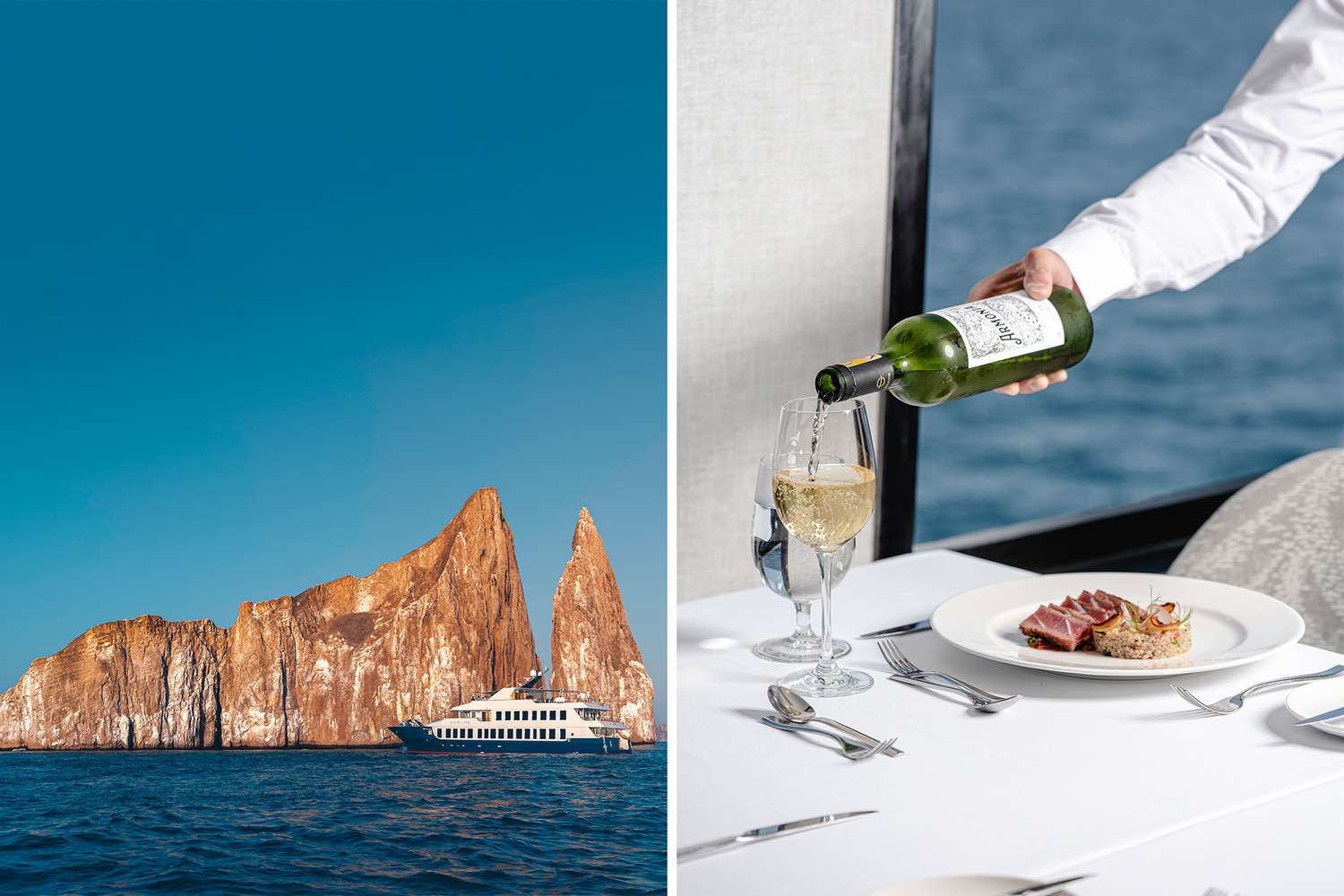
It was a splendid spread. The multicourse affair began with slow-roasted plantains topped with cured egg yolk, capers, and plantain-leaf salt. The dish was served with a sparkling wine from Ecuador’s Bodega Dos Hemisferios. Then came duck confit with mushrooms and an ash-dusted tuile of cassava. An entrée of cauliflower was topped with smoked chiles and macambo beans; another, of pork, came with a coffee-laced jus and a carmelized masa cake. And for dessert? A pineapple-rum cake, paired with a coconut gelato.
From Left: Joselyn de los Santos/Ecoventura; Jaime Trejo/Ecoventura
This style of cooking—a haute-cuisine reimagining of traditional foods—is taking off in many of South America’s biggest cities, from Lima and Bogotá to Guayaquil. But this dinner wasn’t being served at a high-end restaurant. Instead, I was enjoying it at sea with 19 other guests after a morning walk along a beach dotted with sea-turtle nests, an afternoon snorkel with tiny Galápagos penguins, and a hike to the top of barren Bartolomé Island for a bird’s-eye view of the sail-shaped Pinnacle Rock.
We were aboard the Theory, one of three yachts operated by the cruise line Ecoventura, on a weeklong expedition in the southern Galápagos. Our itinerary was one of Ecoventura’s occasional “culinary departures”: sailing with us was chef Santiago Nieto, of the Guayaquil restaurant Casa Julián, who had been tasked with devising inventive menus that would compliment the incredible destination.
Our itinerary took us around the island of San Cristóbal, where we landed Zodiacs on a silky sand beach populated by sea lions and Sally Lightfoot crabs. We visited the crowded rookery on Española, sailed west to Floreana and its flamingo-filled lagoon, and traveled north to Santa Cruz for a highlands excursion to visit the giant tortoises. Along the way, we made several stops for snorkeling, spotting black-tipped reef sharks and dense schools of surgeonfish. We also had the chance to paddle through inlets guarded by iguanas and to hike on islets populated by Darwin’s finches, which are named for the scientist who developed his theory of evolution on these shores.
As someone who loves both adventuring and dining, I was pleased to find that the abundance of activities was matched by the opportunities to eat: excellent breakfast buffets; lunches of grilled lobster or ropa vieja; hot chocolate after every snorkel; sunset canapés; and incredible dinners. (The quality of the food is one reason the line has been a part of Relais & Châteaux, the hotel association with a strong culinary focus, since 2018.)
The culmination of the week, for me, was Nieto’s signature dinner, which was as much a celebration of our trip as it was a recognition of Ecuador’s agricultural bounty. “I brought ingredients from the mainland that you might not have been able to try otherwise,” he told us. Like many travelers to the Galápagos, all I had seen of the country before boarding the Theory had been the inside of an airport. Flavors like macambo and plantain leaf were completely new to me—and a reminder that there’s far more to Ecuador than this famed archipelago.
Nieto was also seeing the islands for the first time, despite the fact that he lives and works in Guayaquil, a typical transit hub for the Galápagos-bound. “It’s been overwhelming,” he said admiringly. The salt-spray air, the haunting aridity, the greens and reds of prickly-pear cacti—all of this had sparked many new ideas, the chef told me.
One afternoon, Nieto led a ceviche-making demonstration on the sun deck. Soon enough, we noticed an audience of magnificent frigate birds was keeping pace with the ship, gliding above us on their seven-foot wingspans. Then a Galápagos brown pelican, seemingly enchanted by the scent of the mahi-mahi being prepared, landed on the railing.
I empathized. Though I had fortified myself that morning with cheese-filled green plantain dumplings and coddled eggs, I was peckish after spending the day hiking on Española. As the pelican eyed our fish, members of the crew gently cautioned against feeding the bird. Not that I would have. As impressive as the wildlife had been up to that point, the food was too good to share.
A version of this story first appeared in the December 2025/January 2026 issue of Travel + Leisure under the headline “Island Flavor.”
Read the full article here