


Under cloudy skies, the Regent Seven Seas Explorer anchored off Prince of Wales Island. The ship had spent the past few days navigating the Alexander Archipelago, with its pine forests, dramatic mountains, and pristine fjords. Now passengers were headed ashore in tenders to visit what may soon become one of the state’s most in-demand ports.
For now, Klawock is a modest affair, with a floating dock and a big white tent serving as a welcome center—something of a contrast to the luxuriously appointed Seven Seas Explorer, which was one of the first vessels to arrive at this newly created, Indigenous-owned port.
Plans call for Klawock to become a gateway to outdoor adventure as well as a place of connection with the area’s Indigenous history and culture. But for now it remains something of a nascent operation, albeit one with considerable potential. As I chatted with passengers who were browsing the Alaska-made hot sauce on offer and gathering around firepits with locally brewed beers, everyone seemed enthusiastic about the place.
“This feels special,” one cruiser told me, echoing the sentiments of many of the passengers who were among the first to visit.
In 2024, the port hosted fewer than 4,000 passengers from a half-dozen ships—a tiny fraction of the traffic that visits other Alaskan destinations such as Ketchikan. While those numbers are growing—officials forecast around 60 ships for 2026—Klawock remains an under-the-radar harbor, accessible only by smaller ships like those operated by Regent, as well as Azamara Cruises, HX Expeditions, Ritz-Carlton Yacht Collection, and Silversea.
“We hope that our guests will leave understanding that we have deep-rooted traditions and values,” explains Mary Edenshaw, CEO of Klawock Heenya, the Alaska Native corporation that developed the port. (Klawock Heenya had the assistance of Huna Totem, which runs Icy Strait Point, another Native-owned port near Glacier Bay and a T+L Global Vision Award winner in 2025.)
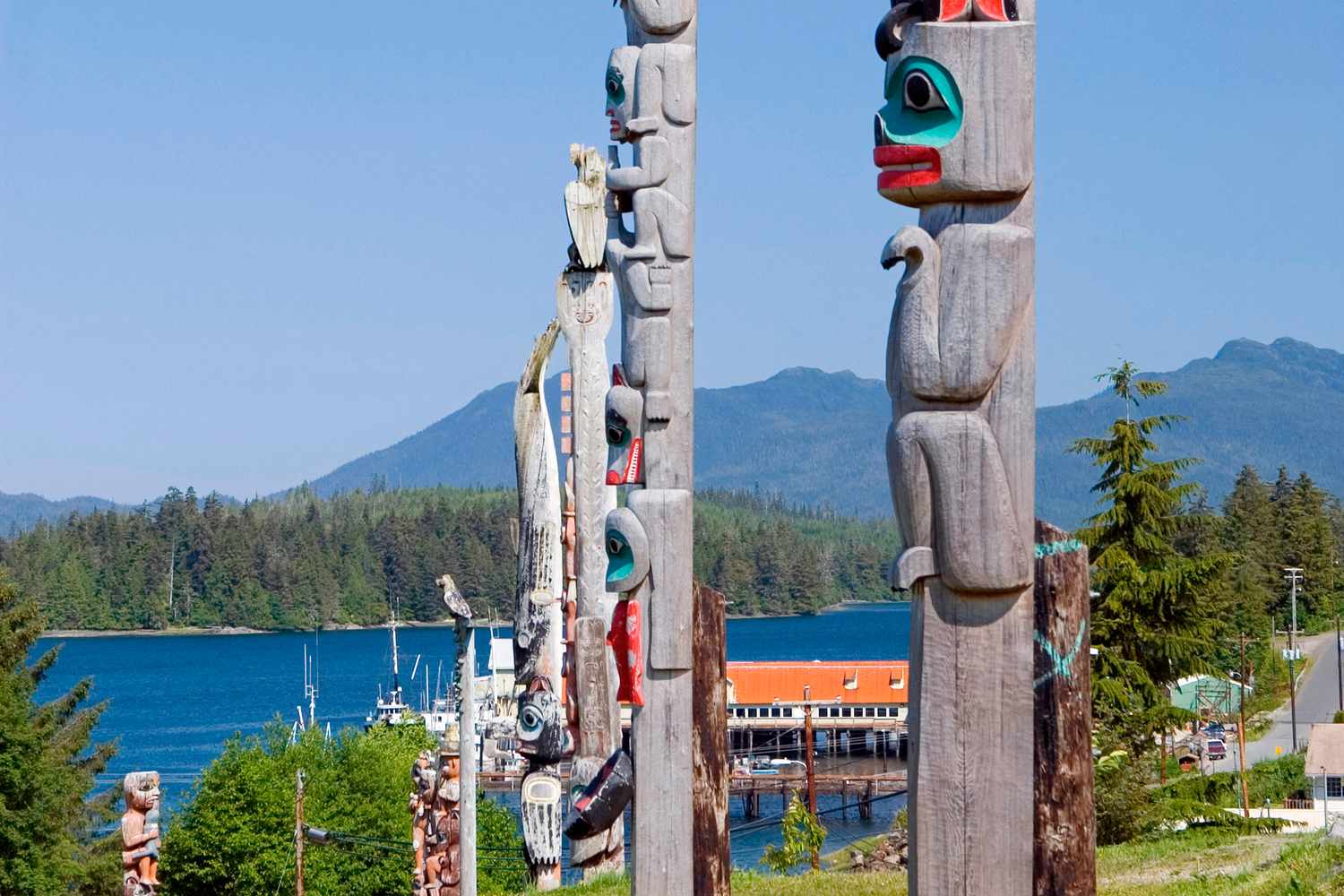
Many cruisers start their visit to Klawock by taking in a collection of about two dozen colorful totem poles on a hillside overlooking the harbor. Crafted by master carver Jon Rowan and his apprentices over decades, these towering pieces are based on designs that once stood in Tuxekan, an abandoned town not far away.
Beyond being the home of these cultural riches, Klawock is also on the doorstep of some remarkable scenery. Visitors can take a small-boat tour of the surrounding waters, which are filled with humpback whales, or a driving tour through boreal forest. I joined several passengers for a pop-up culinary experience in the woods: a four-course survey of locally harvested foods that included sumac-rubbed salmon, juniper-poached halibut, and oysters on the half shell topped with kelp.
What you won’t find in Klawock are the eye-popping thrill rides, like the mile-long Ziprider, that have made Icy Strait Point so popular—though there’s talk of creating a more permanent cruise-passenger welcome center.
Back at the totem-pole park, I bumped into cultural interpreter Matthew Demmert-Fletcher, who also works as a commercial fisherman. He walked me over to his favorite pole, which—no surprise—features a depiction of a bowl of fish. “The story it tells is to not be greedy with your catch,” Demmert-Fletcher told me. “You have to let some fish escape, so the future can grow.”
A version of this story first appeared in the March 2025 issue of Travel + Leisure under the headline “The New Frontier.”
Read the full article here