


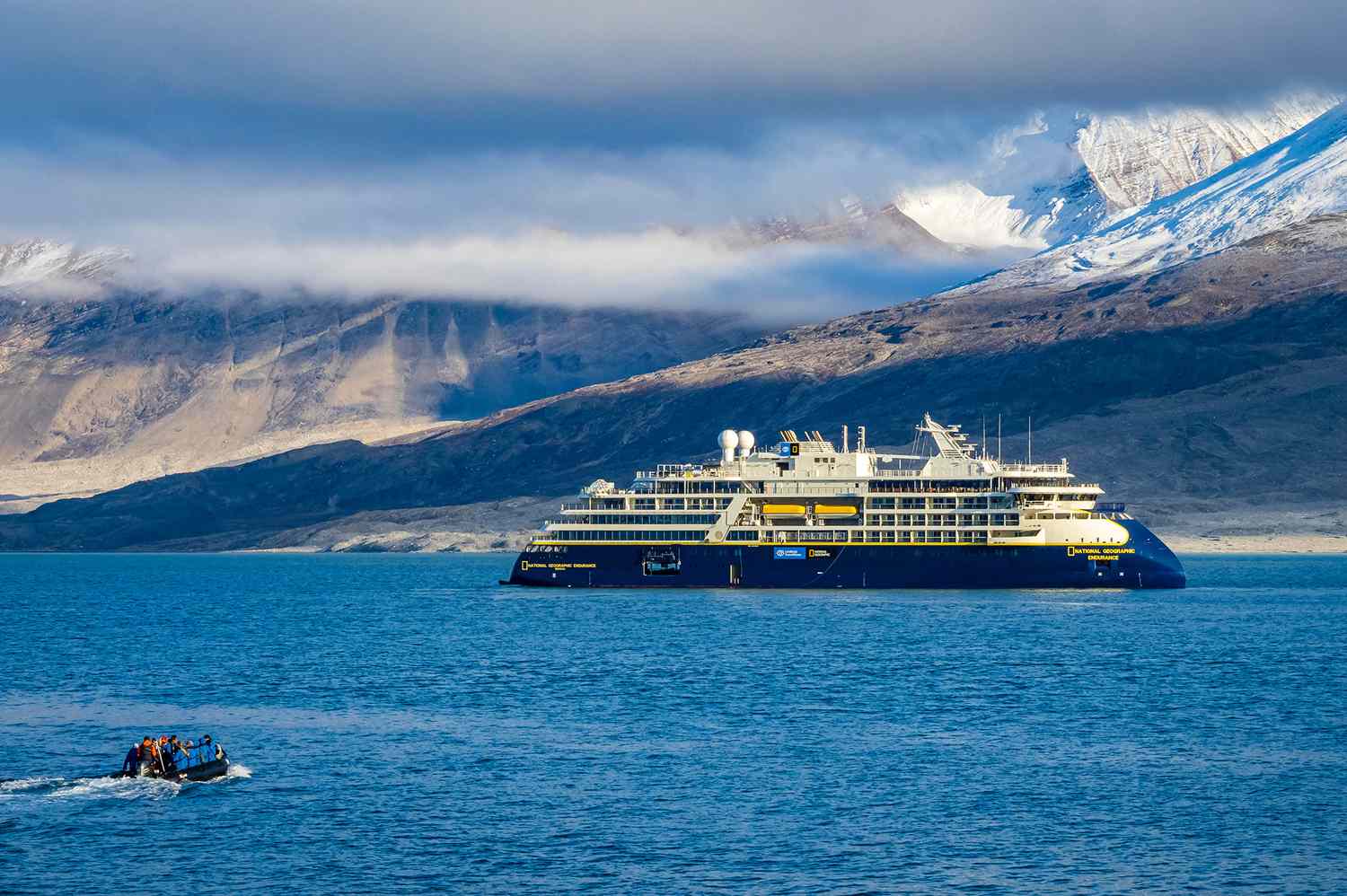
National Geographic Endurance
- The ship’s open bridge allows guests to come and go, offering a prime perch for wildlife spotting.
- All cabins offer a view, and some have private balconies.
- Two glass “igloos” at the stern of the ship can be reserved for a night out for wildlife watching after dark or aurora borealis spotting.
- Excellent dining, including a communal dinner experience called Charlie’s Table.
“Look for a stick of butter,” said a member of the crew.
I was standing on the bridge, scanning the sea, when suddenly I saw it: a buttery yellow smudge in the distance. I dialed the focus of my binoculars and there it was, a beluga whale swimming off the shores of Svalbard.
As excited as I was to have spotted the whale, it was just one of the many incredible animals I was able to witness during my 10-day expedition across the high Arctic. Part of my success was thanks to the “open bridge” policy aboard the National Geographic Endurance, the comfortable 76-cabin ship that was sailing these frigid waters. Kitted out with spotting scopes, binoculars, and wildlife identification guides, the bridge was also, of course, staffed by eagle-eyed officers and expedition crew. I popped by frequently and, any time word of a sighting spread around the ship, I raced to the bridge to learn more.
That was easy enough to do given the intimate size of the 138-passenger vessel. With its ice-hardened hull and an X-bow design for a more comfortable ride, Endurance was purpose built for places such as Svalbard, as well as other spots in the Arctic and Antarctic, explained Captain Leif Skog, vice president of marine operations for Lindblad Expeditions.
“Being designed for polar waters, we’re able to have a longer season, particularly in the Arctic, so we can start earlier and stay longer,” Skog said. (He also pointed out that Endurance was indeed named after the ship Ernest Shackleton used for his transantarctic expedition, and shares a design with National Geographic Resolution.)
As wonderful as the ship was, I also made the most of opportunities to go ashore with expert guides during my 10-day expedition. We’d transfer to our landing sites aboard Zodiacs and then hike, whether it was to abandoned settlements or to try our luck at spotting Arctic foxes, birds, and seals. Some days, we would tour by Zodiac or kayak, and on one occasion the crew set up a “polar plunge” for those who wanted to take a swim in the icy sea. (I was happy to spectate.)
Back aboard, there were always opportunities to learn, with lectures about wildlife, history, and geology, as well as workshops on photography and other subjects. A rich reference library offered a way for enthusiasts to dive deeper into topics of interest.
And while we did have some time in more populated areas, such as Longyearbyen, the administrative center of Svalbard, the majority of our time was spent out in nature. The ship became not only my gateway to seeing remarkable creatures but also the raw physical beauty of the archipelago. Here is my review of the National Geographic Endurance.
The Staterooms
Oivind Haug/Lindblad Expeditions
All of the ship’s 76 cabins have views, and many of them are equipped with balconies. There are seven categories to choose from, with Category 1 being the coziest, up to Category 7 balcony suites that feature not just a bed but also a pull-out sofa, coffee table, desk, large walk-in closet, and expansive bathroom with a double vanity. (Guests in suites also receive priority for one spa reservation and one night in an observation desk glass igloo.)
Each cabin has an “expedition command center” that includes a tablet with the day’s schedule and other information, a device docking station, a National Geographic Atlas of the World, and—to give a maritime feel—a barometer and clinometer.
My husband and I stayed in Cabin 701, which is right next to the bridge. We had a balcony—and though the weather was too chilly to spend extended time outside, the fresh air was great. The room was attractive, with a modern design and clean lines, and it was very comfortable.
Bars and Restaurants
The ship’s main restaurant, Two Seven Zero, is named for its 270-degree views, which afford fabulous wildlife watching opportunities. Breakfast is a buffet with cooked-to-order options like omelets, and lunch features a changing menu of options like grilled haddock, turkey breast piccata, and pasta of the day. Dinner is typically served as a plated meal with rotating daily options, such as roasted pork belly ramen, mushroom risotto, or lamb, along with some stalwarts such as steak and falafel.
The other spot to eat onboard is C. Green’s, which is located on the observation deck and named after Charlie Green, the British cook on Ernest Shackleton’s expedition. Here, guests can grab an early riser breakfast or an array of lunch options including sandwiches and salads. Self-serve snacks like mixed nuts, dried fruit, and cereal bars are also available here; the Den includes a beverage station with a cookie jar that’s available 24 hours a day. (I made good use of it during the trip, since this ship has a lot of nice spots where one can sit and look out with a cup of coffee and a treat.) Afternoon tea features items like small sandwiches and pastries.
The culinary highlight onboard is Charlie’s Table, where guests gather to share a specially designed multi-course menu of “sustainable cuisine,” with a wine pairing add-on available for a fee. I especially enjoyed the creativity of menu concept and design as well as the artistic presentation of dishes such as a “kelp forest” soup and a course representing the seven continents and the melting of the polar ice caps.
The Ice Lounge is where evening recaps are held, and many guests enjoy watching these presentations about the day’s activities. While there are plenty of drink options at the bar, I didn’t see much in the way of a late-night scene or evening entertainment. After long days of hiking, riding in boats, and exploring, many guests were happy to retreat to their cabins on the earlier side.
Where National Geographic Endurance Sails
Endurance often sails in icy waters, including those in the Arctic and around Antarctica, South Georgia, and the Falkland Islands. Upcoming itineraries for the ship include trips to the Faroe Island, Greenland, Iceland, Norway, Scotland, and Sweden, among others. While there are no immediate plans for Endurance to repeat a similar version of my Svalbard itinerary, National Geographic-Lindblad Expeditions will offer similar trips aboard the Endurance’s sibling ship, National Geographic Resolution, in 2026.
Shore Excursions
Kristen Pope/Travel + Leisure
Pull on your rubber boots and waterproof gear, because these trips are all about getting out there. On my Svalbard sailing, there were a variety of options—hikes, walks, and beach exploration—with guests able to self-select among strenuous, moderate, or easy options. On hikes we saw Arctic foxes running along the shoreline, a pile of polar bear scat complete with white fur in it, bright magenta flowers called saxifrage, and plenty of other wildlife—from walruses to reindeer—in addition to Svalbard’s gorgeous Arctic landscapes.
We spent time riding in Zodiacs to see the scenery and spot wildlife, including a visit to a bird cliff with thousands of birds; we also had the opportunity to kayak on the trip. Those who were so inclined also had a chance to do a polar plunge.
Amenities and Entertainment
National Geographic Endurance travels to some of the most beautiful places in the world, so views are a prime consideration on this ship, which provides an abundance of ways to enjoy the scenery, both from the ship’s cozy interior and exterior. For the ultimate viewing experience, guests can book one of the two glass igloos on the observation deck for all-night views of the spectacular scenery. (If you’re traveling in peak summer, when days can be very long, an eye mask is a good idea.) These pods are conveniently located right next to the two glass-walled hot tubs on the ship.
A small but mighty spa has treatment rooms with a view, and there’s also a fitness room, a yoga studio, two saunas, and a “terrace wellness” space with loungers and tea. The ship’s Den provides a cozy indoor space with an extensive library and digital navigation display.
Attending lectures is a popular pastime onboard, with experts sharing their knowledge of wildlife including polar bears, walrus, and reindeer, as well as geology, history, and workshops on photography. The scenery and wildlife viewing on our trip were incredible, but there wasn’t much in the way of nightlife beyond hanging out in the Ice Lounge.
Family-friendly Offerings
I didn’t see a single child on my trip, and there was no family-focused programming. Generally speaking, all the programs and activities on my Svalbard sailing were geared toward adults, and I would imagine that only the most ecology-obsessed teens would’ve found the journey as engaging as I did.
This said, select National Geographic-Lindblad Expeditions itineraries feature the National Geographic Explorers-in-Training Program, which allows kids and teens to participate in hands-on activities like photo workshops as well as wildlife-watching excursions.
Accessibility
Two elevators are available onboard the ship, though to fully participate in the expedition, guests should be able to get in and out of a Zodiac boat: this involves stepping from the ship into an inflatable boat that can be moving with the ocean’s swell. Guests who can’t go ashore or on Zodiac tours can still travel aboard the Endurance, taking part in things like ship-board lectures, wildlife watching, dining, and all other services.
National Geographic-Lindblad Expeditions says that guests are welcome to bring their own mobility devices, and that those needing accommodations are “encouraged to notify the team at least 30 days before departure so the crew can best support their experience.” The company also recommends that “guests requiring personal care … travel with a companion.”
Read the full article here