


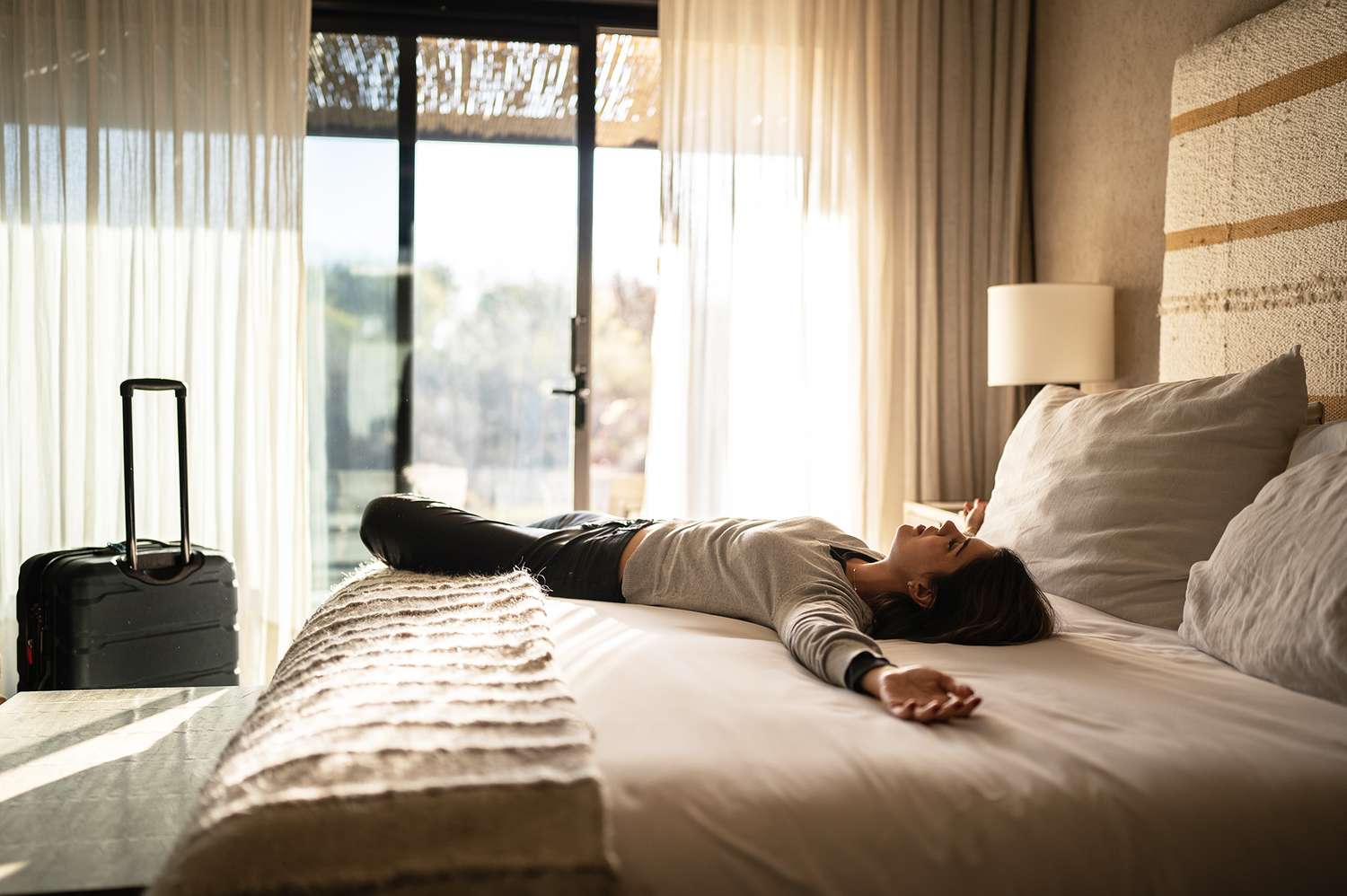
The average American gets just 11 paid vacation days per year. And even with so few offered, more than half of Americans don’t use their annual vacation days at all. So really, if you use any of your days off, they really should count. And that’s why it’s key to try to beat the dreaded jet lag to ensure you can enjoy every single minute of your getaway from the second you land.
However, jet lag is a tricky thing to beat. But rather than guess at what can help you win the global clock, we asked a few medical experts to weigh in with their advice. And there’s one method that seems to reign supreme: finding your light.
“Jet lag isn’t just about losing sleep. It happens when your internal body clock falls out of sync with the local light–dark cycle at your destination. Light is the strongest signal to the brain’s master clock, which is why jet lag affects more than sleep alone. Energy, mood, digestion, and mental sharpness are often disrupted as well,” Dr. Lynette Gogol, a board-certified neurologist and lifestyle medicine physician, told Travel + Leisure.
As Gogol explained, how intense jet lag feels depends on several factors, including how many time zones you cross and the direction you travel. “Eastward travel tends to be harder on the body than westward travel because it requires the clock to advance (shift earlier), which is biologically more difficult than delaying (shifting later),” Gogol said. “The more time zones crossed and the longer the journey, the more disrupted the circadian system becomes.”
So, Gogol explained, one of the fastest ways to recover from jet lag is through “well-timed light exposure. Light directly resets the circadian clock, but timing matters. Getting light at the wrong time can prolong jet lag, while getting it at the right time speeds recovery.”
If you’re traveling eastward, Gogol said that morning light helps shift the body clock earlier, making it easier to fall asleep and wake up on local time. Evening light, on the other hand, should be kept dim in the hour before bed.
“After westward travel, light in the late afternoon or early evening helps delay the clock so later bedtimes feel more natural, while still minimizing bright light right before sleep,” Gogol noted. “The body adjusts more easily when it receives a clear signal about which direction to shift.”
And, if natural daylight isn’t available, a light box can be helpful. “Morning exposure to bright light, typically around 10,000 lux for 20 to 30 minutes, can help advance the clock after eastward travel, but it must be timed carefully,” Gogol said.
Other pros agreed with Gogol, including Kelsey Pabst, a registered nurse and medical reviewer at the Cerebral Palsy Center, who also noted that “Jet lag is mostly a problem of light, not sleep.” To help, Pabst suggested using 0.5-3 mg of melatonin (which she also noted has been shown to reduce the duration of jet lag by one to two days) to help reset your bedtime when you arrive, along with wearing an eye mask to avoid “any possible light. This works well for 6-hour plus time zones and for flying over a single night,” Pabst said. “Begin on the first night when you arrive at your destination; stay active as much as possible in the morning, regardless of whether you haven’t slept well.”
Come daylight, Dr. Stacie Stephenson, a specialist in functional and integrative medicine, said to try to “expose yourself to natural light between 6:30 am and 9:30 am to signal your body to wake up.” Stephenson even cautioned against light from TVs, cell phones, and computers for 90 minutes before bed, as this too can suppress melatonin production.
Dr. Samuel Robinson, a board-certified family physician, agreed, adding, “The most important strategy to overcome jet lag is to get exposure to bright sunlight within one hour of waking at your new destination,” Robinson shared. “Aim for 30-60 minutes of sunlight for the best results.”
More Jet Lag Quick Tips
Eat at the right time: “Meal timing also matters. Eating on the local schedule helps reset clocks in the gut and liver that influence energy and digestion. After arrival, anchoring the day with a hearty breakfast within 30 to 45 minutes of waking helps reinforce the destination time zone,” Gogol said. “In the evening, a balanced dinner that includes complex carbohydrates two to three hours before bedtime can further support circadian adjustment, particularly after westward travel.”
Hydrate strategically: “Hydration helps, but more isn’t always better. Air travel increases fluid loss, and even mild dehydration can worsen fatigue and headaches. At the same time, drinking too much late in the evening can disrupt sleep,” Gogol explained. “Steady hydration earlier in the day works best.”
Stay clear of alcohol: “Try not to drink too close to bedtime, and avoid heavy meals, caffeine, and alcohol at least three to four hours before bedtime,” Dr Hana Patel, NHS Doctor and resident sleep expert at Time4Sleep, said. “Light snacks like a banana or a handful of nuts can help boost melatonin production.”
Get comfortable on the flight to your destination: “During the flight, I asked not to be woken up for meal service. Prior to settling in, I make sure I am well hydrated. I used an old-fashioned analog pilot’s watch set to the local time of my destination,” Dr. Jimmy Sung shared. “Base-layer hoodie, comfy socks, and noise-cancelling headphones set to brown noise to help me have a comfortable sleep.”
Read the full article here