


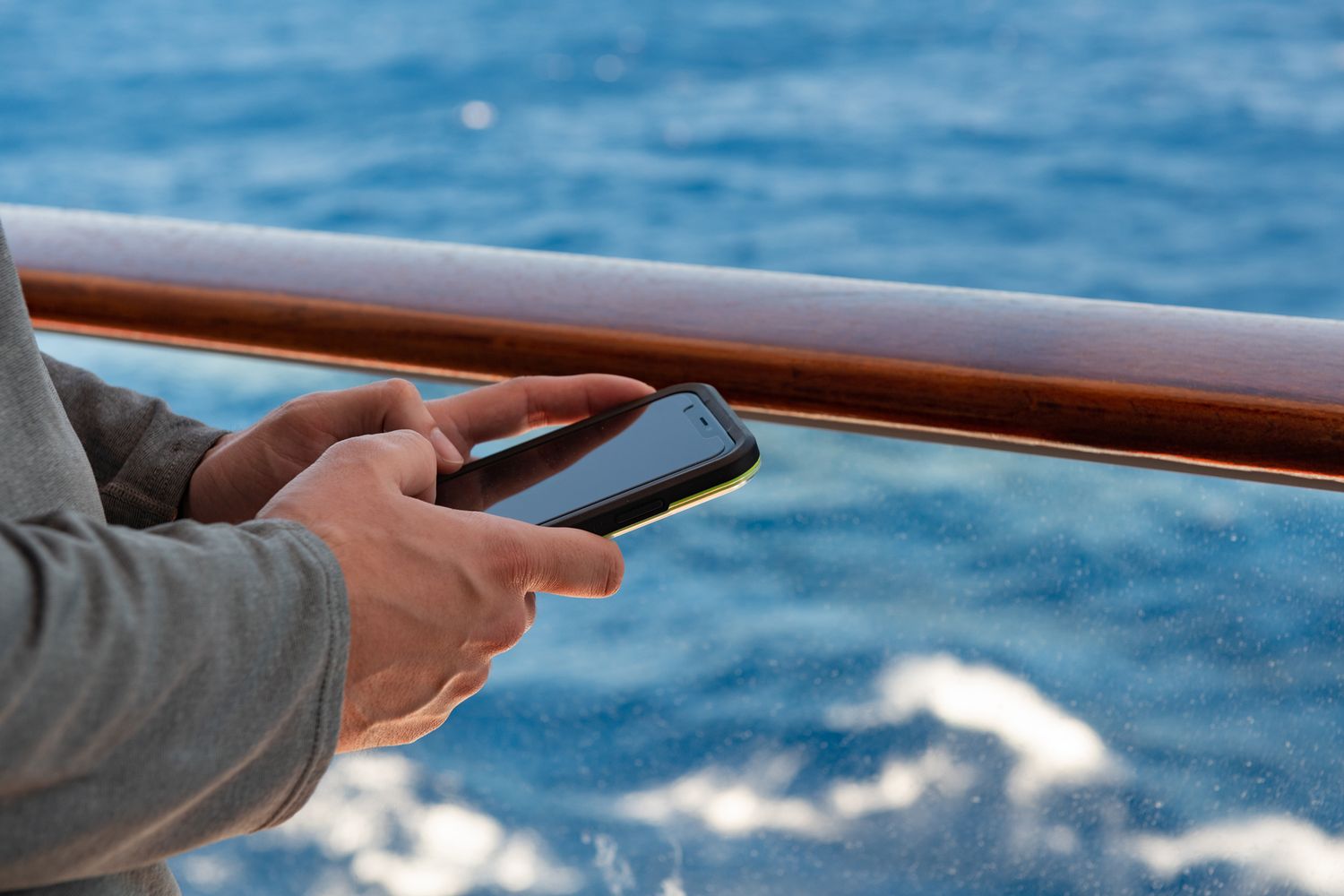
- Forgetting to put your phone in airplane mode on a cruise can trigger expensive roaming charges via the ship’s satellite-based cellular network.
- Background data like app updates and notifications can incur costs even if you aren’t actively using your phone.
- Cruisers can avoid charges by enabling airplane mode and using cruise Wi-Fi, or by purchasing a carrier or cruise-specific data plan.
Forgetting to put your cellphone in airplane mode on a cruise can be an expensive mistake.
Yet so many cruise travelers get caught up in that first-day-of-vacation excitement—the first piña colada, the mad dash to make restaurant reservations, the exhilaration of seeing your luggage safely on board, the second piña colada—that by the time the ship is pulling out of port, cellphone best practices are not top of mind. Most vacationers are too busy snapping photos and Facetiming mom from the pool deck to check their phone’s connection.
Some travelers think that because they’ve connected to the ship’s Wi-Fi, they can ignore their cellular service. But no matter your highly understandable reason for not having airplane mode on your to-do list, your failure to attend to your phone before sailaway can cost you.
“Once the cruise ship is far enough from land, a phone can no longer reach traditional land-based cell towers, prompting the customer to opt-in to the vessel’s maritime cellular network,” explains Sarah Day, vice president of wireless growth and offer strategy for AT&T. If you are connected to a maritime network, your phone might list “Cellular at Sea” or “901” as the network it’s connected to.
On a ship, cellphones connect via satellites. “Your phone communicates with a Distributed Antenna System throughout the ship, which beams the signal up to a satellite, then down to a ground station, and finally into the Verizon network,” says Verizon spokesperson George Koroneos.
Once your phone connects to the ship’s satellite-based cellular network, your land-based phone plan no longer applies. Even if you’ve purchased an international phone plan to use in port, it will not cover you at sea. Regardless of provider, all calls, texts, and data usage will be treated as international maritime roaming— and charged at expensive pay-as-you-go rates. Satellite communications don’t come cheap.
Now, some might assume that’s not a problem because you don’t intend to call or text on board. That assumption will cost you.
“Even if you aren’t actively texting or calling, background data (app updates, email syncing, social media notifications) can trigger these roaming charges the moment the ship’s cellular service is active,” says Koroneos.
Even if you do not actively use your phone, if it’s turned on but not in airplane mode, you will start to rack up extra charges.
What’s a cruiser to do? There are several options.
Tada Images/Adobe Stock
You could purchase a cruise line’s Internet package and use the ship’s Wi-Fi for your communication needs. You’ll still need to put your phone in airplane mode, and before you sail, you should make sure you have Wi-Fi calling and texting apps (like WhatsApp) on your phone. Most cruise lines now use Starlink, so connection speeds can often be similar to service on land.
Cruise line Wi-Fi plans can be pricey, but you’ve got options to ease the sting. More inclusive cruise lines like Regent Seven Seas, Silversea, Viking, and Virgin Voyages offer complimentary Wi-Fi to all guests. Other lines might offer free Internet as part of booking promotions or suite perks. Celebrity and Princess Cruises bundle Wi-Fi with other add-ons to sell as a discounted package.
If all you really want is to stay in touch with your travel companions while on board, some cruise line apps have onboard messaging options that are inexpensive. However, they’re not always reliable and often don’t ping you when a new text comes in.
Some cellular service providers have also realized the pressing need for communication options at sea and have their own plans. For example, Verizon’s Cruise Daily Pass and AT&T’s International Day Pass both cost $20 per day and allow customers to access unlimited talk and text and 500 MB of high-speed data (and unlimited low-speed data) both on land in port and at sea on the ship.
If you purchase a plan like this, you’d actually need to turn off Wi-Fi on your phone. You won’t need airplane mode, but you still have to adjust your settings before sailaway.
Whether you opt for cruise ship Wi-Fi or your carrier’s international plan that covers cruises, your service can be interrupted by bandwidth issues or if the satellite connection is blocked. But if you need to stay in touch while on board, you have more options than ever before.
No matter which plan you choose, set a reminder on your phone to turn on airplane mode (or turn off Wi-Fi if you bought a cellular plan) before the ship sails away—and before those vacation daiquiris kick in. Otherwise, you might come home to find a sky-high phone bill as an unwanted souvenir from your cruise.
Read the full article here