


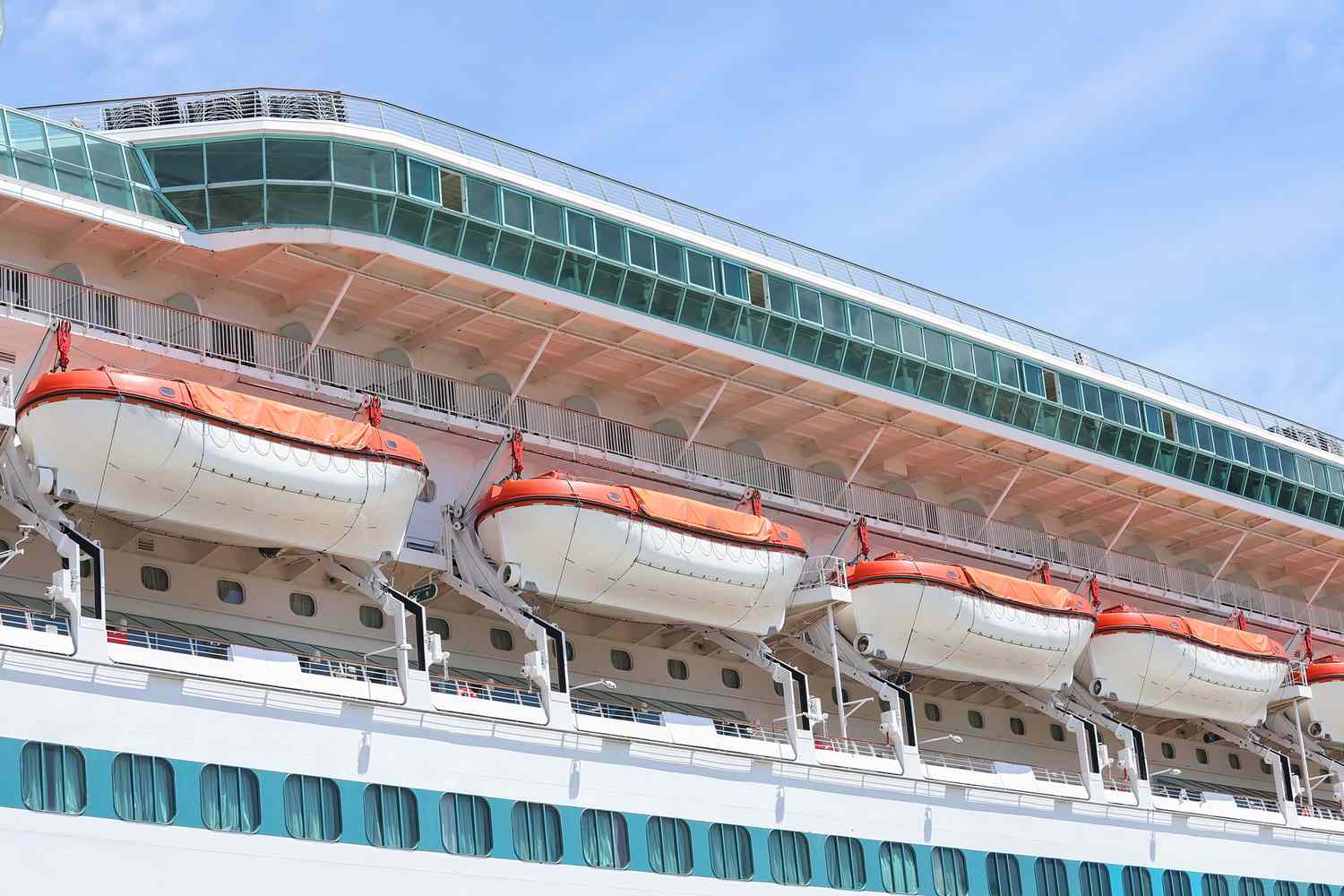
- Cruise ship safety drills, or muster drills, are mandatory under international maritime law to ensure passengers know emergency procedures.
- Many cruise lines now use a convenient e-muster process that takes just a few minutes, though occasional full in-person drills still occur.
- Passengers who skip the drill risk being removed from the ship without a refund and must cover their own travel costs home.
From humongous megaships to luxurious yacht-like vessels, cruise travelers all love to grumble about the same thing—taking time out of their first day on board to complete the mandatory safety drill. Despite the efforts cruise lines have made to make them shorter and easier to complete, some guests are tempted to ignore the calls to report to their muster stations—especially in the rare occurrence of a full, in-person drill.
Trust us, you don’t want to do that. Here’s why you should never skip the cruise safety drill.
Why cruise lines conduct safety drills
Chanintorn.v/Adobe Stock
Safety drills, also called muster drills, are not the brainchild of a sadistic cruise ship officer, trying to place obstacles between cruise guests and their sunbathing and cocktails. The safety briefings are required by the International Maritime Organization’s International Convention for the Safety of Life at Sea Convention—a treaty first adopted in 1912 after the Titanic sank. It’s since been continually updated to ensure that the maritime industry maintains strict safety protocols worldwide.
“Safety drills are a mandatory SOLAS requirement designed to ensure guests understand lifesaving procedures and know exactly what to do in the unlikely event of an emergency,” says Antonio Durante, senior director of regulatory safety proficiency and occupational safety for Carnival Cruise Line. SOLAS regulations mandate that all guests complete a safety drill before the ship sails (a timeline that changed from “24 hours after boarding” after the Costa Concordia disaster in 2012).
The goal is to help cruisers understand what the ship’s emergency alarm signal sounds like and what to do and where to go when they hear it. The hope is that in the unlikely event a cruise ship is in danger, guests will have some familiarity with emergency procedures, making it easier for the crew to keep people safe.
How long will that muster drill really take?
Robert/Adobe Stock
Before the COVID-19 pandemic, all guests had to report to their muster station—sometimes in a lounge or dining room, but often on an outside deck in full sun—to listen to a 10-minute safety announcement. Because it takes time for hundreds or thousands of cruise passengers to assemble, the entire drill from start to finish could take up to 40 minutes, according to Durante, with a lot of that time spent waiting around.
However, when cruise ships started sailing again after the pandemic, no one wanted to encourage mass gatherings. So most cruise lines created an e-muster process, wherein passengers would watch a safety video on their in-cabin TV or cruise line app, and then briefly check in at their muster station at time of their convenience between boarding and sailaway. Before the ship sails, the captain makes a safety announcement over the ship’s PA system that guests can listen to wherever they are on the ship.
“Our e‑muster process is quick, simple, and consistent across all stateroom categories,” says Durante. “The full process generally takes only a few minutes.”
Some cruise lines, such as Disney Cruise Line, still require a full in-person muster drill. Others, like Carnival, mostly use the e-muster but stage an occasional full muster, so crew can practice assembling and handling large crowds of people.
What happens if you skip the safety drill
Tommy Lee Walker/Adobe Stock
Cruisers love to complain about embarkation-day safety drills, but these days, it takes just a few minutes, completed at your convenience. Still, some guests are tempted to skip or get too wrapped up in first-day activities (and drinks!) and forget.
Carnival’s response to missed musters is representative of the cruise industry. If a guest fails to complete the e-muster or check in at their muster station, the crew will ask them to join a second safety briefing. Guests who continue to fail to show up will receive a letter with instructions for how to complete the safety requirements.
In the rare case that a passenger disregards all requests to participate in a safety drill, “the captain may deny rights for any passenger to travel onboard,” says Julie Leonardi, Carnival’s senior manager of public relations, in accordance with the line’s internal safety policy and procedures.
That’s right—if you can’t be bothered to take 10 minutes (or at most, 45 minutes) out of your vacation to follow international safety protocol, you can be kicked off your cruise ship. You won’t be reimbursed for the cruise fare you paid for the trip you’re now missing, and you’ll be on your own for travel costs to get back home.
So, grumble all you want while you watch a chipper crew member demonstrate how to put on a life jacket and put your hands over your ears when that high-pitched emergency signal goes on for far too long. But if you’re tempted to skip the safety drill, know that the hassle of finding your muster station and waiting in a short line to check in is nothing compared to the hassle you’ll face if you don’t comply.
Read the full article here