


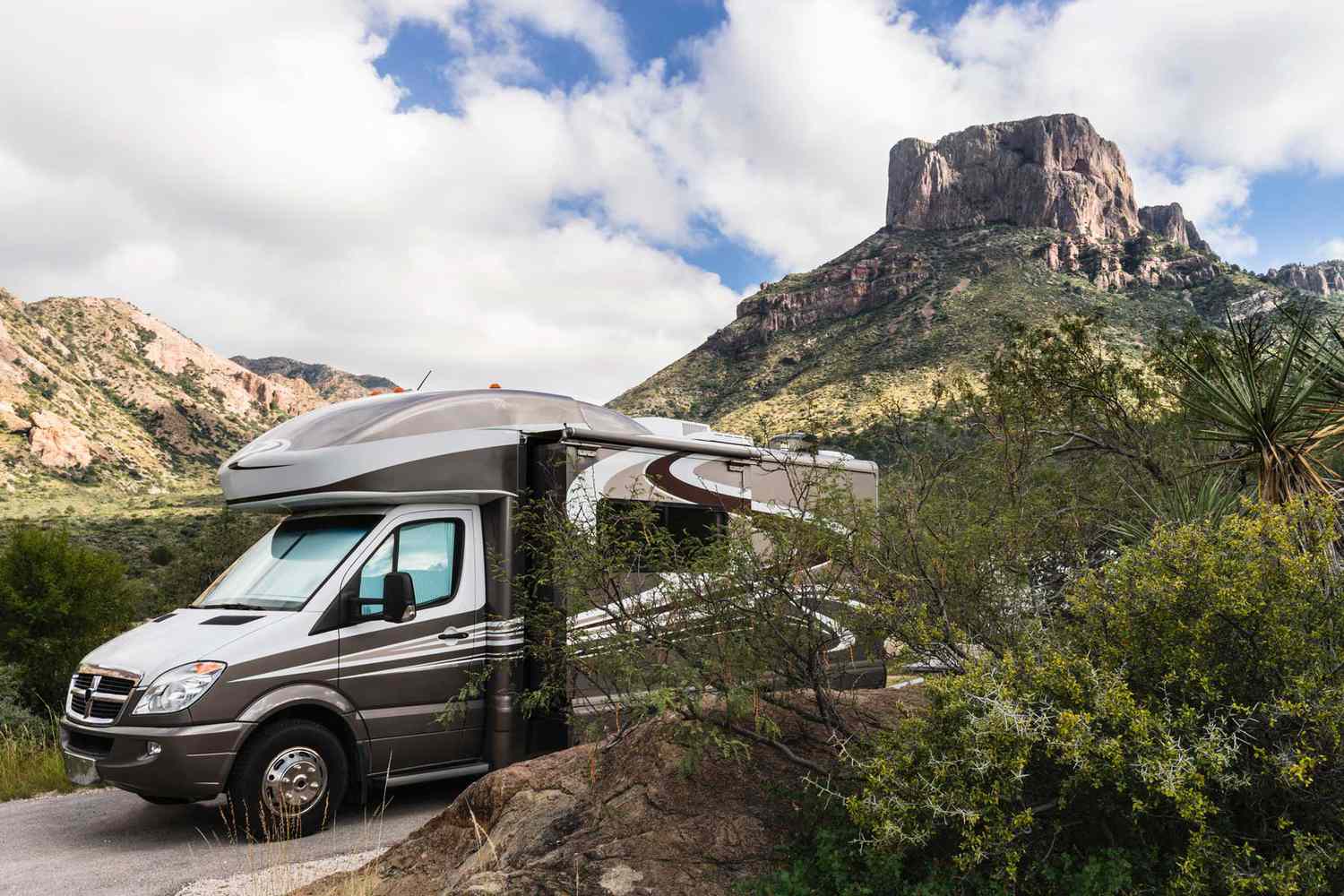
Camping in Big Bend National Park takes a little preplanning, but it’s worth it for the chance to stay in one of the best stargazing destinations in the U.S. Located where the Chihuahuan Desert meets the Chisos Mountains in Southwest Texas, the park is home to the Santa Elena Canyon, a limestone cliff canyon artfully carved by the Rio Grande. While the area can be unbearably hot in the summer and quite brisk in the winter, fall and spring are the best times of year to visit. You’ll need at least a few days to enjoy the park, and while many visitors stay in local lodges or vacation rentals, you can camp here year-round.
Keep reading for everything you need to know to secure that perfect Big Bend National Park camping spot.
Campgrounds in Big Bend National Park
There are four campgrounds inside Big Bend National Park: three park-operated camping areas with various services and one RV park run by an outside company.
Chisos Basin Campground sits in a scenic mountain basin with views of Casa Grande and Emory Peak. There are plenty of hiking trails nearby, including the Window View Trail, a popular place to watch the sunset. The year-round campground has 56 sites with access to flush toilets, running water, and a dump station. There are no hook-ups, and trailers over 20 feet and RVs over 24 feet are not recommended.
The year-round Rio Grande Village Campground is nestled in a grove of trees near the river. This is the place to go if you want access to more amenities—a store, laundromat, and visitor center are nearby. The campground has 93 sites with access to flush toilets, running water, showers. Some sites are equipped with overhead shelters. A dump station is nearby.
The small Cottonwood Campground is more remote than the others and has fewer services, but it tends to be quieter and has plenty of shade. Though capacity is limited in the summer due to extreme heat, this campground is open year-round and has 22 camp spots—all without hook-ups or generators. Each site has a picnic table, bear box, and grill, and the grounds have a vault toilet.
RV Camping
While all park-operated campgrounds allow RVs, you’ll want to head to the Rio Grande Village RV Campground (operated by Aramark) for an experience tailored to RV campers.
All 25 sites at Rio Grande Village have full hook-ups—water, electrical, and sewer—and are built for RVs with a max length of 38 feet. The campground sits adjacent to the Rio Grande Village Store. For reservations, call 855-765-1324.
Backcountry Camping
Big Bend National Park has plenty of vast open space, making it perfect for those willing to get off the beaten path and try their hand at primitive backcountry camping. Inside the park, you’ll find roadside campsites (great for car camping) as well as rugged spots for backpackers or those on a river or horseback riding trip.
Before you head into the park’s open space, make sure you’ve secured the proper backcountry permit. Permits for designated backcountry campsites (like the backpacking sites in the Chisos Mountains and most roadside campsites) are available online at Recreation.gov, while permits for backcountry camping and roadside sites along Old Maverick Road and River Road must be secured in person at either the Panther Junction Visitor Center or Chisos Basin Visitor Center.
Campsite Reservations
All Big Bend camping sites require advance reservations through Recreation.gov or by calling 877-444-6777. Most reservations can be made up to six months (180 days) in advance. However, some campsites can only be reserved two weeks ahead.
Chisos Basin Campground and the Rio Grande Village RV Park operate at full capacity year-round, while Rio Grande Village Campground and Cottonwood Campground limit capacity during the heat of summer (May 1 to October 31).
Camping Regulations
All campsites share the same basic regulations. Visitors are allowed to stay in the park for up to 14 consecutive nights but are limited to a total of 28 days in a calendar year. You can bring your pet to the campground, but they must stay on leash at all times and never be left unattended. Pets are not allowed on trails in the national park, so take this into consideration when you make your plans.
Generators are permitted at Chisos and Rio Grande, but not at Cottonwood, which is a dry campsite. If you do plan to use a generator, you must abide by the designated hours and areas in which you are allowed to use it. All food must be securely stored away in your vehicle or in an animal-proof locker. Wood and ground fires are forbidden in all sites.
Tips for Camping in Big Bend National Park
All the campgrounds inside the park tend to fill up quickly, so making an advance reservation is key, especially during the busy season in March and April. In addition, winter holidays—Thanksgiving, Christmas, New Year’s Eve, and Texas spring break—tend to be popular times to visit the park.
Be prepared before exploring backcountry roads and consider whether or not your vehicle is suitable for them. There are many areas you can get to by paved road, but other routes require four-wheel drive.
While hiking, avoid the hottest parts of the day and bring plenty of water and food to keep your energy up.
If you’re looking for a quieter camping experience within the park, head to Cottonwood Campground or look into one of the more primitive backcountry options.
Everything all booked up? Consider looking outside the park at private campgrounds nearby like Stillwell Store, just eight miles from the northern entrance of Big Bend.
Things to Do in Big Bend National Park
Big Bend National Park has it all—vast amounts of open space, rivers, canyons, pictographs, and hot springs. Thanks to the park’s varied terrain, you can choose between desert, mountain, and river hikes, or hop in your car and explore the park on four wheels. Other activities include bird-watching and taking a boat trip along the Rio Grande—a good way to cool off in the summer heat. Big Bend is also said to have the least light pollution of any national park in the lower 48, making it a go-to destination for stargazers.
Read the full article here