


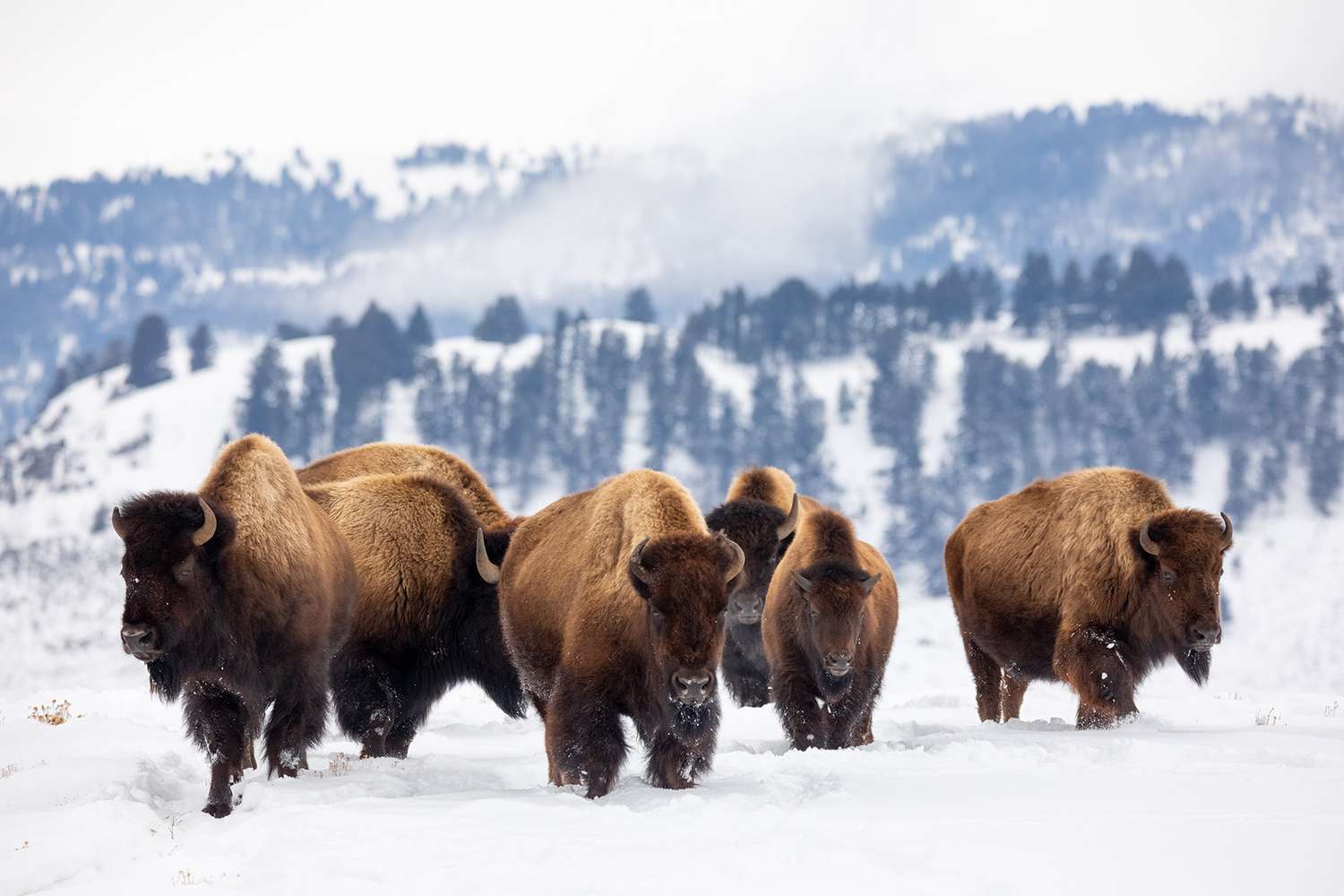
- It might take extra planning and effort, but a winter trip to Yellowstone can be a memorable and uncrowded experience.
- You can explore the popular destination during the off-season on skis, snowshoes, or a snowmobile, or by taking a snowcoach tour.
- Limited lodging is available inside the park so you’ll need to book your stay as far in advance as possible.
Yellowstone, one of the country’s most popular national parks, draws more than four million visitors each year to witness spewing geysers, steaming pools, and incredible wildlife you won’t find anywhere else in the U.S. The park’s expansive wilderness is home to treasured megafauna, from bears and wolves to herds of bison and elk, all of which visitors regularly spot.
Yellowstone’s landscape is big and beautiful, with dramatic river-cut canyons and towering mountains. More than half of the world’s geysers are found here—including Old Faithful, which typically erupts every one to two hours—along with a supervolcano, the Yellowstone Caldera.
While summer is by far the most popular time to visit Yellowstone, all that beauty and wonder doesn’t go away when the snow begins to fall. The park evolves into a quiet winter wonderland between December and March with minimal crowds and plenty of open space. Winter just might be Yellowstone’s best-kept secret. It requires a different approach and a bit more legwork, but the reward is a trip you won’t soon forget. Read on for everything you need to know about visiting Yellowstone in the off-season.
Getting to and Around Yellowstone in the Winter
ferrantraite / Getty Images
You can drive all over Yellowstone National Park during its peak season, but it’s a different story in the winter. Snow covers the roads, and avalanche danger is prevalent. The only part of the park that remains open to cars year-round is the road between the north and northeast entrances—and even then, service is extremely limited. If you’re planning to drive yourself, check the park’s road status map before you go.
A better way to get around the park in the winter is by traveling over the snow on skis or snowshoes, or by snowmobile or snowcoach. This mode of travel offers a completely different experience and lets guests get up close to the landscape and natural elements. You can typically opt for over-snow travel until March or April, after which the roads reopen.
Winter Activities in Yellowstone National Park
Yellowstone National Park is a veritable playground for outdoor enthusiasts, wildlife fanatics, photographers, and adventure seekers—even in the wintertime. Explore some of the best things to do during your visit.
Skiing and Snowshoeing
There are miles and miles of trails throughout the park, some with a set track and others that will require you to break the trail yourself. Skiers and snowshoers are also permitted to travel on unplowed roads.
Many ski and snowshoe adventures start around Mammoth Hot Springs near the north entrance. Those staying in Jackson Hole can access the park for tours from the south entrance. You can rent ski and snowshoe gear from the Bear Den Ski Shop at the Mammoth Hot Springs Hotel or any outfitter outside the park.
Anyone who isn’t well-versed in avalanche safety should opt for a guided tour. The national park has compiled a list of authorized businesses you can choose from. As a bonus, tours usually include rental gear and transportation into the park. If you venture out without a guide, make sure the trails are open and conditions are safe to do so.
Snowmobiling and Snowcoach Tours
Delaware North Parks and Resorts
One of the most fun ways to see Yellowstone in winter is by snowmobile. Most people book a trip with a guide, as only four permits are allotted to non-commercially guided groups each day. Luckily, there are tons of outfitters who know the ins and outs of the park and can lead you to wide-open powder fields waiting to be explored. Many of them include the necessary gear, like thermal coveralls and helmets, as well as lunch inside the park.
If being out in the elements isn’t your cup of tea, you can book a snowcoach through one of the many local snowmobile and snowcoach outfitters in the area (find NPS-authorized options at the link above). This allows you to relax and drink in the views or watch for wildlife without having to drive.
Seeing Old Faithful in the Winter
Watching Old Faithful erupt in the winter is pure magic. With a blanket of fresh snow and no crowds, you can fully experience the wonder of this powerful (and punctual) geyser. But, unlike in the summer, you’ll need to book a trip with a snowmobile or snowcoach company to get to the site from November to late April. Rest assured, seeing the juxtaposition of the fiery eruption against a white backdrop is well worth the extra effort.
Winter Photography
Whether you want to preserve your winter wonderland memories or sharpen your photo-taking skills, a photography tour is worth considering. Options include national park lodge-organized tours as well as those run by independent companies like Slonina Photography. Even if you’re not lucky enough to spot wildlife, capturing the snow-laden park in the perfect light is a wonderful way to immerse yourself in the winter landscape.
Yellowstone Forever Programming
Formerly known as Yellowstone Institute, Yellowstone Forever is a park-run organization that provides year-round educational programs for visitors. Winter options include field seminars and guided excursions with naturalists, historians, photographers, and artists. Wildlife viewing days, snowshoeing, and private ski tours are also available.
Where to Stay in Yellowstone National Park in the Winter
Courtesy of Yellowstone Vacations
Winter lodging is limited in the park, but the Mammoth Hot Springs Hotel and Cabins and Old Faithful Snow Lodge and Cabins remain open. The latter is accessible only via over-snow transportation, such as a snowmobile or snowcoach. Rooms are limited at both lodges, so make your reservation as far in advance as possible. You can also look at lodging in the nearby Montana towns of Gardiner, Silver Gate, and Cooke City. To the south, Jackson Hole, Wyoming, remains a popular option but also requires over-snow transportation.
Mammoth Campground, near the park’s north entrance, is typically open for tent camping (with limited services) throughout the winter.
What to Pack for Yellowstone National Park in the Winter
With temperatures ranging from around zero to 20 degrees Fahrenheit during the day and dipping even lower at night, layering is essential on your winter trip to Yellowstone.
Pack long underwear, a wool sweater, a down jacket, and a wind- and waterproof outer layer (like a Gore-Tex jacket and pants). Depending on your planned activities, you might opt for a pair of snow pants or bibs. You’ll also want to bring synthetic or wool socks, gloves or mittens, a warm winter hat, and gaiters to keep your feet warm and dry.
Even though the temperatures can be frigid, the sun will likely be shining, so make sure to pack sunglasses and plenty of sunscreen. Hand warmers are also perfect for tucking into your gloves, pockets, or shoes. If you plan to venture out into the backcountry or the field on a tour, consider adding extra snacks, water, and a flashlight or headlamp for emergency use.
Read the full article here