


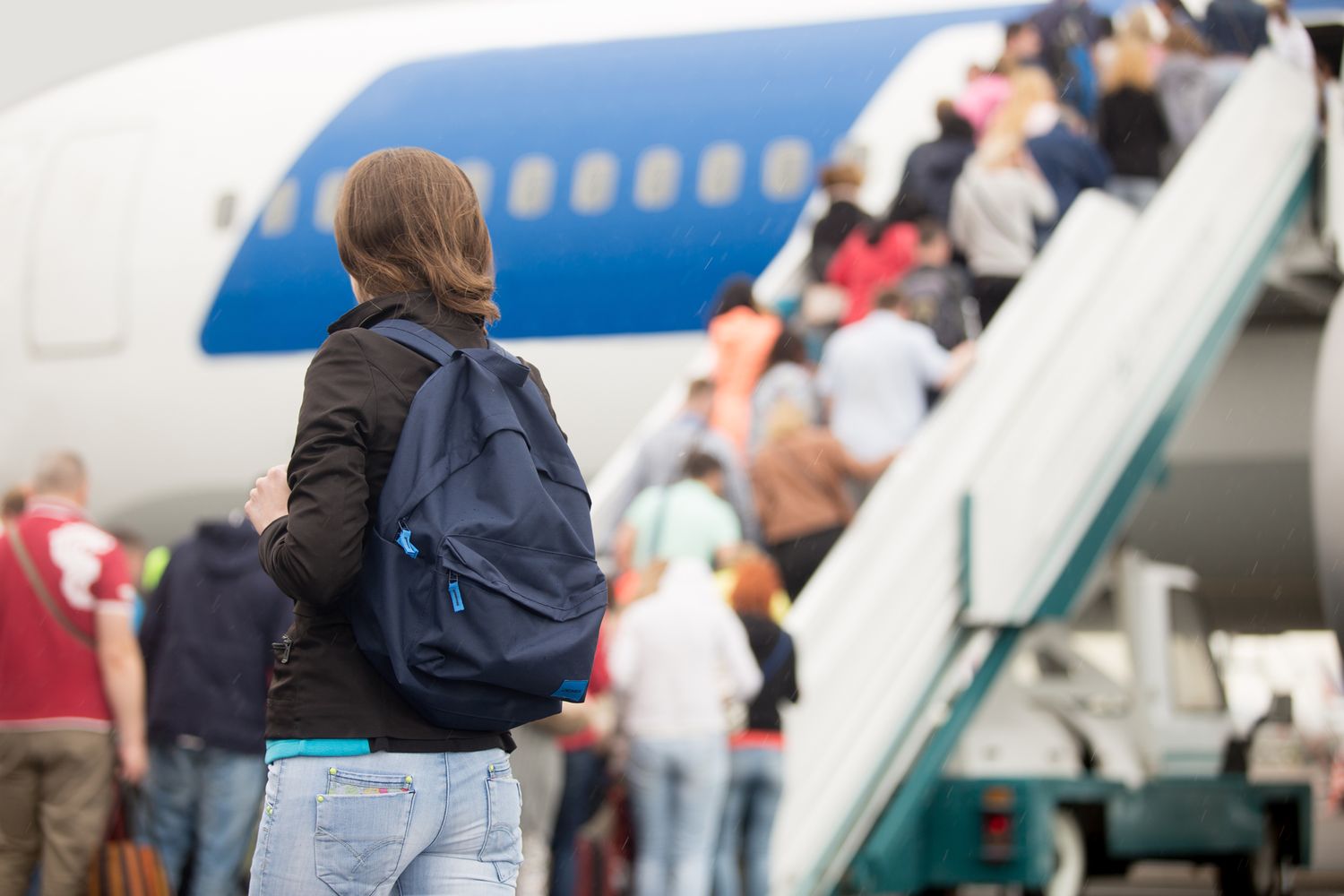
While air travel has become a pretty casual affair when it comes to wardrobe choices, airlines actually do enforce dress codes—and crews can intervene. Recently, a couple of viral incidents in which passengers were challenged or removed for their clothing has pushed the topic into the spotlight.
Most airlines haven’t necessarily rewritten their rules, but some have been quietly clarifying expectations for staff, leaving travelers wondering what “appropriate attire” actually entails. The U.S. Transportation Department under the Trump administration even weighed in ahead of the hectic holiday season, urging Americans to dress with “respect.”
Still, airlines offer very little detail on specifics. American Airlines simply advises passengers to “dress appropriately; bare feet or offensive clothing aren’t allowed.” Spirit is more explicit, noting it may deny boarding to anyone “inadequately clothed… or whose clothing or article, including body art, is lewd, obscene, or offensive in nature.” Most carriers use similarly open-ended language, giving crews wide discretion, so what one employee considers acceptable may strike another as inappropriate.
As travel expert and Point.me founder Tiffany Funk explains, this ambiguity “leaves a lot up to interpretation,” which is why enforcement can feel inconsistent and, at times, spark controversy. The underlying intent is straightforward, though: airlines want to maintain a calm, family-friendly environment in a very confined space.
Funk also points to the practical side of thoughtful dressing. Cabins run cool, and you’re seated close to strangers for hours, so wearing layers and covering arms and legs isn’t just polite—it’s often more comfortable.
What Can Actually Get You Flagged (or Removed)
Horror stories of passengers being removed for what they’re wearing may draw attention online, but both etiquette expert Myka Meier and Funk emphasize that denials of boarding are still uncommon. When issues do arise, they generally fall into a few clear categories:
Clothing With Offensive Graphics or Language
Profanity, depictions of nudity, and anything likely to spark conflict are the biggest red flags. Think of it this way, says Funk: “If you wouldn’t wear it to a family-friendly event because it would be offensive or start an argument, it’s probably not appropriate for a plane.”
Overly Revealing or Beachwear Outfits
Meier explains that “excessively revealing, sheer, or [clothing] better suited for the beach or nightlife” commonly crosses the line. Micro-shorts, very low-cut tops, or shirts that leave a large amount of midriff exposed can prompt conversation with the crew or, in some cases, complaints from fellow passengers.
Items That Pose Hygiene or Safety Concerns
artemstepanov/Adobe Stock
Travel is stressful, and even the most composed passenger may work up a sweat sprinting across the terminal. For everyone’s comfort, Funk recommends wearing socks, closed-toe shoes, and shirts with at least short sleeves. Clothing that’s visibly dirty or has a strong odor can also draw attention—and not the good kind.
Where Comfort Ends and “Inappropriate” Begins
The pandemic cemented athleisure as the default travel uniform, and both Funk and Meier say leggings, joggers, soft knits, and sneakers are perfectly acceptable. The real issue isn’t what you’re wearing so much as how you’re wearing it. Clean, well-fitting clothing that provides reasonable coverage is unlikely to raise concerns.
What to Do If a Crew Member Asks You to Cover Up
No one wants to be on the receiving end of an attire complaint, but if a crew member approaches you, try to stay calm; otherwise, you risk not being allowed to board your flight. “Crew are simply enforcing airline policy, not making a personal judgment,” says Meier. She’s also quick to note that “a polite response such as, ‘Of course, thank you for letting me know,’ helps diffuse any awkwardness.” Often, the fix is as easy as putting on a sweater or scarf. If you don’t have a layer, ask what might resolve the issue. Gate agents are usually pragmatic, and a courteous response gets you on your way faster.
Will Dressing Up Help You Score an Upgrade?
It’s a persistent myth, but Funk is clear: attire doesn’t influence upgrades today. She tells Travel + Leisure, “Upgrades are going to elite-status fliers or to those who buy upgrades in cash or miles.” Likewise, she adds that downgrades generally don’t happen due to dress, either. “When an airline downgrades a flyer who paid for a particular seat, they have to refund the fare difference in cash or miles, so they don’t do it unless there’s a need,” she explains.
Read the full article here