


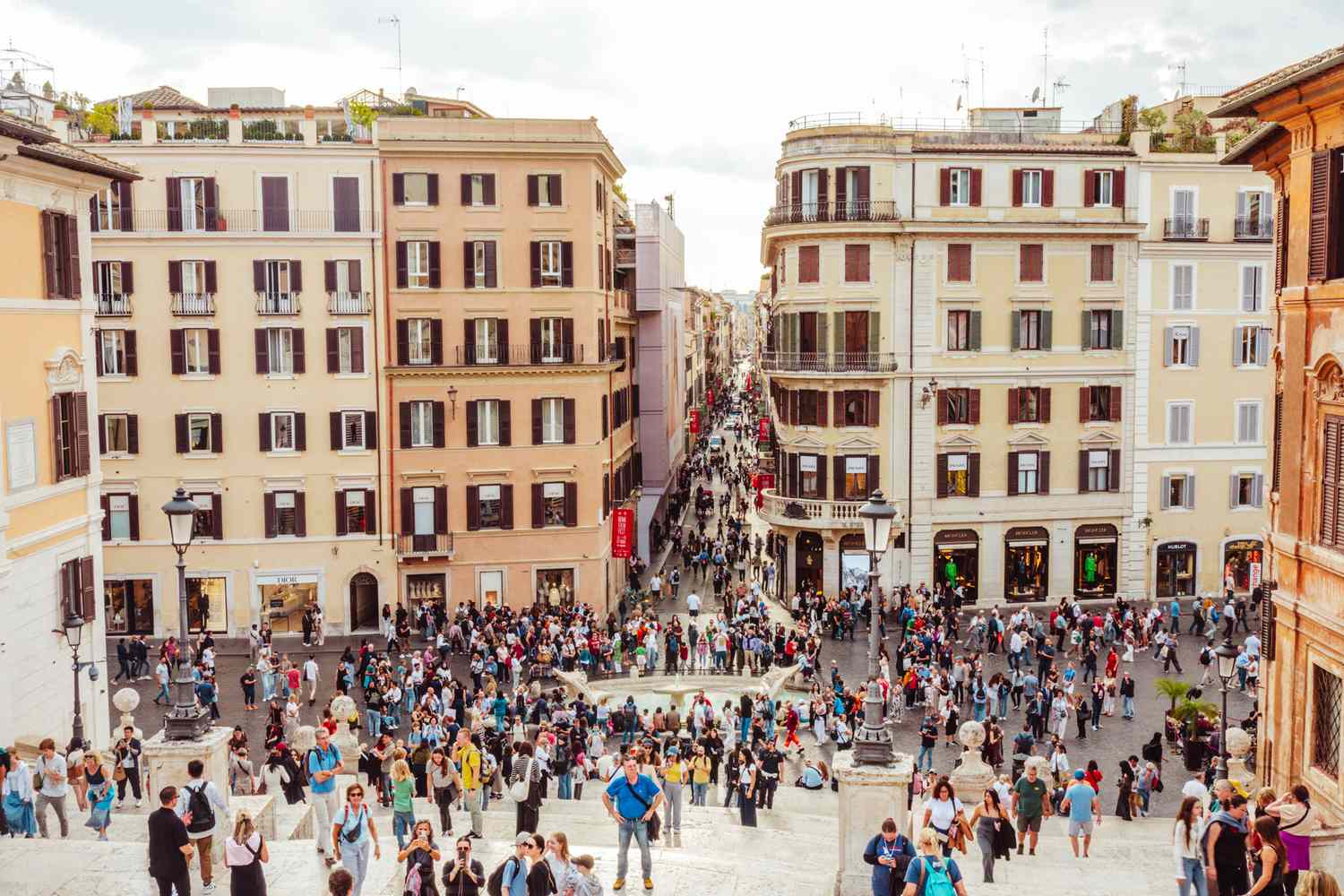
As an American living in Rome, I’m surprised by how concerned tourists sometimes get about safety in Europe. I don’t want to generalize, but personally, I feel safer in Europe than in the U.S. Violent crime is generally less common here, though petty crime, including pickpocketing and other scams, does happen. I once had my iPhone stolen out of my coat pocket at a supermarket a couple of blocks from my apartment, and a friend had her purse snatched from under her table at a restaurant.
As long as you’re vigilant, as you should be in any major city, you’ll be just fine. Keep your wits about you and watch out for these scams that I warn my friends and family about when they’re traveling in Europe.
Pickpockets
SergeyChayko/Getty Images
I don’t think you need a special money belt or anything like that to protect your cash and cards, but it’s important to be aware of your surroundings, especially in crowded places or on public transit. If you’re wearing a backpack, take it off and keep it in front of you while on the metro, trains, and buses. Keep crossbody bags in front of you, where you can see them.
“I’ve heard about pickpockets posing as helpful friends or families, and this can happen in paid attractions, like in the Vatican Museums and the Colosseum,” says Elizabeth Heath, an Umbria-based journalist and founder of Villaggio Tours. “It’s worth it for them to buy a ticket to go in so they look more legitimate; they might even be wearing a business suit. They act friendly or helpful and then take your purse.”
Phone Snatchers
Phone snatching is, unfortunately, increasingly common in major European cities like London, Paris, Barcelona, and Rome. You might want to think twice about leaving your phone on café or restaurant tables, especially in touristy areas. And hold onto it tightly if you’re using it in crowded areas.
Luke Abrahams, a London-based freelance journalist, warns that phone snatching has become increasingly common in London, especially around Oxford Circus, where many tourists start snapping photos of the crossroads and the department stores. “I always say, if you see guys on bikes with masks, put your phone away because it is a massive problem now,” he warns.
Taxi Scams
Westend61/Getty Images
Always use official taxis, not unauthorized ones, which tend to prey on tourists arriving at the airport. In Italy, official taxis are white with a taxi sign on top. In other countries, they may be other colors, but they should still have a taxi sign on the roof and a license or permit number displayed. Always look for taxis at official taxi ranks or hail them using apps like FreeNow or Uber.
Watch out for taxi drivers who claim the meter is broken and try to get you to pay a fixed rate or ask you to pay in cash. If you’re worried that a taxi driver is taking an unnecessarily long route in an effort to overcharge you, track the route using Google Maps, but before you start arguing, keep in mind that in Rome and many other European cities, there are so many one-way streets that it’s normal for cars to have to take circuitous routes, even if the distance between two points is small.
“Free Gift” Scam
Watch out for guys who try to give you a rose, a friendship bracelet, or other small trinket in busy public squares, around monuments, or in touristy areas. If you accept the “gift,” they’ll start aggressively demanding money. If you see them, just keep your hands to yourself, avoid making eye contact, and keep walking. If they approach you, don’t engage with them; just say “no thank you” and continue on your way.
Overcharging at Restaurants
Taylor McIntyre/Travel + Leisure
I always tell my family and friends to avoid the tourist-trap restaurants around the main squares and monuments, which tend to overcharge tourists for mediocre food. Be wary of places with big English menus or guys who stand out front trying to hustle people inside. In Italy, it’s normal for restaurants to have a charge for coperto (cover charge) or servizio (service charge), but if you see other strange line items on your bill, don’t be afraid to ask about them.
And while this is not a scam, I know from experience that if I order a whole fish or in some cases a steak at a restaurant where the price is listed as “per hectogram” or “per kilogram,” I’m going to be in for a big bill at the end of the meal.
Third-party Ticket Resellers
If I had a euro for every time I heard about tourists who book skip-the-line tickets or tours through third-party resellers at a marked-up price just to have them canceled at the last minute, I would probably be rich now. Always buy tickets through the official website or a trusted tour operator. If you see third-party sites selling skip-the-line tickets for attractions like the Colosseum or the Vatican Museums for double or triple what the normal tickets cost, know that it’s a scam; typically all online tickets are skip-the-line tickets, so they’re just charging you extra because they can get away with it.
“I could not get Domus Aurea tickets because they sold out the second that online sales were live, so I had to go through [an online tour marketplace], which is just going through another reseller, and then they canceled my tour because, of course, they had oversold and didn’t have the tickets that they had promised for that day,” Heath says. Online tour agencies that buy up all the tickets for attractions and then sell them at a premium are a pet peeve of hers. “I know a family who had their Colosseum tour canceled at the last minute for the same reason,” she continues. “They couldn’t find any other options and never got to go.”
Read the full article here