


- Glen Canyon National Recreation Area offers expansive desert landscapes similar to Antelope Canyon with fewer crowds and no required reservations.
- Visitors can hike trails like Cathedral Wash, explore Lees Ferry, kayak Lake Powell, and see landmarks like Horseshoe Bend.
- The area is open year-round with a $30 vehicle fee, and spring and fall provide the most comfortable conditions for exploring.
You don’t need a reservation or a guided tour to experience the sculpted sandstone landscapes that have made Antelope Canyon one of the Southwest’s most sought-after destinations.
At Glen Canyon National Recreation Area, which stretches 1.25 million acres across the Arizona-Utah border, visitors can explore similarly striking desert terrain with far fewer logistical hurdles and crowds—and it’s technically just minutes away from Antelope Canyon. The area is open year-round and generally accessible 24 hours a day. While no reservations are required for hiking or day use, entry costs $30 per vehicle for a seven-day pass. Parking is available near key access points like Cathedral Wash and Lees Ferry (though it can fill up quickly in peak season), and dogs are welcome on leash, making it an easy, flexible option for travelers exploring with pets.
Here’s what you need to know before planning a trip to Glen Canyon National Recreation Area.
What to Do
Daniel A. Leifheit/Getty Images
Hiking is one of the best ways to experience Glen Canyon National Recreation Area, and Cathedral Wash is among the most popular treks. Spanning roughly three miles, the trail winds through sandy paths and narrow canyon corridors. While occasional rock scrambling and some route-finding are required, the expansive views are well worth the effort.
Beyond Cathedral Wash, the surrounding desert offers plenty of ways to explore—whether on foot or by four-wheeler. Glen Canyon National Recreation Area has a network of rough, often unpaved roads that are great for off-roading, but you’ll need a high-clearance vehicle to reach the more remote areas and viewpoints. One popular option is the 67-mile-long Burr Trail, which leads to a “Singing Slot Canyon,” famed for its prime acoustics.
Lees Ferry serves as a central hub for both land and water access, combining some of the region’s best hiking with direct entry to the Colorado River. Here, visitors can kayak or fish along a calm, scenic stretch of water, or explore nearby trails. The contrast of sheer canyon walls and open sky makes it one of the most visually striking areas in the recreation area.
Lake Powell is another major draw for its calm, clear water, best enjoyed via kayak or paddleboard, moving between red rock walls and quiet coves. Visitors can also go on a guided boat tour or a private charter. While water levels can fluctuate, which can shift where you launch, being on the water is still a big part of the experience.
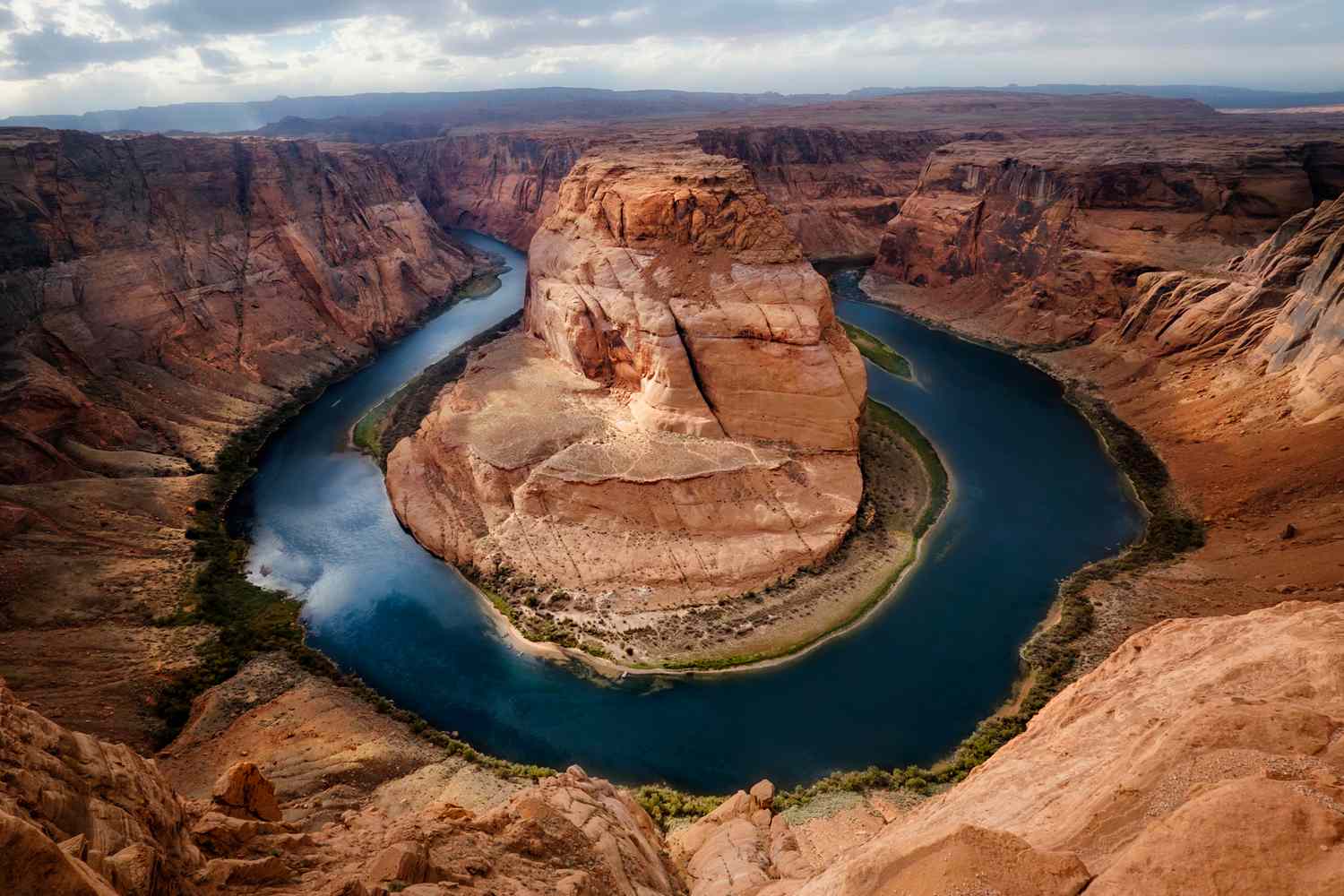
Also within the recreation area, Horseshoe Bend is one of the region’s most iconic—and most photographed—viewpoints. A short, well-marked hike leads to the overlook, where the Colorado River curves in a dramatic 270-degree bend framed by towering sandstone cliffs. The trailhead is located just off U.S. Route 89 near Page, with paid parking required.
Farther afield, Rainbow Bridge National Monument—one of the largest natural bridges in the world— is typically accessed by boat via Lake Powell. However, due to lower water levels, dock-to-trail access is not always available, which may limit how close visitors can get. For those seeking a more remote experience, a challenging backcountry hike across the Navajo Nation Parks & Recreation land is also possible with a permit.
Best Time to Visit
Enn Li Photography/Getty Images
Spring and fall are the easiest times to hike—temps are milder, and you don’t have to think about the weather as much. Winter’s quieter, a bit colder, and sometimes windy, but you’ll get fewer people and really clear desert views. Summer gets brutally hot, especially down in the canyons, so if you’re going, start early and bring more water than you think you’ll need. And like with any slot canyon, always check the weather: Flash floods can happen even if it’s not raining right where you are.
How to Get There
Melissa Kopka/Getty Images
Glen Canyon National Recreation Area is huge, so the entrance you choose depends on what you want to see. Most people stay in Page, Arizona, since it’s right by Lake Powell and close to places like Horseshoe Bend, Lees Ferry, and Cathedral Wash. You’ll also want a car—Page, Arizona, is about 2.5 hours from Flagstaff, Arizona, and around 4.5 hours from Phoenix, and once you’re there, most trailheads and viewpoints are an easy drive away.
The closest airports with commercial service are in St. George, Utah, and Flagstaff, both of which are roughly 2.5 hours away by car. You will likely find more options out of Phoenix or Las Vegas, but be prepared for a 4.5 to five-hour drive.
Read the full article here