


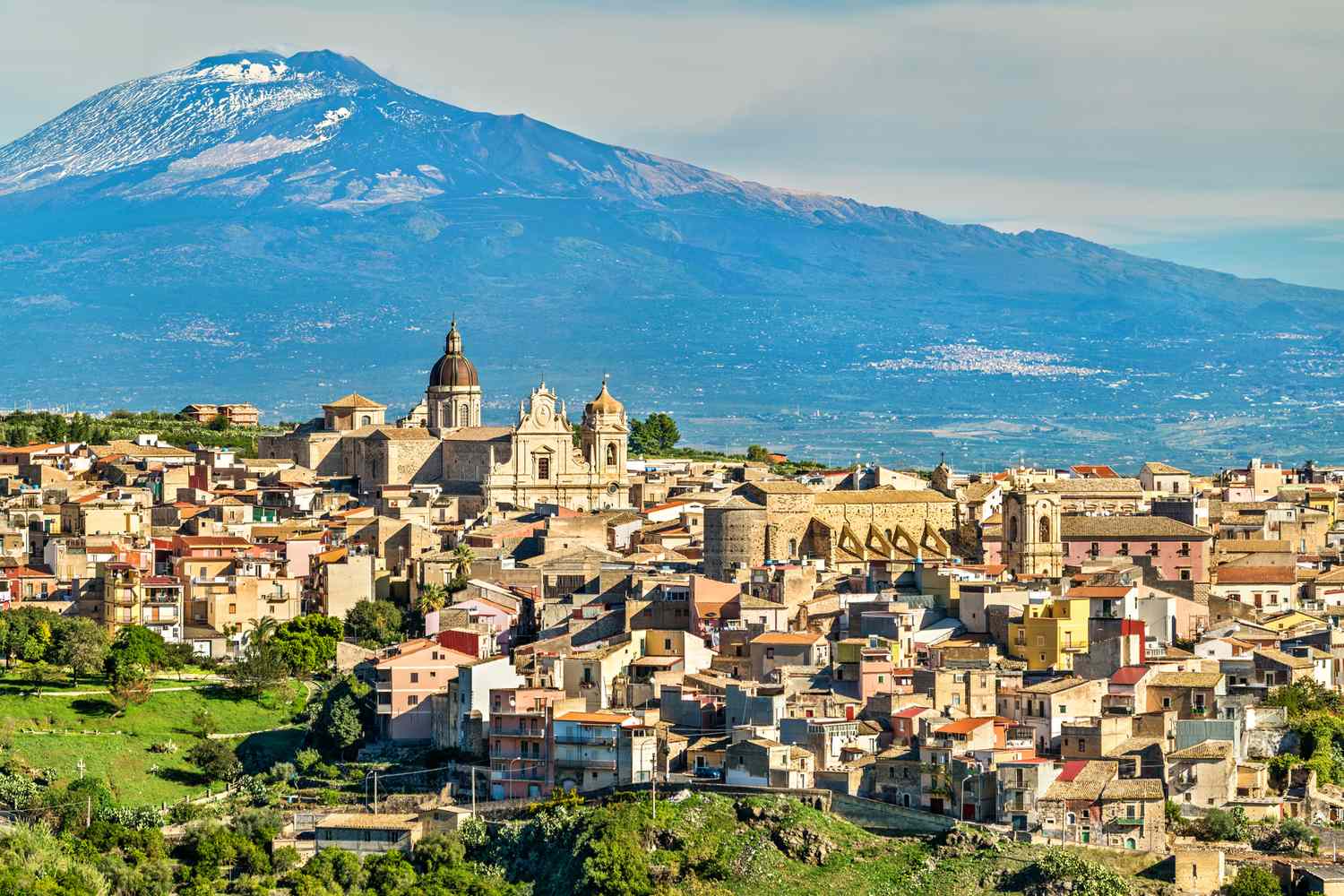
- Militello Val di Catania was named Italy’s “Village of Villages” in 2025, recognized for its beauty, history, and culinary traditions.
- The town has UNESCO-listed Baroque architecture, historic churches, and archaeological sites shaped by centuries of rebuilding.
- Visitors can enjoy uncrowded streets, traditional Sicilian cuisine, and easy access to nearby destinations like Noto, Modica, and natural waterfalls.
There are few places in Europe as beautiful as Militello Val di Catania.
This little Sicilian town was recently named “Borgo dei Borghi,” or “Village of Villages,” by Rai Italia, Italy’s public radio and television broadcaster, whose national TV program honors the country’s most beautiful small towns. Each year, the show travels across Italy in search of places rich in history, tradition, and culinary culture; in 2025, Militello stole the show.
Located in southeastern Sicily, Militello is home to just over 6,600 residents. Militello unfolds as a cascade of honey-colored palazzi and churches with soft curves. It’s a place where bell towers punctuate the day, and wrought-iron balconies spill over with flowers. The scene is all set against rolling green hills, and it looks and feels cinematic.
First occupied in antiquity, Militello Val di Catania’s name is believed to be derived from the phrase militum tellus, or “land of soldiers,” recalling a possible Roman military presence. After the catastrophic Sicily earthquake of 1693, entire towns (including Militello) were rebuilt with a shared aesthetic: ornate, sun-drenched, and a little theatrical. The monumental (and gorgeous) reconstruction efforts earned the town UNESCO recognition in 2002. What you see today is the result of centuries layered one atop the other, culminating in the luminous Baroque reconstruction that defines Militello’s identity.
Here’s what you need to know before planning a trip to Militello Val di Catania.
Best Things to Do
Andrea Tabaro/Getty Images
“Militello is special for a simple reason: it’s remarkably beautiful, yet still almost entirely outside the traditional tourist circuit,” Peppe Mendola, founder of Essence of Sicily, tells Travel + Leisure. “While most travelers gravitate toward Noto, Modica, or Ragusa, Militello remains surprisingly overlooked … You get all the beauty and cultural depth of the Val di Noto, but without the crowds or the sense of a place shaped around tourism. It’s the kind of town that makes you wonder why no one told you about it sooner.”
Look around, and you’ll spot palazzi, convents, fountains, and bell towers—even the remains of a Norman tower. The true heart of Militello, though, lies just beyond the center at Santa Maria la Vetere, a church within an archeological park—the structure is considered to be the village’s oldest site. Though it was rebuilt after the 1693 earthquake, the church was originally founded during the town’s Norman period and constructed atop far older habitation. Among the site’s most interesting spaces is the cripta dello Spirito Santo, a rock-cut funerary chapel lined with burial niches marked by carved crosses.
In the center of the village, the Chiesa Madre San Nicolò – Santissimo Salvatore anchors the skyline. As you wander around the village, you’ll find quiet courtyards, sunlit piazzas, and fountains that feel suspended in time. For Baroque drama, step into the Sanctuary di Santa Maria La Stella, and for a medieval edge, trace what remains of the Barresi-Branciforte Castle.
If you visit in August, you may be able to see Militello at its best. La Festa del Santissimo Salvatore takes over the town with processions, statues, music, and fireworks in a multiday celebration. And if you’re looking to explore beyond Militello, you’re well placed. The Baroque showstoppers of Noto and Modica, along with Ortigia, are feasible day trips. The Cascate dell’Oxena, gorgeous natural waterfalls, are closer to town. For something a little different, hop aboard the Treno della Ceramica, a gorgeous, historic train line linking Catania and Caltagirone. Militello sits midway along the route.
Where to Eat and Drink
eddj87/Adobe Stock
The charm of Militello is that it is 100 percent local—from its intimate size to its food offerings. At bars and cafes, there is nothing more Sicilian than feasting on brioche col tuppo (sweetened doughy brioche) and granita alla mandorla (toasted almond granita).
For a treat, the local cassatelline della zia monaca—a shortcrust pastry filled with almonds, fruit jam, chocolate, liqueur, cloves, and cinnamon—is delicious (and provides a little boost of energy). Other local delicacies include mostarda—a sweet and spicy prickly pear jelly—and the savory scacciata, a flatbread filled with ingredients like vegetables, cheese, anchovies, and sausage. Before you leave, make sure you try a dessert or a drink with a little sanguinelli, the coveted blood orange, in it.
There is also a quiet cottage industry of home restaurants (set in courtyards and living rooms) where menus follow family traditions. This is the best way to get a taste of Militello’s culinary traditions and a slice of local life. Il Vicolo tra i Santi feels like dining in someone’s kitchen; Al Cortile – Fuori dal tempo serves a beautifully unhurried meal in a tucked-away courtyard; and U Trappitu, set inside a former olive mill, serves dishes like paccheri alla marinara, pistachio-crusted tuna, and lobster tagliatelle.
Where to Stay
JannHuizenga/Getty Images
In Militello, staying overnight is about slipping into the fabric of the town. Bed-and-breakfasts are your primary options, such as the guest houses at Porta della Terra. Every stay is hyperlocal, which means delicious Sicilian breakfasts of fresh fruit, sweetened ricotta, homemade pastries, and espresso.
For something more secluded (and with a pool), head just beyond town to Castello Camemi. Set in the rolling countryside, this restored historic estate trades paved streets for open skies, olive groves, and views stretching across the Val di Noto.
Read the full article here