


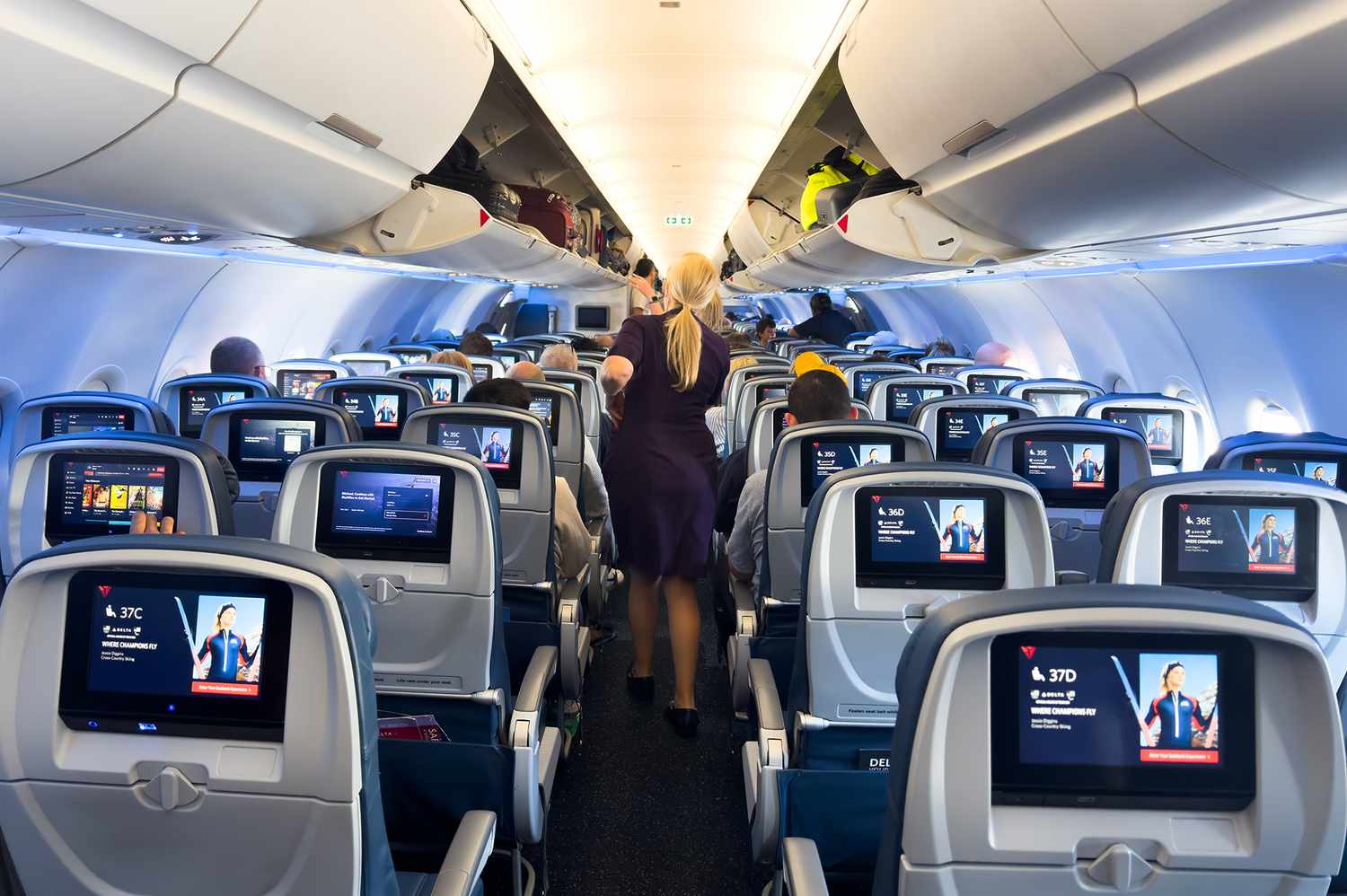
There’s an entirely different language in the skies. The Federal Aviation Administration (FAA) has a robust list of acronyms and abbreviations that those in the field should be familiar with, and pilots communicate with each other and with Air Traffic Control using the NATO (North Atlantic Treaty Organization) Phonetic Alphabet. For example, a pilot will say something like “Delta Alpha November 2-3-4-5 Tango at Gate Bravo 12” instead of “D A N 2345 T.” This helps ensure clear communication and eliminates any misunderstandings over the radio.
But according to a report Wander, a luxury vacation rental company, shared with Travel +Leisure via email, there are also several unofficial phrases and code words that may be used in the air.
The next time you’re on a plane and hear a member of the air crew say “mermaid,” it’s probably not a reference to the folklore creature with the body of a human and the tail of a fish. “From my understanding, this is a slang term among the flight crew or flight attendants to describe passengers who take up more space during the flight in their seat or are ‘manspreading,’” says Kolin Jones, a pilot and the founder and CEO of Amalfi Jets, a private aviation company. He also confirms it’s not an official FAA term.
Forbes describes “mermaid” as a “passive-aggressive nickname for a passenger who spreads themself out over several seats to stop other passengers from sitting in their row,” adding that it’s “particularly common on emptier flights where there are more spare seats to be claimed.”
No, it’s not an emergency, but you also don’t want to be the “mermaid” yourself. “If heard, it is not something to worry about … but maybe check how much space you’re taking up and if you’re encroaching in someone else’s seat space,” Jones adds.
T+L recently reported on a few other code words and slang terms pilots and flight crew may employ while on the job. “Angel” and “Code 300” are used by some airlines and aviation companies to communicate that there’s a medical emergency onboard. As Jason Martinelli, the director of operations at Cirrus Aviation Services, previously told T+L, these words can signal to the crew that a passenger is “incapacitated, unresponsive, or in serious distress.”
Additionally, Wander reports you may hear “code yellow” or “pan-pan,” both of which indicate there’s been a medical incident during the flight.
Read the full article here